Korean Food / Sujeonggwa: Cinnamon-Ginger Punch, Ingredients and Serving
Sujeonggwa is a Korean cinnamon-and-ginger punch, usually served cold and sweetened with honey or sugar. Dried persimmon, pine nuts or jujubes may be added to the clear amber drink. To choose or make it, distinguish the spiced liquid from optional garnishes and adjust the sweetness only after tasting the strained infusion.
What goes into sujeonggwa?
The Korea Tourism Organization's cinnamon-punch entry describes water boiled with cinnamon and ginger, sweetened with honey, cooled and served with possible jujube, pine-nut or dried-persimmon garnish. A separate dried-persimmon version uses ginger, cinnamon and sugar with the fruit. These sources show why one glass need not contain every possible garnish.
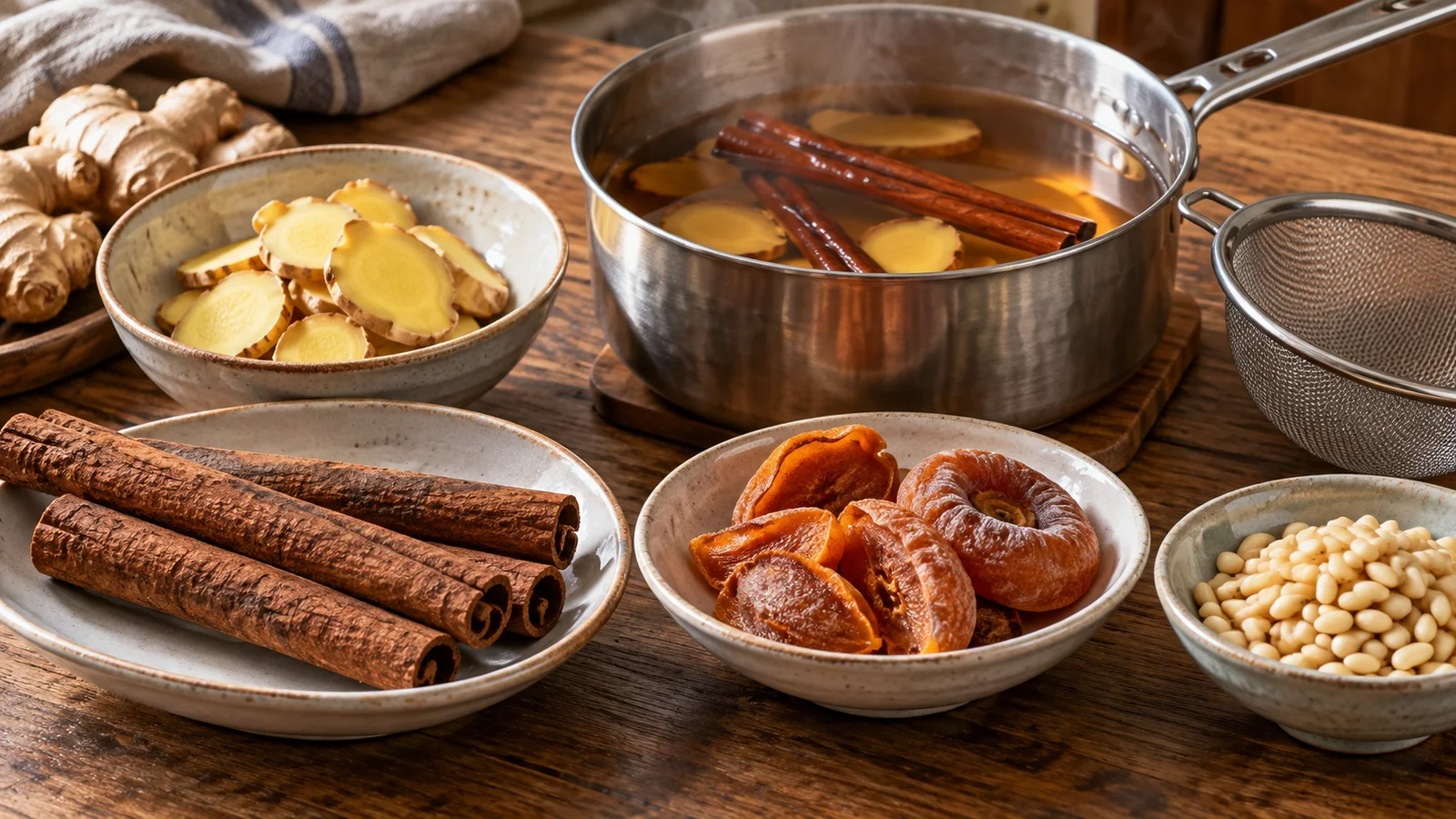
Cinnamon provides a warm woody aroma, while ginger contributes a sharper spicy note. Sweetener softens the combination, and dried persimmon can add fruity sweetness and a soft piece to eat. The ingredient photograph shows whole cinnamon, fresh ginger, dried persimmons and pine nuts beside a simmering infusion. Whole spices can be strained out before serving; a dark color alone does not identify the sweetener or its quantity.
How is it different from other Korean sweet drinks?
Sujeonggwa is identified by its cinnamon-and-ginger infusion. Sikhye, another Korean sweet drink, is built around rice and malt instead. Both may be served cold, but their ingredients, aroma and mouthfeel differ. If a menu calls either one simply a Korean sweet punch, ask whether it contains cinnamon and ginger or rice grains before ordering.
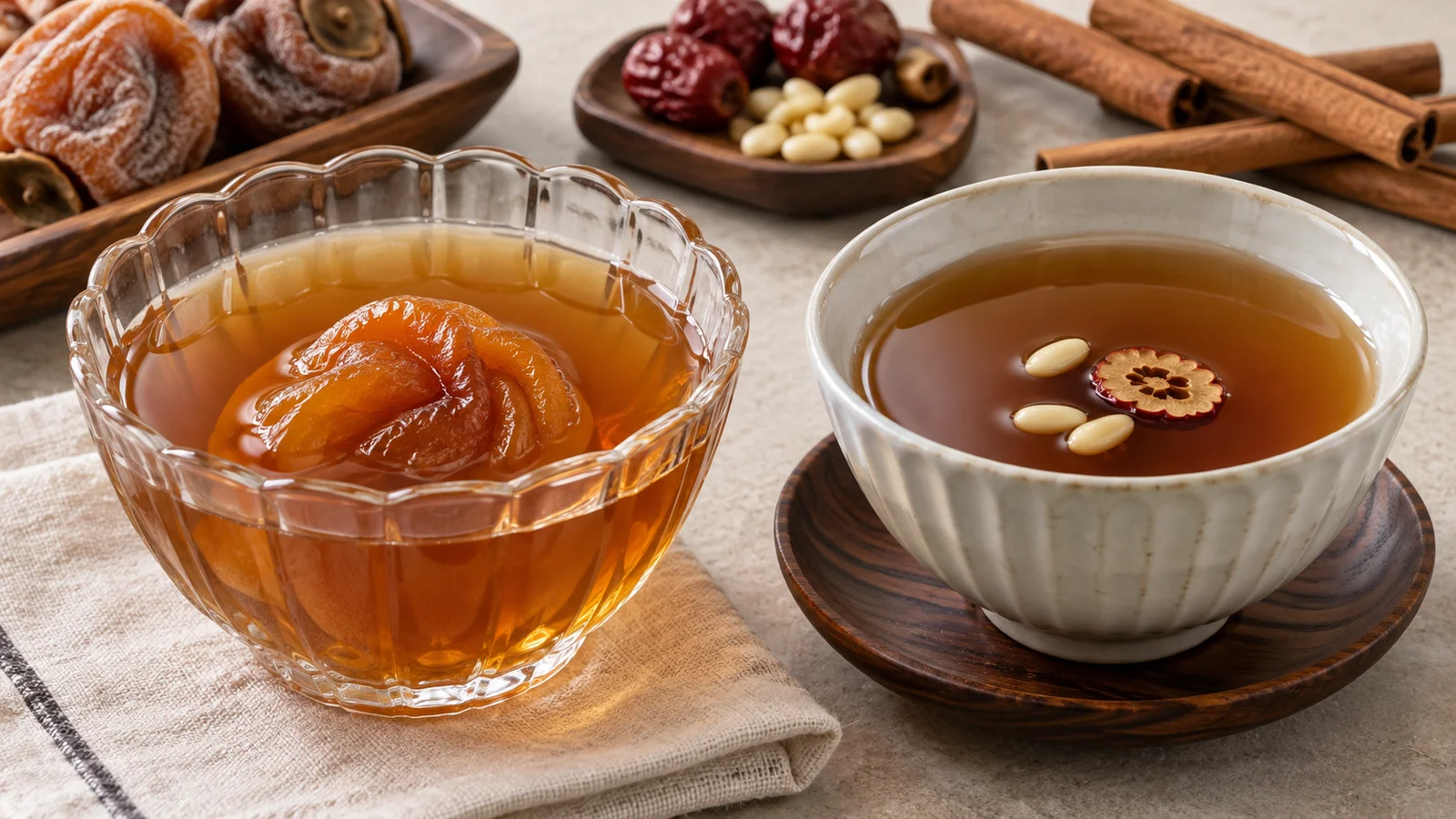
Garnishes also change what you get in the cup. The two-bowl photograph compares a version with softened dried persimmon to one with pine nuts and a jujube slice. The persimmon gives an edible fruit piece; pine nuts float on top and add a distinct nutty bite. Neither garnish by itself turns an otherwise different drink into sujeonggwa. For a nut allergy, ask whether pine nuts or other nuts are used even if none are visible.
How can you make a basic batch?
- Prepare the aromatics. Rinse the cinnamon sticks and clean and slice fresh ginger. Set aside a sweetener and, if wanted, dried persimmon, jujubes or pine nuts. Use a reliable recipe for starting quantities because long boiling and pan size change the concentration.
- Extract and strain. Simmer cinnamon and ginger in water until the liquid smells distinctly of both. They can be simmered together; the Korea.net recipe boils them separately, strains each liquid and then combines them to keep their flavors distinct. Whichever method you follow, remove the solids with a fine strainer.
- Sweeten, cool and serve. Dissolve the recipe's sugar or honey in the strained infusion and taste when it is safe to do so. Cool it using suitable food-handling practice, then chill and add prepared garnishes when serving. If using dried persimmon, allow it to soften as directed by the recipe.
Make a small batch first if you are unsure of the spice strength. Too much ginger may dominate; if the infusion is too strong, dilute a portion with water and taste again before sweetening further. If it seems weak, a tested recipe's simmering guidance is more reliable than adding unstrained spice powder to the finished drink. Keep the strainer clean so grit and ginger fibers do not reach the cup.
How is sujeonggwa served and selected?
It is usually served chilled as a drink or dessert, sometimes after a meal or for a gathering. The Tourism Organization's dried-persimmon entry describes a sweet punch associated with Lunar New Year. That association does not mean it can only be served on a holiday. A small cup lets a reader assess the balance of cinnamon, ginger and sweetness before choosing a larger portion.
When buying a bottled drink or ordering at a café, check whether it contains actual cinnamon and ginger infusion, concentrate, added sugar, dried persimmon or nuts. Recipes and sweetness vary; a dark amber drink may still be heavily sweetened. For dietary needs, rely on the ingredient label or the seller's recipe and shared-equipment information rather than the color or the presence of one garnish.
What matters when storing the drink?
Follow a packaged product's storage directions and date. For a homemade batch, cool it promptly, transfer it to a clean covered container and follow applicable guidance for refrigerated prepared drinks. A sweet syrup is not evidence that an opened or homemade punch will keep safely at room temperature. Store garnishes as the recipe or package directs, since fruit and nuts can have different handling needs.
Stir or pour gently if ingredients settle, and use a clean ladle for repeated servings. Add pine nuts or softened fruit when serving if you want their texture to remain distinct. Do not use a pleasant spice aroma or sweet taste as the sole test of whether old punch is safe; when storage conditions are uncertain, avoid serving it.