Korean Food / Mulhoe: Cold Raw Seafood Soup, Broth and How to Choose
Mulhoe is a Korean cold dish of sliced raw seafood, vegetables and a seasoned chilled broth. It is commonly tangy, may be spicy, and can feature fish alone or a mixture of seafood. Before ordering, ask which seafood is used, how much broth is served and whether noodles or rice are included; those details vary by restaurant.
What is in a bowl of mulhoe?
The Korea Tourism Organization's mulhoe entry lists sliced seafood such as flatfish, rockfish, abalone and sea cucumber in seasoned cold broth. It notes vinegar for a tangy taste and versions with raw fish alone or added shellfish. This is a family of preparations, not a guarantee that any particular bowl contains every listed ingredient.
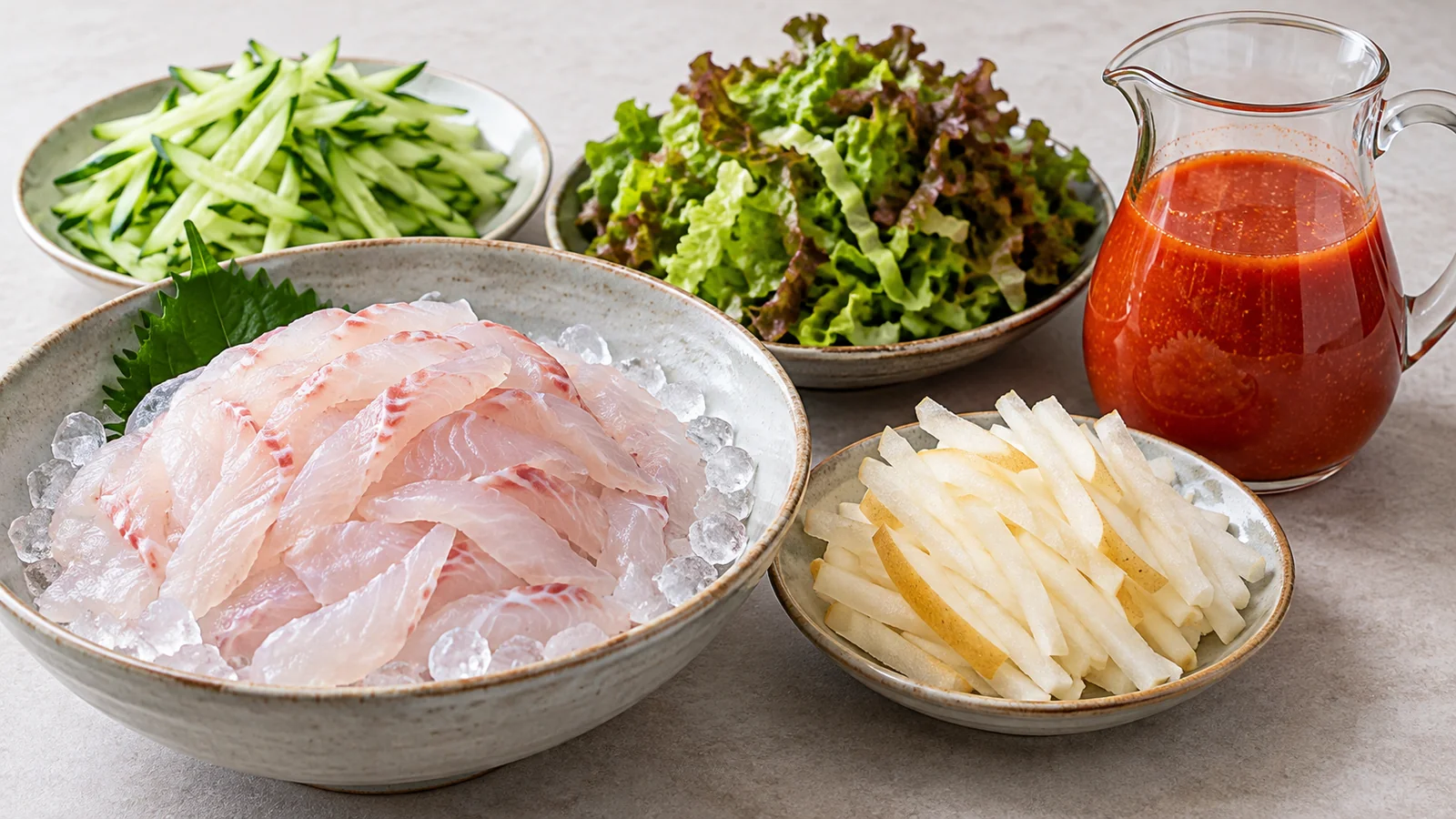
Crisp sliced vegetables add a different texture from the tender seafood. Some preparations also use pear, chili seasoning and ice; an official listing for a Pohang restaurant describes a version with noodles, pear, gochujang and ice. The ingredients photo separates fish, vegetables, fruit and broth so you can see their roles before they are combined. It illustrates one possible bowl, not a fixed national recipe.
Does the broth have to be red or very spicy?
No single broth color or heat level defines all mulhoe. Vinegar gives acidity, while chili paste or other seasoning may make a version red and spicy. Some kitchens serve plenty of liquid and others focus more on seasoned fish and vegetables. The Pohang example above can be enjoyed even before adding soup, showing why you should ask how that restaurant serves its version.
Do not confuse a chilled spicy broth with cooking the fish. The seafood in an ordinary raw-fish mulhoe remains raw even after it meets vinegar, chili sauce or ice. If you need cooked seafood, ask whether the menu offers a different cooked dish; a red color or strong sour taste does not change the raw-fish nature of this bowl.
Which seafood should you choose?
- Fish-focused mulhoe: ask for the species used that day and whether the bowl contains only fish or also shellfish. White fish examples are not a universal species list.
- Mixed-seafood mulhoe: abalone, sea cucumber or other seafood may change the texture and price. Ask for the actual contents of the menu item before ordering.
- Special regional or house version: the name may indicate a location or signature combination, but it does not replace an ingredient list. Compare the bowl and broth style offered by the specific restaurant.
The tourism organization's overview links mulhoe with coastal areas including Gyeongsang, Jeju and Gangwon, and specifically mentions fish-only and shellfish variations. Location can guide what to look for, but seafood availability and restaurant recipes change; ask rather than infer from a regional name.
How do you eat it with noodles or rice?
First taste a small amount of fish and broth, then mix vegetables and seasoning to your preference. If noodles come separately, add some to the broth after you know how tangy or spicy it is. Rice can also be served alongside; neither accompaniment should be assumed to be included or mandatory. The image shows both separately to make the choice clear.
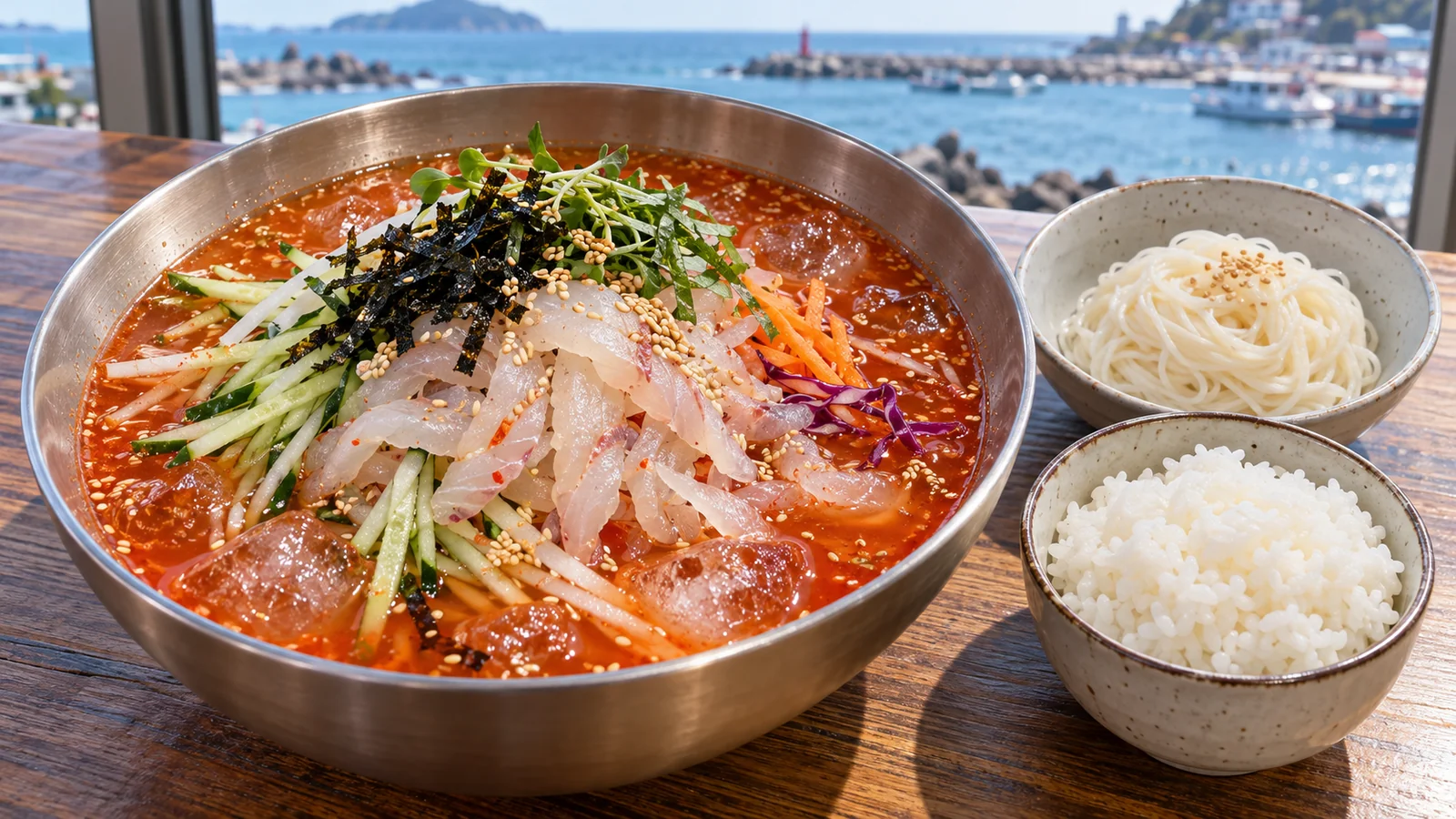
Ask whether a portion is intended for one diner or sharing, and whether noodles, rice or extra broth cost more. A large-looking bowl can contain ice and vegetables as well as seafood; appearance alone does not tell you the amount of fish. For an allergy, ask about fish, shellfish, toppings and the broth seasoning individually.
Who should avoid raw-seafood mulhoe?
The U.S. Food and Drug Administration's seafood-safety guidance advises pregnant people, children, older adults and people with weakened immune systems to avoid raw or undercooked fish and shellfish because of foodborne illness risk. This U.S. guidance applies to the raw seafood in mulhoe; individual medical or local public-health advice may be more specific.
The FDA also says freezing can kill some parasites but does not kill every harmful germ, and cooking seafood thoroughly is the safest route. A cold serving, fresh appearance or sour seasoning does not make raw seafood equivalent to cooked seafood. If you are in a higher-risk group or unsure of your own restrictions, choose a fully cooked alternative and ask a healthcare professional where appropriate.
What should you ask about freshness and takeout?
Choose a seller who handles raw seafood under appropriate chilled conditions, and ask how an order for takeout should be kept and when it should be eaten. If fish, broth and noodles are packed separately, confirm how the seller intends them to be combined. Avoid leaving the bowl warm while traveling, and follow the seller's handling instructions rather than relying on ice in the photograph as a safety guarantee.
Do not use a smell test or a quick reheating step to decide that a raw-fish dish kept under uncertain conditions is safe. A reheated mulhoe would also no longer be the intended cold raw-seafood dish. If the handling history is unclear, choose a fresh, properly handled order or another cooked meal.