Korean Food / Hobakjuk: Pumpkin Porridge, Texture and Toppings
Hobakjuk is Korean pumpkin porridge: cooked pumpkin is mashed or sieved and simmered into a soft, thick bowl, often with glutinous rice flour. It can be served plain or with small rice-cake balls and beans, and its sweetness varies. Ask about the pumpkin, thickener and toppings if you want a particular texture or need to check ingredients.
What is in hobakjuk?
The Korea Tourism Organization's hobakjuk entry describes cooked mashed pumpkin boiled with sweet-rice flour, making a yellow porridge with a soft, sweet taste. It notes that it can appear as an appetizer or dessert. An Academy of Korean Studies entry on pumpkin porridge describes pumpkin cooked with glutinous rice and beans. These are examples, not a single mandatory list for every bowl.
Hobak means pumpkin or squash in this name, and juk means porridge. The pumpkin gives the central flavor and color; rice flour or another rice component helps set the body. It is a spoonable dish, not a pumpkin drink or pumpkin-filled rice cake. The choice of squash, how finely it is mashed, how much liquid is added and whether beans or balls are included all change the result.
Why are some bowls smooth and others full of pieces?
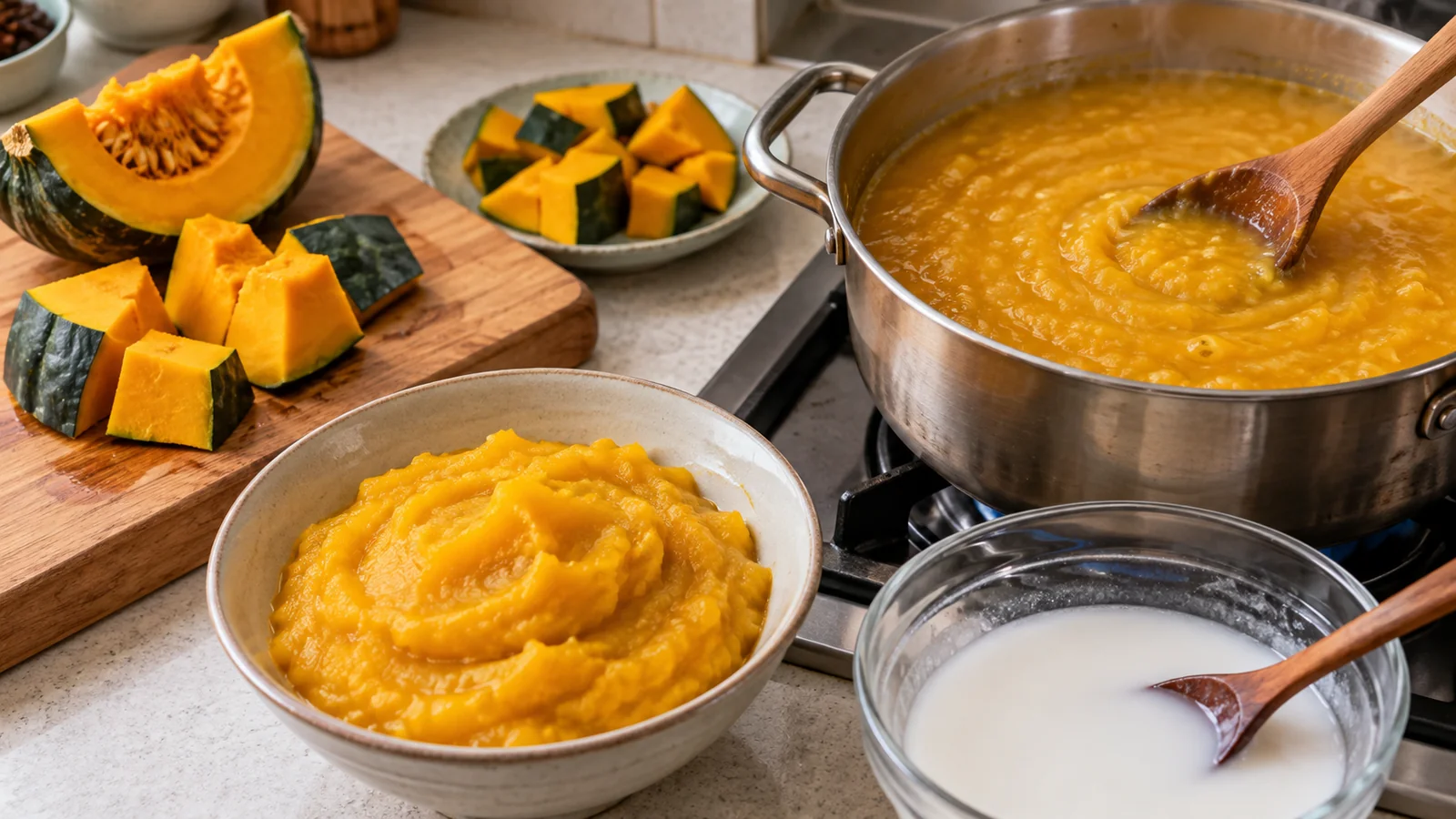
Cooked pumpkin can be mashed for a rustic texture or pressed through a sieve for a smoother one. In the preparation image, cut pumpkin, cooked mash and a pot of simmering puree show the stages before serving. A small mixture of glutinous rice flour can thicken the porridge as it cooks; it should be mixed smoothly and added gradually so dry lumps do not remain. Follow a tested recipe or product directions for quantities, because squash water content varies.
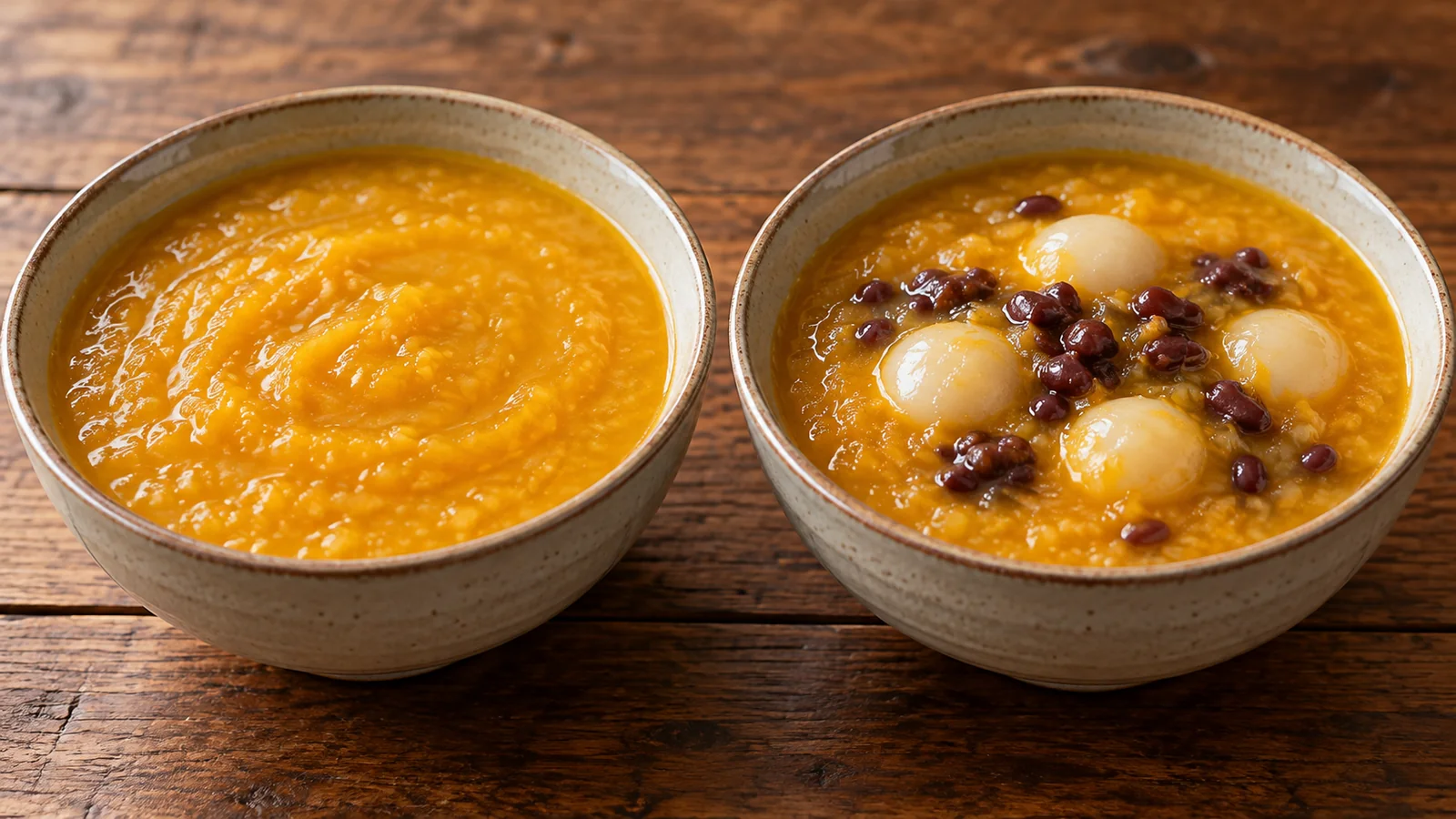
The two-bowl photograph compares plain smooth hobakjuk with a version topped with small rice-cake balls and beans. Chewy balls change how the bowl eats, while beans add distinct pieces and flavor. Their presence is a choice, not proof that one bowl is more authentic. If you prefer a completely smooth spoonful, ask for a version without pieces; if you want contrast, ask what toppings are actually included.
How can you make a basic bowl at home?
- Prepare and cook the squash. Use edible pumpkin or squash and follow safe cutting and preparation directions for the variety. Remove inedible parts, cook the flesh until it is soft, then mash or sieve it to the texture you want.
- Build the porridge. Warm the puree with enough water for stirring. Mix glutinous-rice flour with cool liquid separately before adding it a little at a time, stirring so it disperses; simmer until the flour is fully cooked and the mixture coats a spoon.
- Adjust and finish. Taste before adding sugar or salt, because the squash and any toppings may already be sweet. Cook optional rice-cake balls or beans according to their own directions and add only when ready. Serve at a temperature that is comfortable to eat.
Start with a small batch rather than a universal pumpkin-to-water ratio. If the porridge becomes too thick, add a little hot water and stir; if too thin, keep simmering gently and check again before adding more thickener. Stir along the pot bottom because a thick puree can catch there. If lumps of flour remain, do not hide them under toppings: break them up and cook the mixture through. The result should be soft and spoonable, with a thickness you can adjust.
Is hobakjuk always sweet, and when is it served?
Pumpkin itself contributes sweetness, and cooks can add sugar or other sweeteners, so the finished bowl ranges from mildly sweet to dessert-like. The Korea Tourism Organization notes appetizer and dessert uses. Portions may differ when it is a starter, snack or fuller bowl. Taste and menu description matter more than assuming that the yellow color tells you how much sugar is present.
If a restaurant lists hobakjuk beside other porridge meals, ask whether it comes plain or with rice balls, beans or nuts. A smooth portion may feel light, but it is not a medical treatment; suitability for a person's illness or diet requires separate professional advice. For everyday eating, choose by serving size, sweetness and texture, and let a very hot bowl cool before tasting it.
What should you check when buying and storing it?
Check the actual rice thickener and toppings if you need to avoid glutinous rice, beans, nuts or other ingredients. A packaged bowl may include added sugar or milk even if a basic pumpkin-and-rice version does not. Read its ingredient list, and ask a restaurant about the recipe and shared equipment when important. The name hobakjuk alone does not give a reliable allergen list.
Follow the package or seller's storage and reheating instructions for cooked porridge. For leftovers, consider all added rice balls, beans and dairy as well as the pumpkin base; their handling conditions may differ. Reheat gently while stirring so the thick mixture warms throughout without sticking, following applicable food guidance. Do not use color, sweetness or a newly smooth texture as the sole test of safe storage.