Korean Food / Deodeok-Gui: Grilled Root, Sauce and Texture
Deodeok-gui is Korean grilled deodeok root, usually flattened, coated with a red chili paste sauce and cooked gently until the surface is browned. The root stays pleasantly fibrous and chewy rather than turning into meat; sesame oil and the glaze add nutty, spicy and savory notes. To choose or make it, pay attention to the root preparation, the sweetness and heat of the sauce, and how strongly it is grilled.
What is deodeok-gui made from?
The Korea Tourism Organization's grilled-deodeok entry describes deodeok as a root that is pounded, brushed with a red chili paste sauce and grilled slowly over low heat. It notes the root's own distinctive flavor together with the sauce and sesame oil. The dish is a grilled vegetable side, not a meat dish, even when someone compares its chewiness to meat.
The root is the center of the dish. A thick coating can make different ingredients look similar, so look for long, split, fibrous root pieces beneath the red glaze. Deodeok-gui differs from a plain grilled root because the seasoning is part of the usual serving; restaurants may adjust the amount of chili paste, sweetener or oil. Ask what is in the actual glaze if an ingredient matters to you.
Why split and pound the root before grilling?
For a home version, use deodeok sold as food, wash and peel it according to the seller's directions, then split thick pieces lengthwise. Press or pound them gently so the root opens into a flatter piece without becoming shreds. This gives the surface more contact with the pan and makes it easier to spread a thin layer of sauce. The preparation photograph shows a split root and its fibers before it is coated.
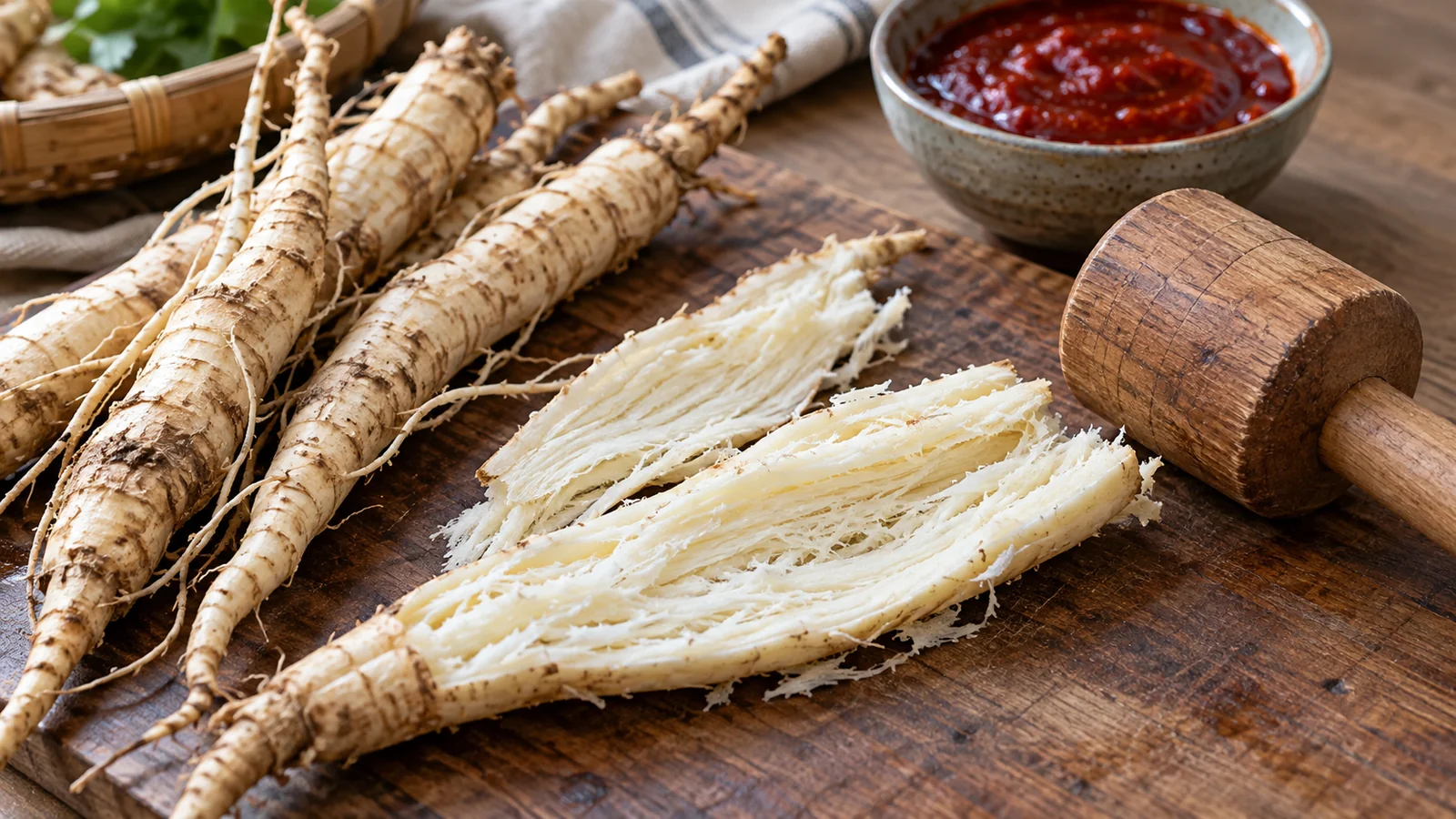
Keep pieces fairly similar in thickness so they cook at a comparable pace. If a root is very tough or uneven, make a small trial piece before coating the entire batch. The purpose of pounding is to soften and flatten the structure, not to remove every bit of chew. Raw deodeok and a prepared glazed side dish can have very different aromas, so judge the finished taste only after cooking.
How can you grill it without burning the sauce?
- Prepare the pan and root. Warm a lightly oiled pan over modest heat, then lay the flattened pieces in a single layer. Let the root begin to cook before adding a heavy coating that could scorch.
- Brush on a thin glaze. Mix a red chili paste sauce suited to your taste, checking the paste's ingredient list. Brush on a little at a time; a thick sugary layer can darken before the root is ready.
- Turn gently and finish. Grill slowly, turning with a spatula when a side releases, and add a little more glaze if needed. Stop when the root is hot through and the surface has browned without blackening.
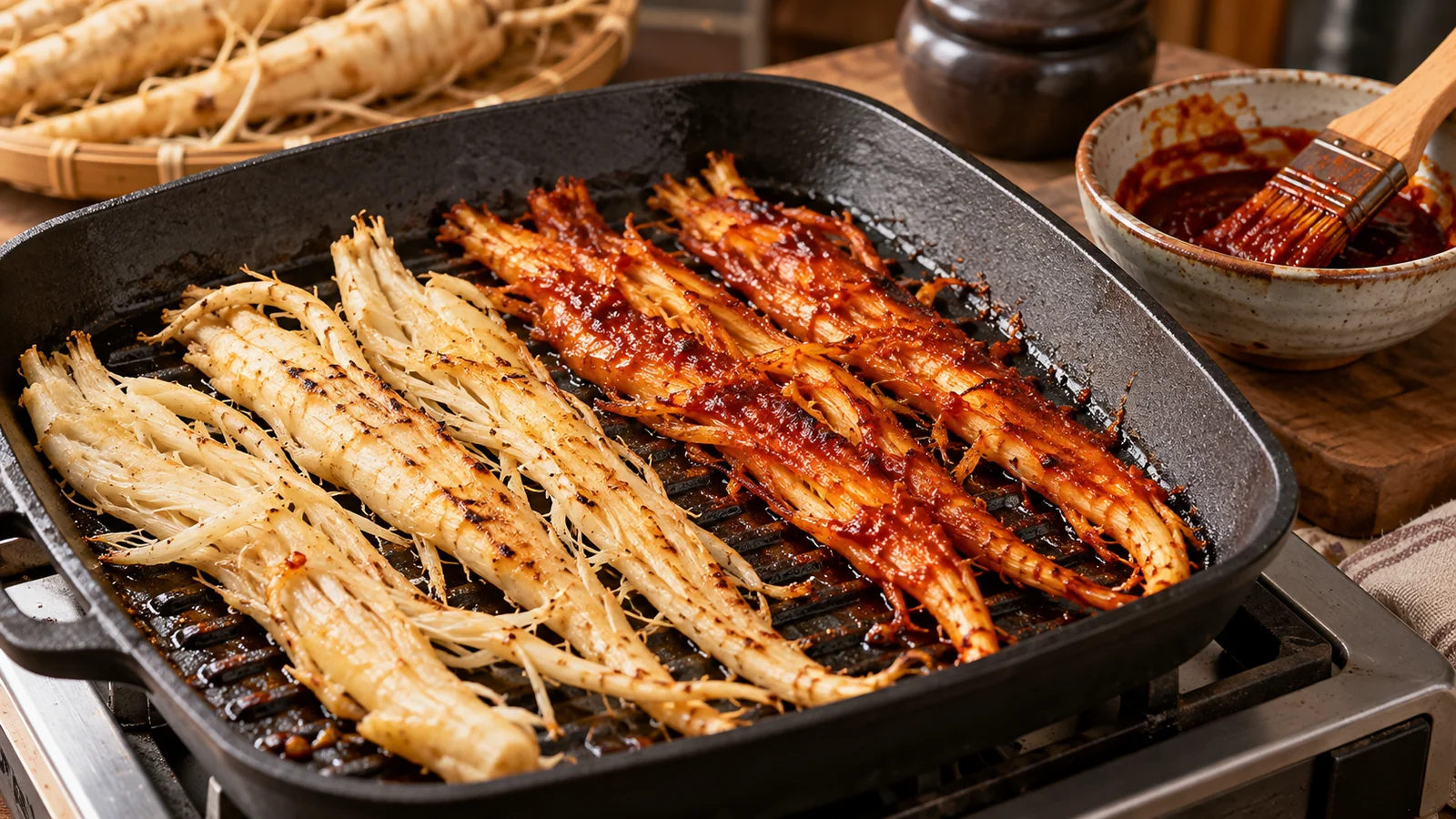
The grilling photograph shows pale pieces and newly coated pieces together so you can see the change. Exact minutes depend on root thickness, pan and sauce, and the official description specifies low heat rather than a universal cooking time. If the glaze chars quickly, lower the heat and use less sauce on the next piece. If the center still feels very firm, flatten a little more and cook gently for longer rather than raising the heat sharply.
What does it taste like, and how is it served?
Deodeok has a recognizable earthy, aromatic root flavor and a fibrous bite. Chili paste adds heat and often sweetness, while sesame oil adds a toasted, nutty note. The balance varies by cook: some plates taste mainly of the root, others mainly of the sauce. Try a small section with rice if you want to notice the seasoning without eating a whole strongly flavored piece at once.
The tourism organization's entry describes deodeok-gui as a side dish. A listed restaurant's deodeok set meal illustrates how it can be offered with rice and other vegetable dishes. A menu may sell it as an individual side or part of a set, so check whether rice and accompanying dishes are included instead of assuming the grilled roots are a complete meal.
What should you check when ordering or storing it?
Ask whether the sauce is spicy, whether it contains soy, sesame or other ingredients you need to avoid, and whether the dish is cooked alongside meat or fish if that matters to your diet. The root itself is plant-based, but the exact sauce and kitchen practice are restaurant-specific. If you prefer to recognize the root's own flavor, ask whether a less heavily coated version is available.
For a packaged side dish, follow its storage and reheating directions. For restaurant leftovers, ask the seller how they should be kept; the glaze can soften or darken during storage and reheating. Warm gently to avoid scorching the sauce, and do not use appearance or chewiness alone as proof that a leftover has been stored safely.