Japanese Food / Ramen: Shoyu, Miso and Tonkotsu Explained and How to Order
Japanese ramen is a noodle dish made with wheat noodles in a seasoned broth, often topped with meat, egg and scallions. Shoyu, shio and miso primarily describe seasonings, while tonkotsu describes a pork-bone stock, so these categories can overlap in the same bowl. Choose by considering the broth ingredients, richness, noodle texture and toppings together.
What is Japanese ramen?
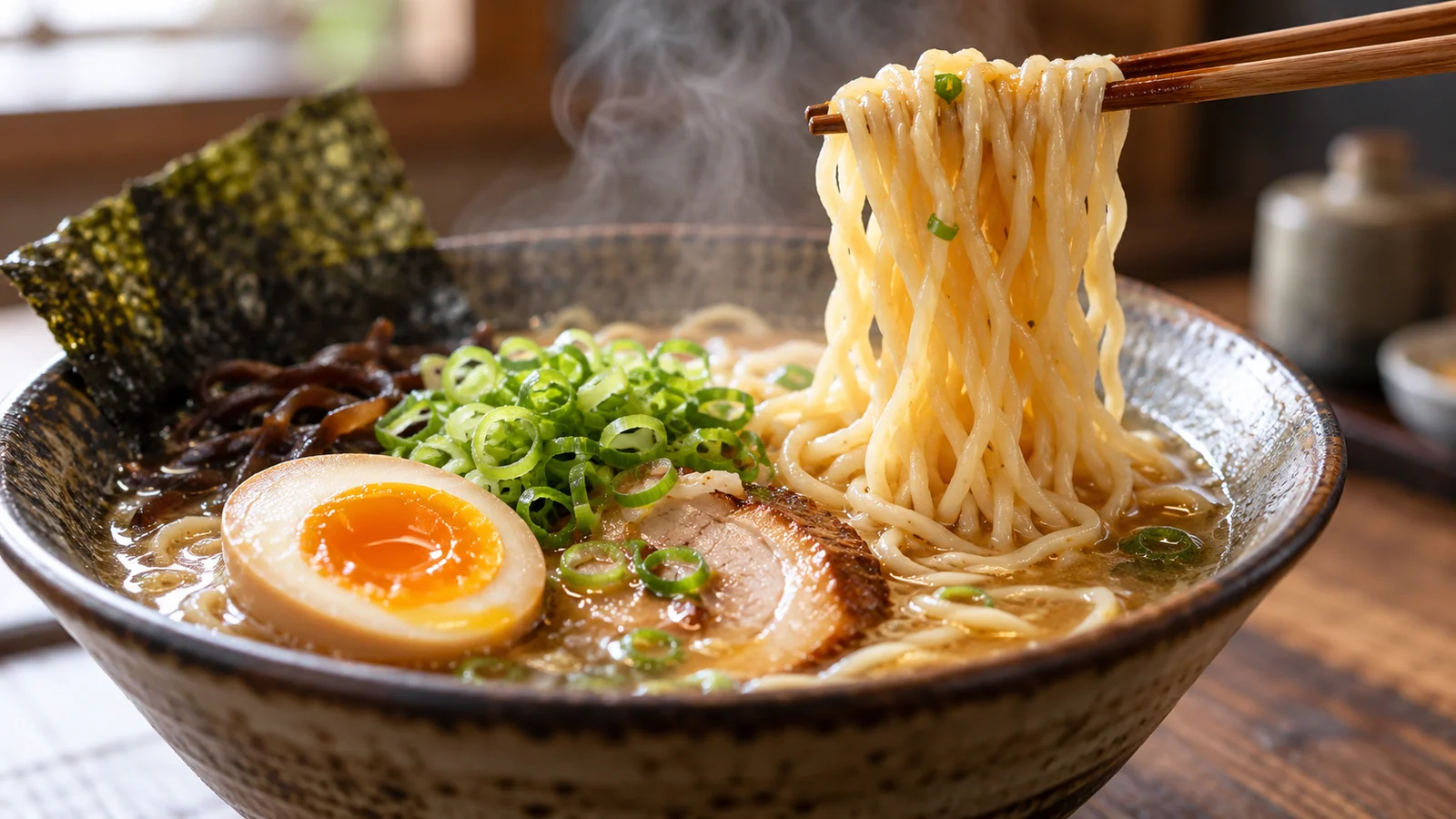
Ramen developed in Japan from Chinese-style wheat noodles into many regional soup dishes. The noodles generally use wheat flour and kansui, an alkaline solution that contributes to their springy texture. Broth may be made from pork or chicken bones, fish and seafood, vegetables, or a combination; seasoning is added to give it its flavor.
According to the Japan National Tourism Organization’s ramen guide, broth and seasoning combinations, noodle thickness and toppings differ by region and restaurant. Bowls with the same name can taste different, so read the menu description too.
How do shoyu, shio, miso and tonkotsu differ?
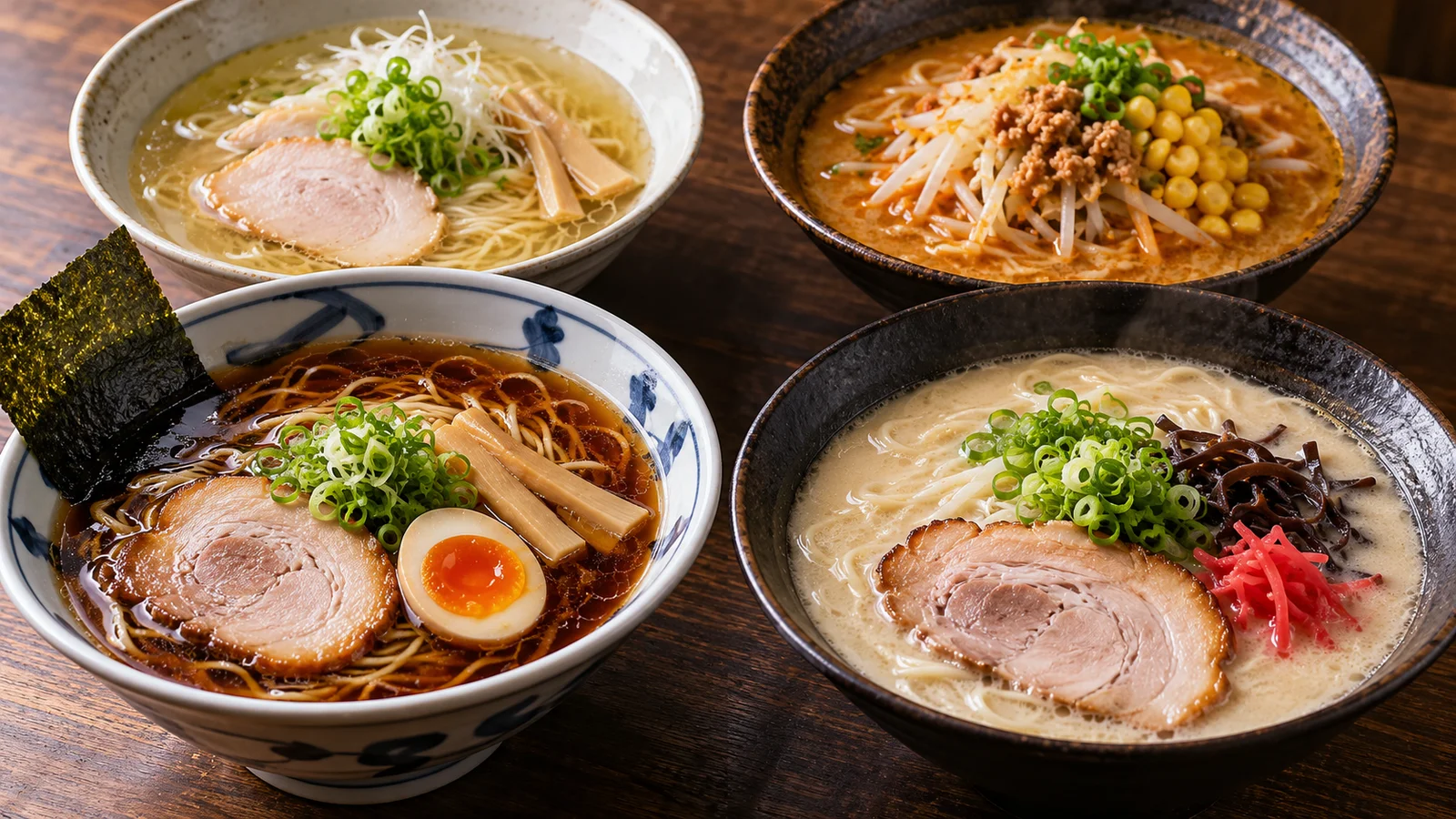
Shoyu, shio and miso chiefly name the seasoning, whereas tonkotsu identifies the stock ingredient. A pork-bone stock can therefore be seasoned with miso or soy sauce. Treating the four names as four mutually exclusive broth bases can be misleading.
- Shoyu: seasoned with soy sauce. Color and flavor vary with the stock, which may contain chicken, pork or fish.
- Shio: seasoned with salt. The soup is often clear, but color alone does not reveal its ingredients or intensity.
- Miso: seasoned with miso, a Japanese fermented soybean paste. It can taste savory and nutty, though richness and ingredients vary.
- Tonkotsu: made with pork-bone stock. A cloudy, rich broth is common, but seasoning and concentration differ between shops.
Broth color is a clue rather than an ingredient list. The tourism organization’s guide to ramen styles also distinguishes the three seasoning names from the pork-bone stock name.
What noodles and toppings are used?
Ramen noodles range from thin and straight to thick and wavy. Some shops let you choose firmness. If you prefer firm noodles, check the available options; ordering the standard preparation first gives you a reference. Thick noodles may pair with a rich broth, but that is not a rule for every shop.
Chashu is seasoned cooked meat, commonly pork in ramen. Other toppings may include a soft-boiled or seasoned egg, menma (fermented and processed bamboo shoots), nori seaweed, scallions, bean sprouts or corn. Toppings can cost extra and a photograph may not match the exact set, so check before ordering.
What should you check before ordering?
- Consider stock and seasoning together. Even soy-sauce ramen may use pork or chicken stock. If you want a lighter soup, read the description or ask staff rather than judging by color alone.
- Choose noodles and portion size. Ask whether thickness or firmness can be selected and how large the standard portion is. Some shops, including those serving Hakata-style ramen, offer kaedama: extra noodles for the remaining broth. It is not available everywhere.
- Check toppings and charges. Find out whether egg or chashu is included or costs extra. At some shops you select and pay at a ticket machine, then hand the ticket to staff; procedures vary.
- Explain allergies and dietary restrictions. Noodles may contain wheat; broth and seasonings can contain soy, fish or shellfish, and egg or meat may be toppings. Ask about cross-contact from shared utensils if relevant.
How do you eat ramen?
Try a little broth first, then eat the noodles with the toppings. Both bowl and soup can be hot, so allow them to cool as needed. Use chopsticks for the noodles and the spoon provided for the broth. Slurping is common in Japan, but it is not a rule you must follow.
Taste the original broth before adding garlic, chili or other seasonings a little at a time. You do not have to finish the soup; leaving it is also an option if you need to limit salty foods. The tourism organization’s dining guide likewise notes that leaving broth is acceptable.
What if you avoid certain ingredients or eat vegetarian?
Even if no meat is visible or a bowl is called shio or shoyu, its stock may contain pork, chicken, fish or shellfish. Noodles or toppings may also contain egg. If you need a vegetarian meal, check the stock, seasoning, noodles and toppings separately, and ask about shared equipment if necessary.
If you avoid pork, alcohol or another ingredient, ask the restaurant directly rather than relying on the menu name. With a food allergy, even a small amount of cross-contact may matter, so explain the specific ingredient and ask how the food is prepared before ordering.