Korean Food / Jjamppong: Ingredients, Broth Types and How to Order
Jjamppong is a Korean-Chinese noodle dish usually served with vegetables and seafood in a hot, spicy broth. Meat and meat-based stock may also be used, so a seafood topping does not tell you everything in the bowl. To choose a serving, check whether you want soup or stir-fried noodles, how much chili heat you enjoy, and which ingredients the restaurant actually uses.
What goes into a bowl of jjamppong?
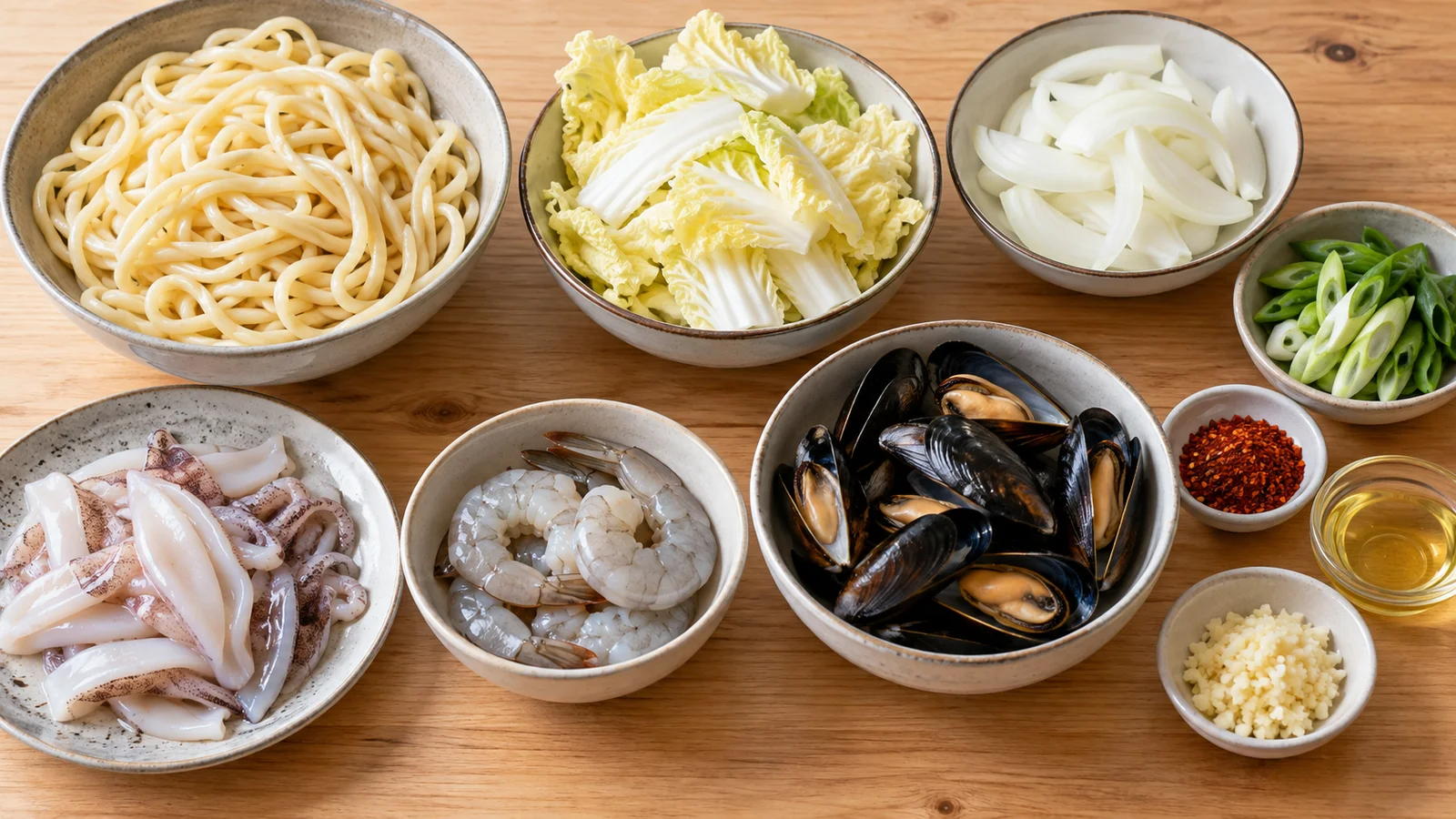
Thick wheat noodles, cabbage, onion and seafood such as squid, mussels or shrimp are a familiar combination. Pork or other meat may be added, and broth can use different animal or seafood bases. The Korea Tourism Organization's jjamppong introduction describes vegetables, seafood and pork cooked with chicken or pork-bone broth. That is an example, rather than a fixed formula every restaurant must follow.
Each component does a different job. Noodles provide a substantial, springy bite; cabbage and onion contribute sweetness and texture; seafood and broth contribute savory aromas. Red chili seasoning adds heat, while oil carries aroma and can leave a red sheen on the surface. A photograph of possible ingredients cannot establish a particular restaurant's recipe or the contents of a packaged product.
Why does it taste different from simply boiling noodles in broth?
A common preparation begins by stir-frying ingredients, then adding broth and combining the cooked soup with noodles. The frying stage gives vegetables and seasonings a different character from ingredients simmered throughout in a pot. Some versions have a noticeable wok aroma, but its intensity varies; it is not a quality score that every bowl must maximize.
When tasting, separate several impressions: chili heat, the savory character of the stock, seafood aroma, vegetable sweetness and the amount of oil. A richer broth is not necessarily hotter. Likewise, a strong seafood aroma does not establish how much seafood is present or whether meat stock was used. Describing the feature you enjoy is more useful than asking only for a "strong" soup.
Regular, white, oyster and stir-fried jjamppong
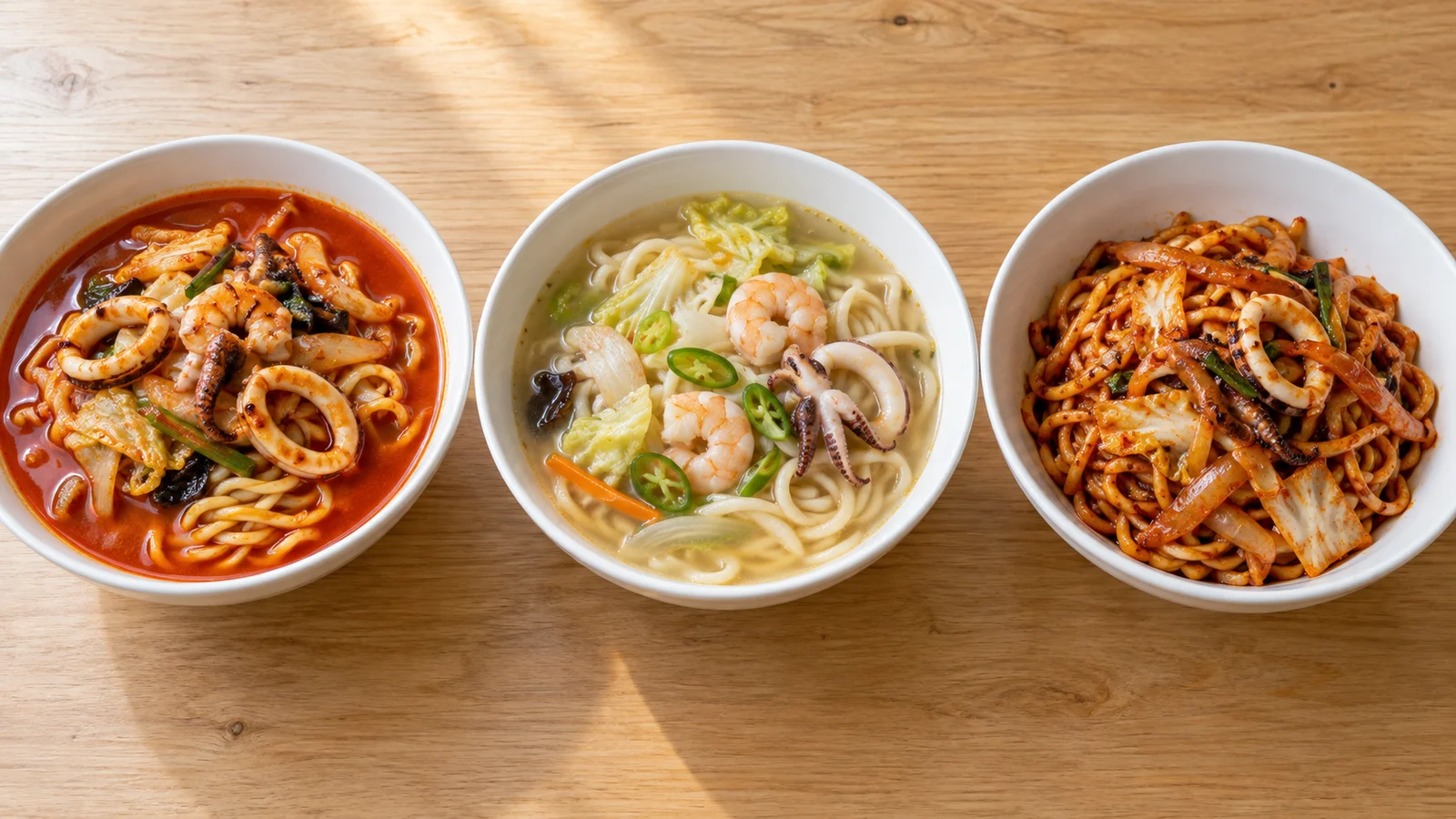
- Regular red jjamppong: a familiar choice when you want noodles in chili-seasoned soup. Spiciness and toppings vary, so the name alone does not set a heat level.
- Baek jjamppong: a pale-broth version. Pale does not mean chili-free: fresh chilies or pepper may still give it heat. Ask about the actual seasoning if you need a mild bowl.
- Gul jjamppong: jjamppong with oysters. Red and pale versions both exist; the oyster name identifies an ingredient rather than one universal soup color.
- Bokkeum jjamppong: stir-fried noodles with ingredients and seasoning coating the noodles, rather than a bowl of abundant soup. Choose it for that format, not as a promise of lower spiciness.
The Korea Tourism Organization's oyster jjamppong guide describes red and white versions. Its stir-fried jjamppong guide explains the contrast between seasoning that coats noodles and seasoning dispersed in soup. These differences help you interpret a menu without assuming all restaurants cook alike.
A white soup can be quite spicy. For example, the Seoul Tourism Organization's Haenghwachon introduction describes a spicy white seafood noodle soup. Treat color as a clue to appearance, then ask separately about chili heat and ingredients.
How does it compare with jajangmyeon and jjamppong bap?
Jajangmyeon is noodles mixed with dark chunjang-based sauce; regular jjamppong is noodles in broth. If you want to taste soup between bites, jjamppong fits that preference. If you prefer sauce clinging to noodles, compare jajangmyeon with stir-fried jjamppong, then choose between their different seasoning flavors. Do not decide that a dark sauce is automatically free of spicy ingredients.
Jjamppong bap is the rice option. Before ordering, ask whether rice comes separately or already in the soup, and whether any noodles are included. Replacing noodles with rice does not automatically change the broth, toppings or seasonings. It therefore does not, by itself, establish suitability for a wheat restriction or another dietary requirement.
What should you ask before ordering?
- Choose the format. Ask for soup noodles, stir-fried noodles or the rice option. If a menu photograph is unclear, ask whether the finished dish has plenty of broth.
- Check the heat level before cooking. Ask whether the kitchen can reduce chili seasoning and whether fresh chilies are included. A request may not be possible when the base is prepared in advance; choose another dish if the available version does not suit you.
- Ask about the stock and seasonings as well as toppings. For example: "Does the broth contain pork or chicken?" or "Is shrimp used in the seasoning?" Removing visible seafood after cooking does not remove ingredients already incorporated into the soup.
- Confirm portion and accompaniments. Check whether the menu price covers one serving, whether rice is extra and how large a shared side dish is. Start with a manageable order rather than assuming every set menu is sized for the same number of people.
If an ingredient allergy is involved, discuss the ingredients and possible cross-contact from shared equipment with the restaurant. If staff cannot confirm what is used, appearance and menu names are not enough to decide. For a packaged jjamppong product, read its own ingredient, allergen and preparation information rather than applying a restaurant description to it.
How can you enjoy the noodles and broth?
First taste a small spoonful after allowing it to cool enough. Hot soup and chili heat are separate sensations; taking a large mouthful immediately makes both harder to judge. Lift a manageable portion of noodles with chopsticks or a fork, and alternate it with vegetables and toppings instead of trying to lift everything at once.
When shell-on seafood is present, separate the edible portion carefully and put shells on a side plate rather than biting through them or leaving them hidden among noodles. For a large squid piece, ask for scissors or cutlery if needed. There is no requirement to finish every drop of soup; choose the amount that suits your appetite and seasoning preference.
For takeout, ask whether noodles and soup can be packed separately and follow the seller's handling instructions. Noodles left in liquid can soften during transport, so separation helps preserve texture; it does not replace appropriate temperature control. If reheating is needed, use the product's or seller's instructions and combine the components when ready to eat rather than relying on the food name to set a universal reheating time.