Korean Food / What Is Jajangmyeon? Chunjang Sauce, Ganjajang, and Noodle Choices
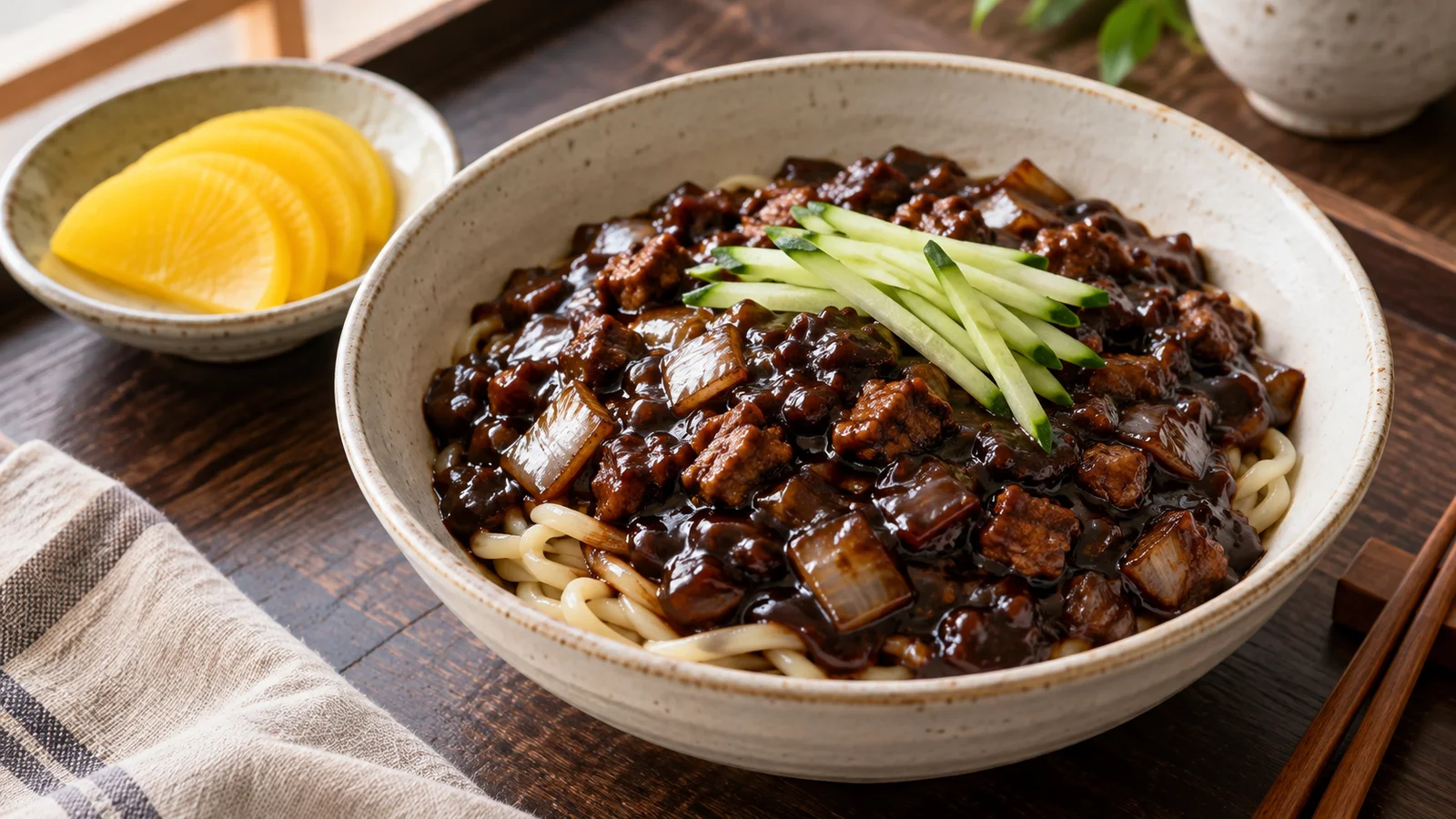
Jajangmyeon is a Korean-Chinese noodle dish served with sauce based on chunjang, a dark fermented paste. Onion, meat, and seasoning give the glossy sauce a savory, salty-sweet character. Begin by comparing the standard bowl with ganjajang, a stir-fried style often served with its sauce separately.
What does Korean-Chinese mean here?
The dish developed from Chinese noodle traditions and changed within Korean food and restaurant culture. Recognizing both the Chinese influence and its place in Korean eating gives a more accurate account than treating it as identical to every Chinese noodle dish.
The Korea Tourism Organization’s food guide introduces jajangmyeon as Korean-Chinese cuisine and discusses Incheon Chinatown and different sauce styles. Incheon offers places connected with its background, but the dish is served far beyond that city. A particular restaurant’s history is also separate from the recipe of every bowl.
What are the sauce and noodles like?
Chunjang is the dark paste at the base of the sauce. It is cooked with oil and ingredients such as onions and meat; the use of water and starch depends on the version. Its sweetness, saltiness, and richness coat the wheat noodles.
The color does not mean chocolate flavor or necessarily intense chili heat. Spicy versions such as sacheon jajang exist, however, so the name does not guarantee mildness. Meat, seafood, and garnishes such as cucumber vary by menu.
Choose ganjajang, yuni, or samseon by what changes
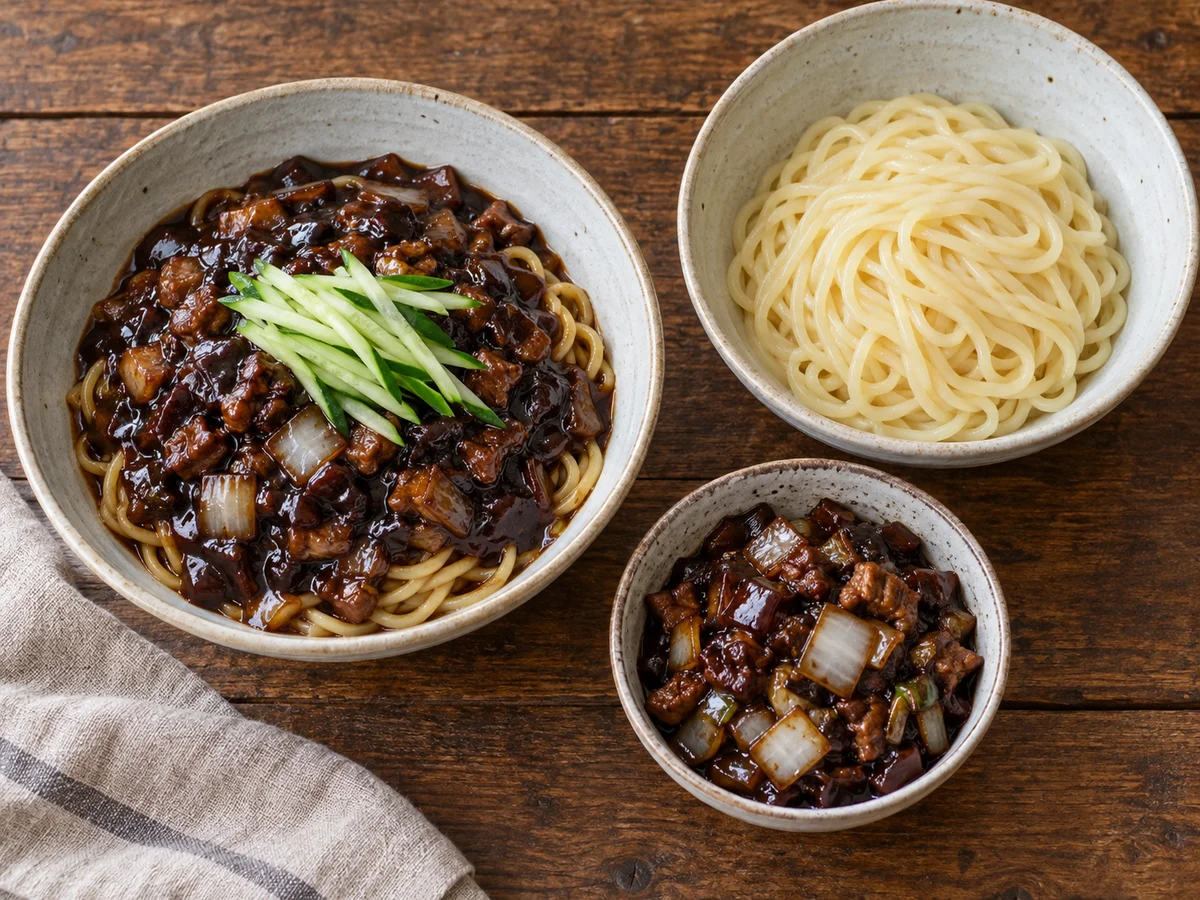
Separate sauce preparation, ingredient size, and seafood content. Ganjajang emphasizes stir-fried paste and distinct onion or meat pieces; yuni emphasizes a more even texture from finely minced ingredients; samseon draws attention to seafood. The names offer clues to the change rather than merely indicating a higher-priced version of identical sauce.
| Menu | Main comparison |
|---|---|
| Standard jajang | Sauce consistency and ingredients mixed through the noodles |
| Ganjajang | Stir-fried sauce, distinct pieces, and separate serving |
| Yuni jajang | Fine, evenly distributed minced ingredients |
| Samseon jajang | The seafood actually included |
Separate sauce alone does not prove ganjajang: other versions can be packed or served that way. Check diner count for a jaengban platter and chili for variants such as sacheon jajang. Unlike the glass noodles of japchae, familiar jajangmyeon centers on wheat noodles and chunjang sauce. The noodle material and sauce matter more than simply grouping both as noodle dishes.
How do you mix and eat it?
Lift small bundles of noodles so the sauce reaches the lower strands. If the sauce is separate, add part first and decide whether you want more. Small movements within the bowl help prevent splashes from vigorous mixing.
Yellow pickled radish and raw onion can be eaten alongside the noodles. Vinegar and chili powder are optional additions; taste the original sauce before changing it. An egg garnish is not universal, even if it appears in a menu photograph.
What should you check when ordering?
Choose between a standard sauce, ganjajang, seafood, or a spicy version. If ordering tangsuyuk or dumplings too, consider noodle portions and shared-dish sizes. A split bowl combining jajangmyeon and jjamppong is available at some restaurants, not every one.
Soy and wheat may occur in the paste and noodles, while pork, seafood, animal fat, or stock may be used in the sauce. The absence of obvious meat pieces does not establish a vegetarian dish. Ask about sauce, broth, and cooking fat when dietary restrictions matter.