Korean Food / What Is Patbingsu? Red Beans, Shaved Ice, Milk Bases, and Toppings
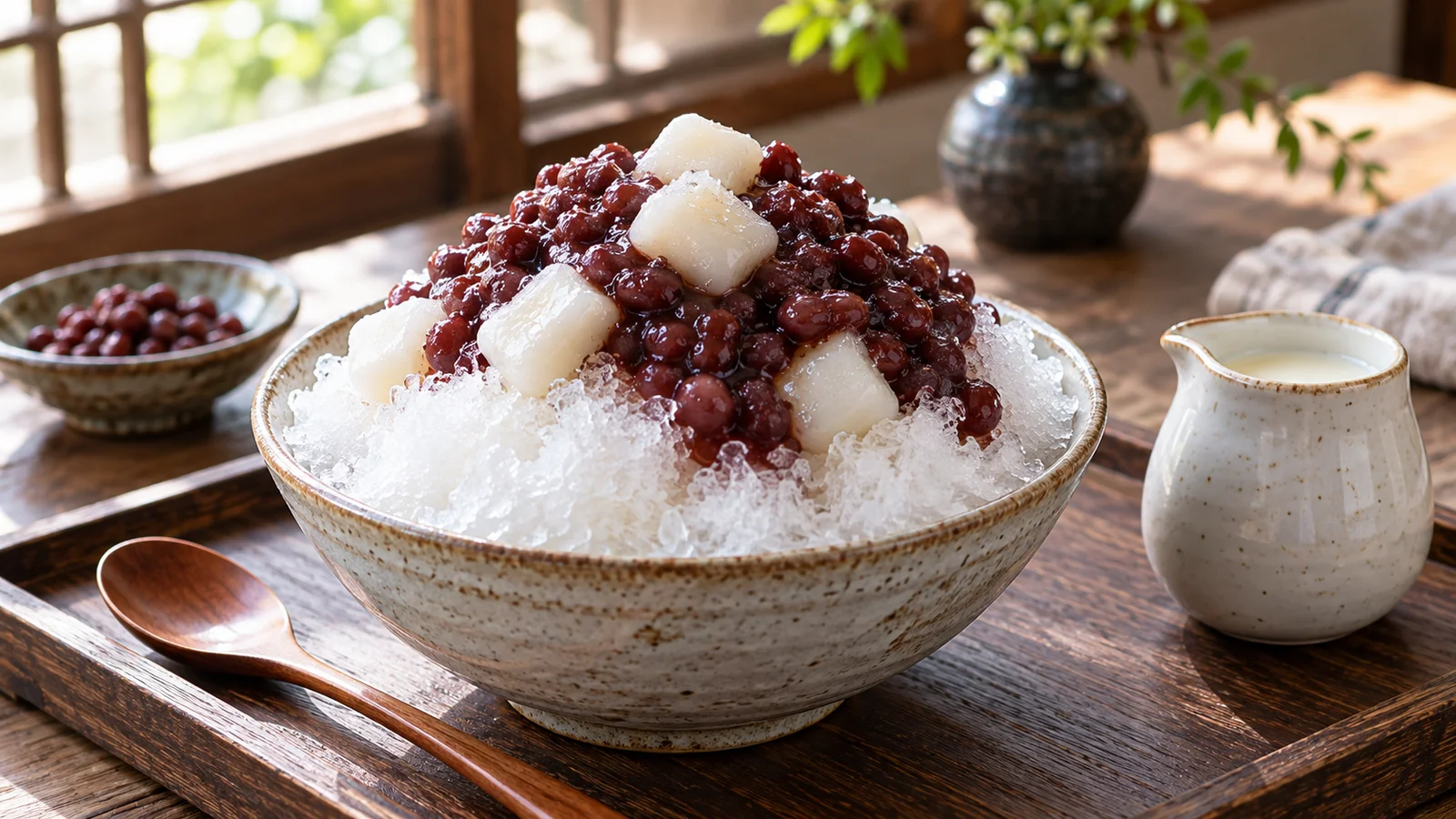
Patbingsu is a Korean cold dessert built around finely shaved ice and sweet cooked red beans, often with rice cakes or milk. It combines the beans’ sweetness with the ice’s cold texture. Bingsu is the broader category, so a fruit or milk bingsu does not necessarily include red beans.
What do the beans, ice, and rice cakes contribute?
The sweetened cooked red beans may retain whole pieces or have a smoother paste-like texture. Ice forms the cold base and rice cakes add chew. The Korea Tourism Organization’s food guide describes shaved ice with cooked beans and rice cakes; milk or condensed milk may add richness and sweetness.
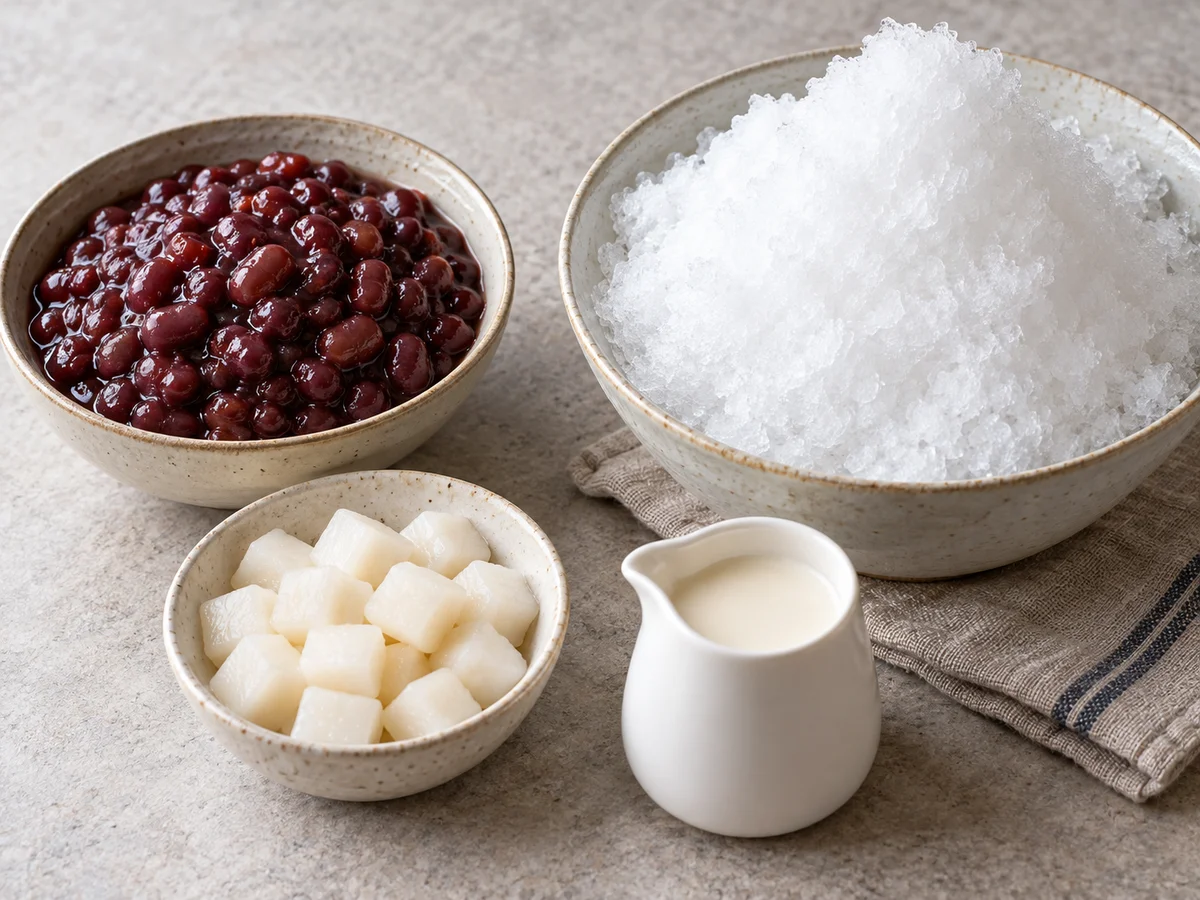
Nuts, fruit, ice cream, and every other topping are not all required. A simple bowl makes the beans and ice easier to distinguish, while a more elaborate one offers different combinations in each spoonful. Choose from the actual ingredients rather than treating one photograph as the standard.
Water ice or milk-based ice?
Shaving water-based ice and adding milk is different from shaving a frozen milk-containing base. Water ice can let the bean and sauce flavors stand out more directly; a milk base brings its own richness and possibly sweetness.
Names suggesting snow-like texture describe fineness, not a complete ingredient list. A bowl that appears to use water ice may still receive milk or condensed milk, and toppings have their own ingredients. To avoid dairy, check the base and toppings separately.
How do different bingsu names compare?
Patbingsu identifies red beans as a central ingredient. Milk bingsu emphasizes milk in the base or arrangement, while fruit bingsu emphasizes fruit such as mango or strawberry. The categories overlap: a milk-ice bowl topped with red beans can still be patbingsu.
Injeolmi versions may emphasize soybean powder and chewy rice cakes, while fruit versions emphasize their fruit and sauce. Neither name establishes whether beans are included. If you want beans, ask; if you prefer less added sweetness, ask whether syrup or condensed milk can come separately.
Taste beans, ice, rice cakes, and sauces separately
Sweetness may come from several places: sweetened beans, a milk-containing ice base, condensed milk, or syrup. For less sweetness, ask about the base and separate sauces rather than only requesting fewer beans. Removing toppings does not change a base that was already sweetened before freezing.
Try a little bean and ice separately, then together. Mixing the entire bowl distributes sweetness but makes individual bean and ice textures less distinct. You can mix one small area first and leave the rest intact to compare both approaches in the same bowl.
Rice cakes add chew distinct from the ice. As ice melts, concentration and texture change, so add separate condensed milk or beans gradually and taste again. When sharing, individual bowls allow different proportions for different diners. There is no requirement for everyone to mix the entire dessert in the same way.
What should you check before ordering?
Find out whether the bowl is individual or intended for sharing, and which beans, milk, or condensed milk are included. Extra toppings change price and portion. If it follows a meal, consider how much dessert your group wants.
Check dairy, soybean powder, nuts, and rice-cake ingredients according to the actual menu. Ice does not mean a dessert is dairy-free or sugar-free. Takeaway changes texture as the ice melts, so consider travel time and the seller’s packing and storage guidance. A simple bean-centered bowl is a useful starting point for comparing your preferences.