Korean Food / Eomuk: Fish Cake Shapes, Broth and Ways to Eat It
Eomuk is Korean fish cake made from ground fish, shaped and cooked in several forms. It may be served on a skewer in hot broth, stir-fried as a side dish, or added to tteokbokki. For a first taste, choose the broth version to notice the fish cake's springy texture and the flavor of the soup separately.
What is in eomuk?
The Korea Tourism Organization's fish cake entry describes eomuk as a fish cake used in soup and other dishes. Fish flesh is ground into a paste and shaped; recipes may include flour or starch and seasonings. The tourism organization's street-food feature gives an example made with white fish and flour, while noting that some Busan shops make fish-only versions. Neither description defines every product on sale.
Do not assume that all eomuk is made from one fish species, contains the same amount of fish, or is free of wheat. A packaged product's ingredient and allergen label is the best place to check its actual composition. At a stall or restaurant, ask staff when an ingredient matters to you; the name eomuk alone does not answer an allergy question.
Why do shape and thickness matter?
Thin rectangular sheets fold easily around a skewer and warm through in broth. Thicker rolls, balls and filled pieces give a different bite and may need different preparation. The photograph compares common-looking shapes so you can distinguish a sheet from a thicker piece; it does not represent a fixed set of standardized varieties.
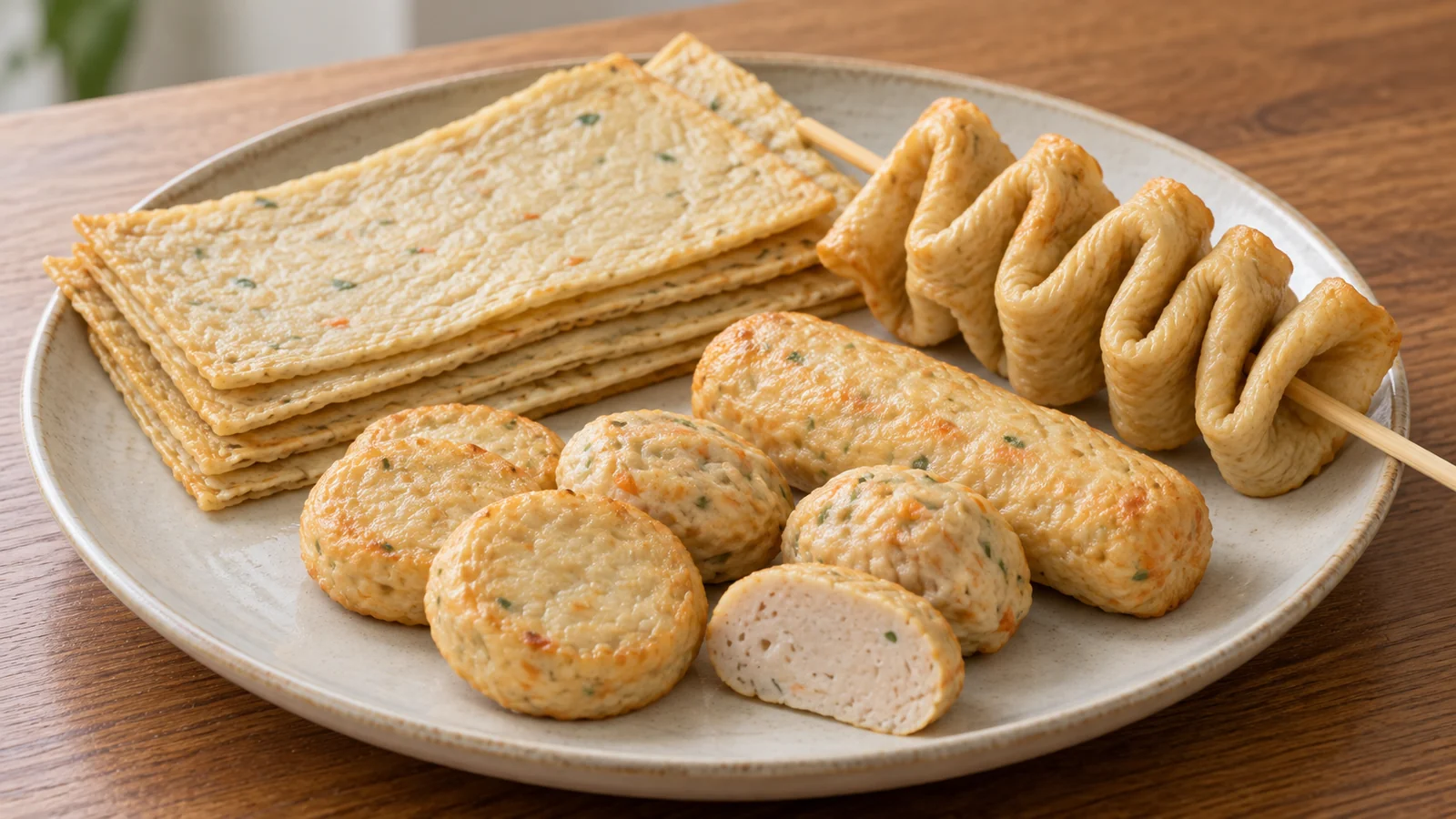
When buying a package, look at the cut or shape specified by the maker and its cooking directions. A thick piece should not be treated as if it heats through exactly like a thin sheet. At a food stall, you can point to the piece you want and ask whether its filling or seasoning differs from the plain one.
How is eomuk served on the street?
A familiar street version folds a sheet onto a wooden skewer and keeps it in hot broth. The Korea Tourism Organization describes skewers simmered in anchovy-and-radish broth; the seasoning and garnish can vary by seller. The fish cake becomes soft and springy in the liquid, while the broth offers a savory taste of its own.
Lift the skewer carefully and let the fish cake cool enough before taking a bite. Sip the broth separately if the stall offers it; its saltiness and heat need not match the fish cake. Ask before adding soy or chili sauce, because a heavily seasoned dip can obscure the plain taste you are trying to compare.
What changes in soup, stir-fry and tteokbokki?
- Eomuk soup: fish cake stays in broth and takes up some of its flavor. Radish or other vegetables may join it, but the recipe is not identical everywhere.
- Stir-fried eomuk: cut pieces are heated with vegetables and a savory or spicy seasoning. This is a side dish with a firmer, less broth-soaked bite.
- Eomuk in tteokbokki: pieces share the sauce with cylindrical rice cakes. It is one ingredient of the dish, not another name for the rice cakes themselves.
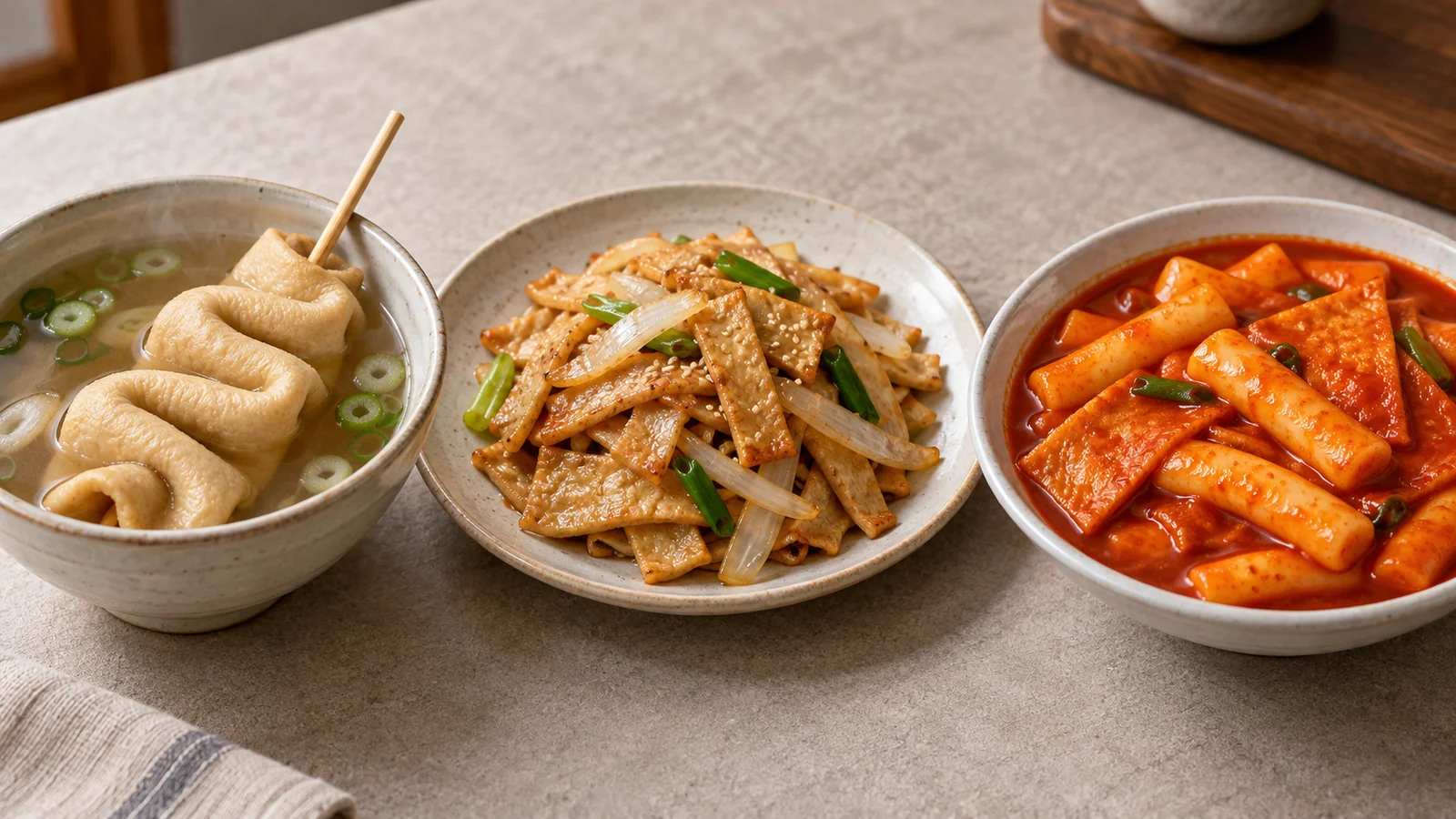
The tourism organization's street-food comparison describes eomuk skewers with hot soup and eomuk alongside the rice cakes in tteokbokki. Our tteokbokki guide explains how its rice cake and sauce differ from a bowl of fish cake soup. Choose soup for a mild broth-centered snack, a stir-fry for a seasoned side dish, or tteokbokki when you want its rice cake and sauce as well.
How do you order or buy the version you want?
- Choose the dish before the shape. Ask for an eomuk skewer or soup if you want broth, or check whether a packaged fish cake is intended for soup, stir-frying or another preparation.
- Check the actual piece and seasoning. A plain sheet, filled roll and spicy red version need not taste alike. Ask whether the price is per skewer, bowl or portion rather than inferring it from the display.
- Confirm ingredients when needed. For allergies or dietary restrictions, inspect the package label or ask about the fish, flour, egg and other ingredients in the fish cake, broth and sauce. Shared cooking equipment may also matter.
Busan is especially associated with eomuk, and the tourism organization's Busan food feature describes its local fish cake tradition. “Busan eomuk” can help you look for regional styles, but it does not by itself guarantee a particular recipe, fish percentage or texture. Compare the specific item rather than relying only on a regional label.
How should prepared or leftover eomuk be handled?
For a packaged product, follow its printed storage and cooking instructions, including the use-by information and whether it needs refrigeration or freezing. Products differ in processing and packaging, so a single storage rule is not reliable for every eomuk. Keep soup and fish cake under the seller's food-handling guidance when taking them away.
If you have leftovers from a stall or restaurant, ask about safe handling or follow applicable local food-safety advice rather than judging only by smell or appearance. Reheat according to the product or seller's instructions and ensure thicker pieces are heated through. If storage conditions are uncertain, do not use a quick reheating step to assume the food has become safe.