Korean Food / Cheonggukjang: Fermented Soybean Paste and Stew
Cheonggukjang is a fermented soybean paste and, on a Korean menu, often the hearty stew made with that paste. The stew can contain whole or broken soybeans, tofu, onion, kimchi and other ingredients. Its pronounced fermented aroma is a defining feature, but the finished bowl need not be especially hot or salty. Check whether a menu means the paste, a stew, or a full meal with rice and sides.
Is cheonggukjang the paste or the stew?
Both uses occur. The Korea Tourism Organization's explanation of cheonggukjang calls it a fermented soybean sauce with a strong aroma and describes it cooked into stew with tofu and onion. Its separate cheonggukjang-jjigae entry presents a bowl with fermented paste, kimchi and tofu. Thus an ingredient packet and a restaurant pot may share the same short name.
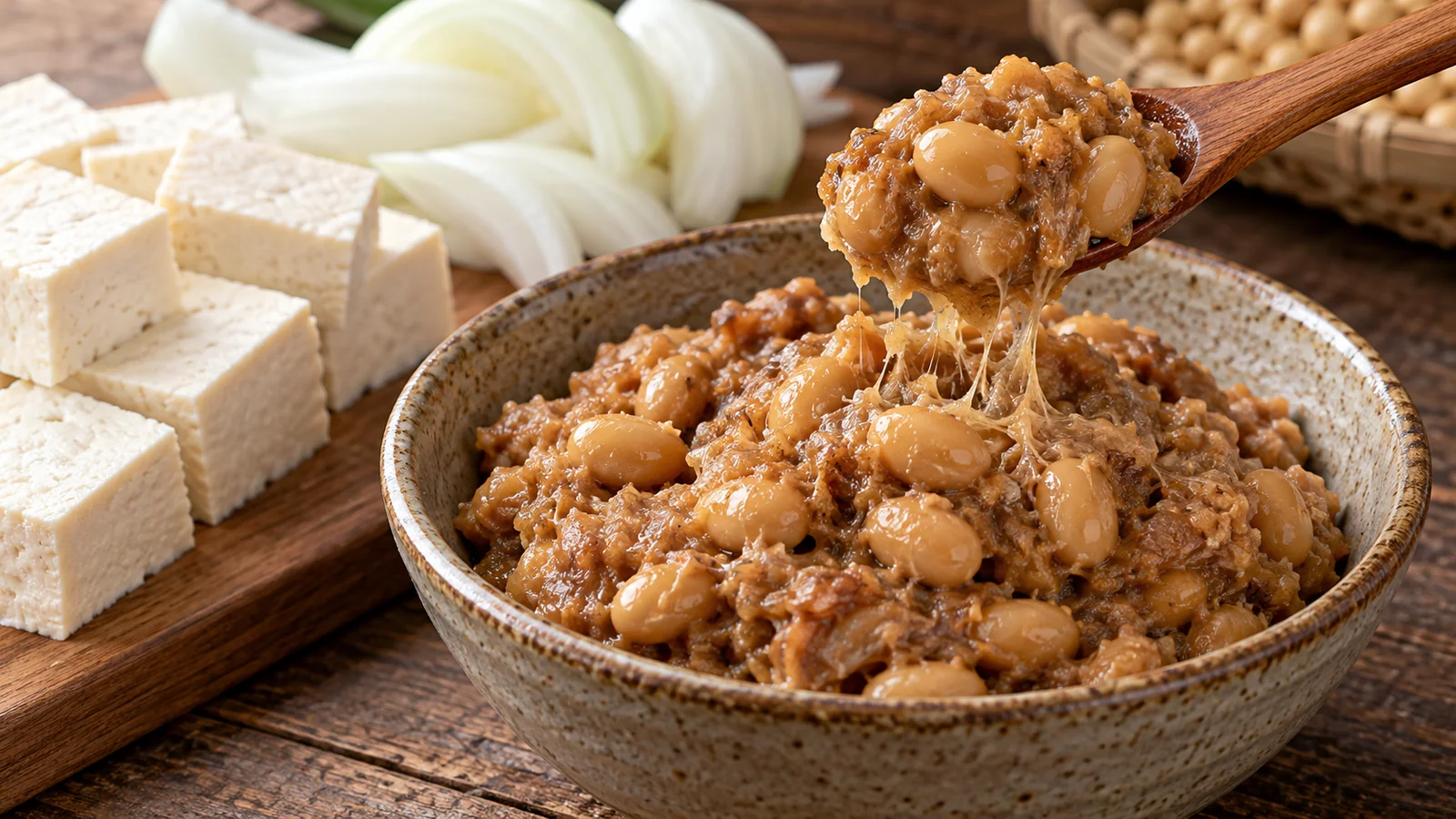
The paste photograph shows recognizable soybeans in a coarse, moist mass rather than a perfectly smooth liquid. Its texture explains why some beans remain visible in the stew. Commercial products vary in salt, added seasoning and soybean content; read their labels. Fermenting beans yourself is a separate controlled food-preparation task, so a first home bowl is simpler to make from a food-grade packaged paste.
How does it differ from doenjang-jjigae?
Both are Korean soybean-based stews, but they are named for different fermented soybean ingredients. Cheonggukjang commonly leaves bean pieces and a notably strong fermented aroma. The tourism organization's stew entry contrasts its generous solid ingredients and comparatively mild, not necessarily spicy or very salty broth with an ordinary soybean-paste stew. That description is an example of style, not a guarantee about every restaurant's salt level.
Do not identify a bowl by color alone. Kimchi, chili, stock, additional doenjang and the amount of tofu can change its color, thickness and taste. If the difference matters, ask which paste is used and whether the stew contains whole beans. The aroma may seem intense before tasting, while the broth itself can be round and savory. Personal preference is best judged from the actual bowl, not a claimed universal comparison.
What goes into a typical bowl?
The official food entries name tofu, onion and sometimes kimchi; mushrooms or beef are possible additions. A freshwater-snail version also shows that the stew can include animal ingredients. Many bowls are served with rice, but sides and portion sizes depend on the restaurant. Ask before assuming that every cheonggukjang stew is vegetarian or that a pictured pot is one serving.
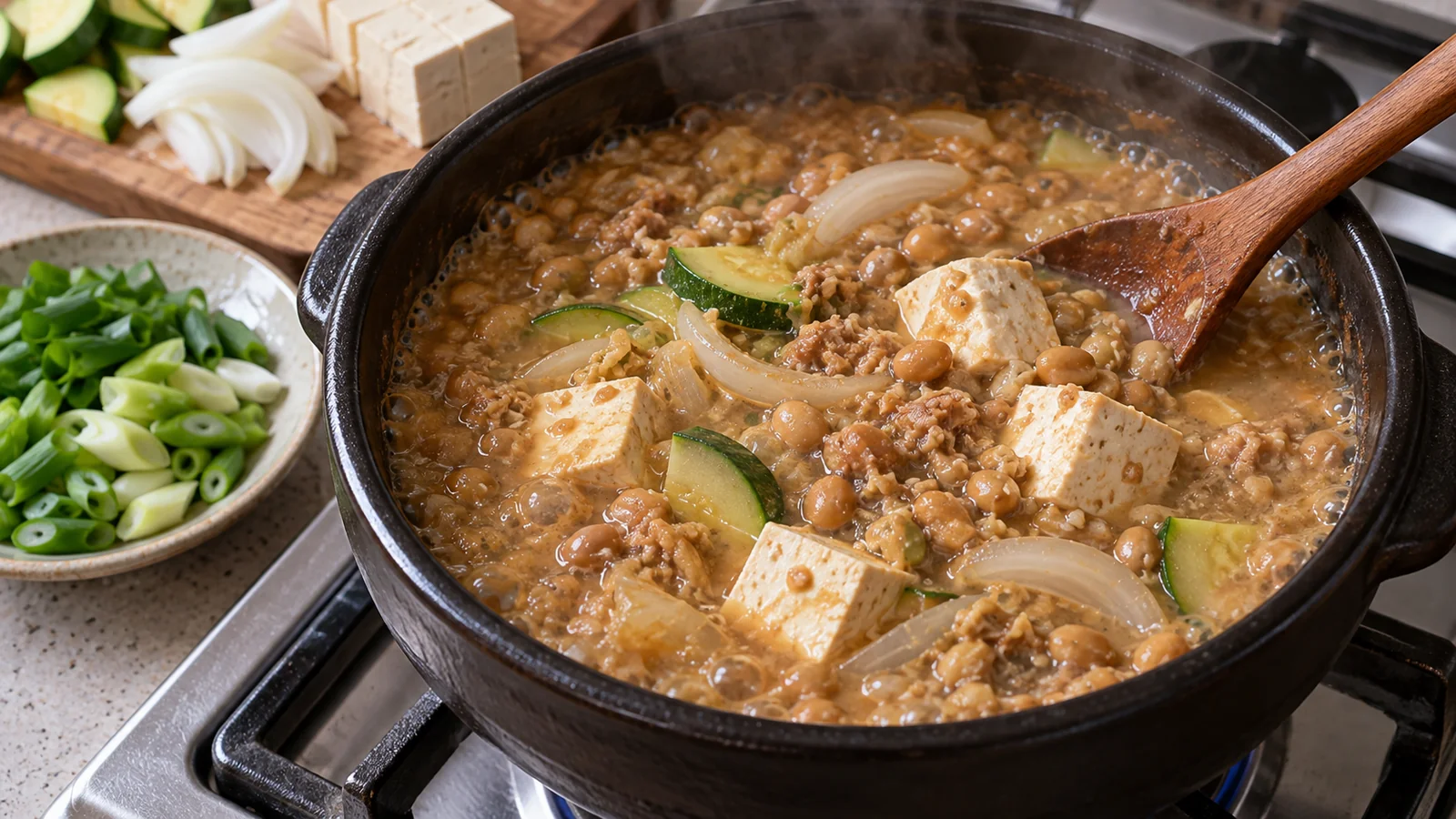
To prepare a straightforward home bowl, start with a packaged cheonggukjang product and follow its quantity and storage instructions. Warm water or a broth whose ingredients you know, cook onion and other firm vegetables until tender, then dissolve or stir in the paste and add tofu. Simmer until the ingredients are heated through, taste, and only then adjust seasoning. Add delicate greens near the end. The cooking photograph shows beans, tofu and vegetables simmering together, not a fixed recipe ratio.
How can you choose and eat it?
- Check the menu form. Confirm that you are ordering cheonggukjang-jjigae, whether rice is included, and whether the pot is meant for one person or sharing.
- Ask about additions. Kimchi, meat, snails, seafood stock or extra chili may alter taste and dietary suitability; tofu and vegetables also vary.
- Start with a small spoonful. Let the hot stew cool enough to eat safely, then taste the broth and beans with rice before adding more chili or salt.
Its aroma is strongest near a steaming pot; the taste and smell are related but not identical. If you are new to fermented soybean foods, a small portion with rice lets you decide whether you enjoy the strong note. There is no need to make a health claim to explain its appeal: it is a savory bean stew with a distinctive scent and variable mix of soft tofu and firmer beans.
What about allergies, packaging and leftovers?
Soy is intrinsic to cheonggukjang, and tofu adds more soy. Packaged paste can contain other seasonings; prepared stew can contain fish, meat or shellfish ingredients. Check the product label or ask the restaurant about the actual recipe and shared equipment when relevant. The word fermented does not make a particular bowl suitable for every diet or establish a medical benefit.
Use packaged paste within its stated storage and use instructions. For takeout or leftovers, follow the restaurant's guidance and safe handling advice for a cooked stew containing tofu and other additions. Reheat until the full portion is properly hot according to applicable food guidance; a strong fermented smell alone cannot tell you whether a stored stew is safe or spoiled.