Korean Food / Injeolmi: Chewy Rice Cake and Powder Coatings
Injeolmi is a Korean glutinous-rice cake cut into small pieces and coated with powder, most often roasted soybean powder. Its soft, chewy center and dry, nutty coating make it different from a rice cake filled with sweet bean paste. The coating can also be black sesame or another powder, so check the ingredient and sweetness of the version you buy.
What makes a rice cake injeolmi?
The Korea Tourism Organization's injeolmi entry describes a salted sweet-rice cake rolled in grain powder and cut into bite-sized pieces; yellow soybean powder is its common coating. Korea.net's recipe article describes glutinous rice powder and powdered soybeans. Here, sweet rice means glutinous rice and its sticky cooked texture, not a guarantee that every product is highly sweetened.
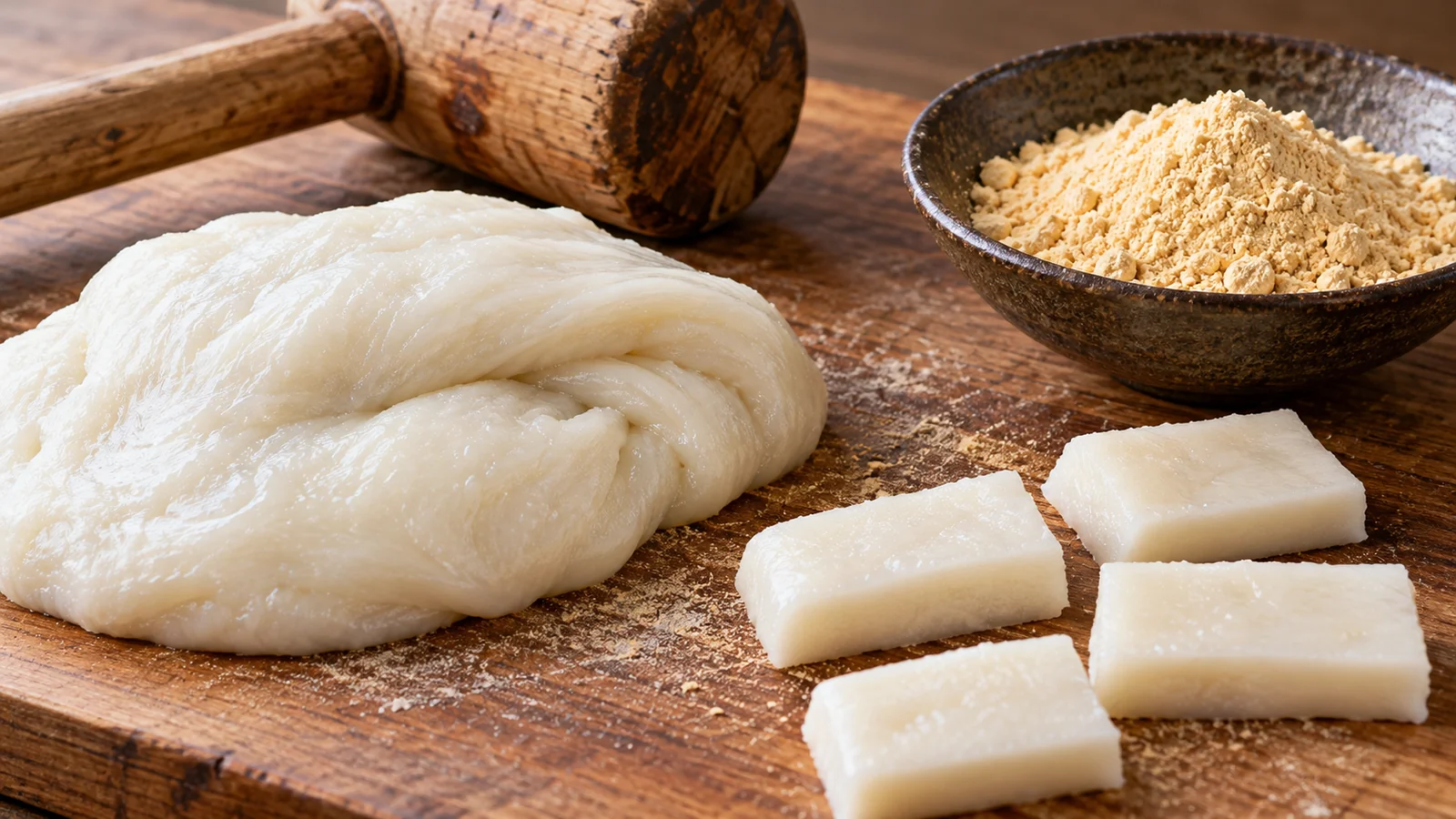
The rice base is cooked until cohesive and worked so it becomes soft and stretchy. It is then portioned and rolled in powder, which adds flavor and helps separate the sticky pieces. The preparation photograph shows the plain white rice cake before coating, a bowl of powder, and a pounding tool. Shops use different rice forms and methods; the photo illustrates the structure rather than claiming one mandatory technique or ratio.
How do taste and texture change with the coating?
Classic yellow soybean powder gives a toasted, nutty flavor and a powdery first bite, while the rice cake inside remains elastic and chewy. A black-sesame version has a darker, more assertive sesame flavor. The tourism organization's black-sesame injeolmi entry describes glutinous-rice dough tossed in black sesame powder. The comparison photograph shows the two coatings around similar white centers.
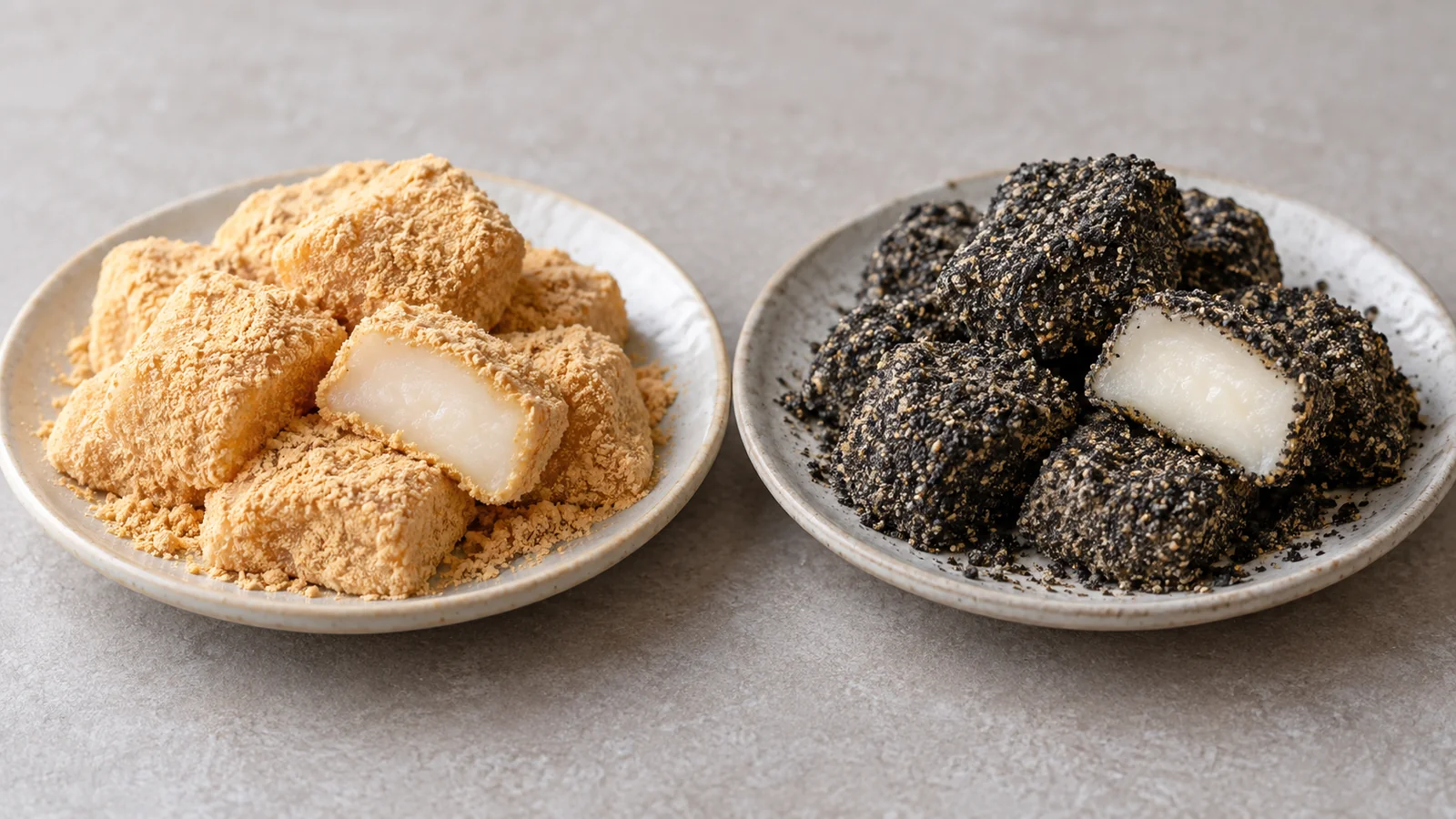
Sweetness is not determined by the color of the powder. Sugar may be in the rice cake, coating or an extra syrup; some products are restrained and others are dessert-like. Cut a piece to see whether a filling has been added. Traditional injeolmi is known for its coated outside and chewy rice center, while a filled rice cake or an ice-cream dessert labeled injeolmi-style is a different purchase.
How is it made and served?
- Cook the rice base. Use a tested recipe for glutinous rice or glutinous rice flour, and follow the flour or recipe's liquid and steaming directions. It must cook into a cohesive mass; guessing one water ratio for every flour is unreliable.
- Work and portion it. Once safe to handle, pound or knead the cooked mass until smooth and chewy. Divide it into manageable pieces, keeping equipment clean and using a little coating powder to prevent sticking.
- Coat and serve. Roll every cut surface in roasted soybean or another suitable powder, then serve pieces according to the product or recipe's storage guidance. Ask about added sugar, syrup or nuts if you are buying a prepared dessert.
Korea.net provides a concrete glutinous-rice-powder recipe for readers who want measured ingredients and a specific steaming method. Follow that complete recipe rather than combining its water amount with a different flour. Fresh injeolmi is often eaten as a small snack with tea. It can also appear in toast or shaved ice, where bread, syrup, condensed milk or ice cream substantially change the finished dessert.
What should you check when buying or ordering?
Identify the coating first: soybean powder contains soy; black sesame contains sesame. Confirm the rice base, sweetener, added filling and any nuts or dairy in a shop version, particularly when it is part of toast or shaved ice. A plain-looking piece is not enough to establish that a packaged or restaurant product meets an allergy or dietary requirement; use its ingredient label or ask the seller.
Choose smaller pieces if you want to compare powders or share several flavors. The cake is sticky and chewy, so take manageable bites and chew fully; supervise anyone who needs help eating chewy foods. If a shop sells freshly made and packaged versions, check how each is intended to be stored. Do not assume all injeolmi has the same shelf life because the rice cake looks similar.
How do you keep the texture after purchase?
Follow the shop's or package's storage and use-by instructions; moisture, coating and added toppings vary. The rice cake can firm up and the powder can absorb moisture over time, changing the contrast between soft center and dry outside. If a manufacturer gives freezing or reheating directions, use those for that product. A generic instruction to leave every rice cake at room temperature would be unsafe and misleading.
When serving a stored piece, check its permitted storage history before focusing on texture. Additional syrup or dairy toppings have their own handling needs. If the storage conditions are unknown, softness after warming is not evidence of safety. For the clearest comparison of classic soybean and black-sesame injeolmi, taste them under the same serving conditions and focus on the coating as well as the rice center.