Japanese Food / Udon: Noodle Texture, Hot and Cold Styles and How to Eat It
Udon is a Japanese noodle dish usually made from wheat flour, water and salt, served either in hot broth or chilled with a dipping sauce. The noodles are known for being thick and soft, but their thickness and springiness vary by region and shop. When ordering, check whether the noodles are hot or cold and what goes into the broth and toppings.
What are udon noodles made from, and what is their texture?
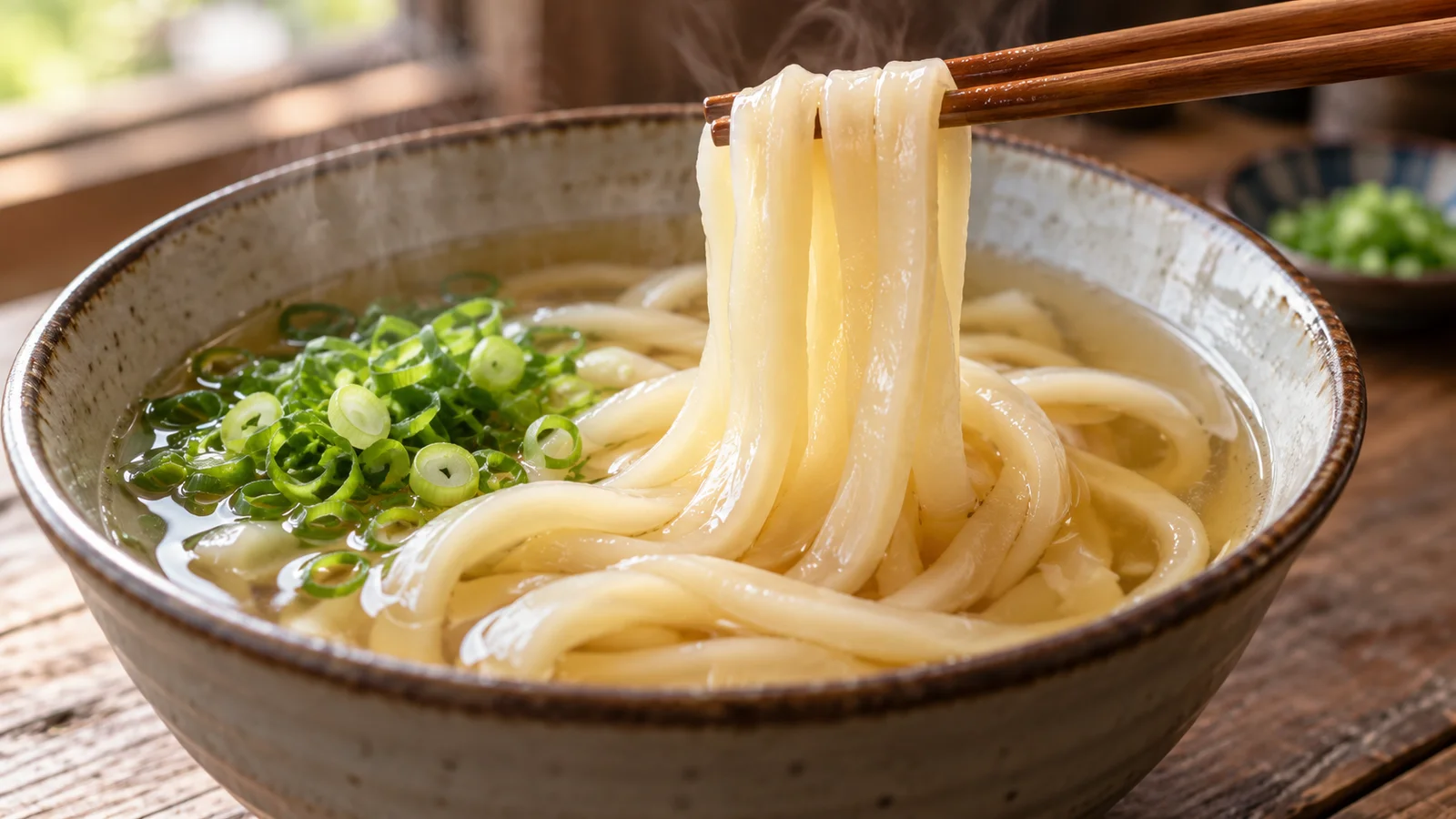
Udon noodles are generally made by mixing wheat flour, water and salt into a dough, rolling it out and cutting it. Gluten, which forms as the wheat dough is worked, contributes to the noodles’ elasticity. They are usually pale and thick, but not all have the same shape or texture: regional methods produce everything from broad, soft noodles to springy noodles with square edges.
Sanuki udon from Kagawa Prefecture is known for its firm, springy bite. The Japanese Ministry of Agriculture, Forestry and Fisheries’ introduction to Sanuki udon describes thick, chewy noodles with a square cross-section. This does not mean they must be hard to chew; cooking time and serving temperature also affect texture.
How do hot and cold udon differ?
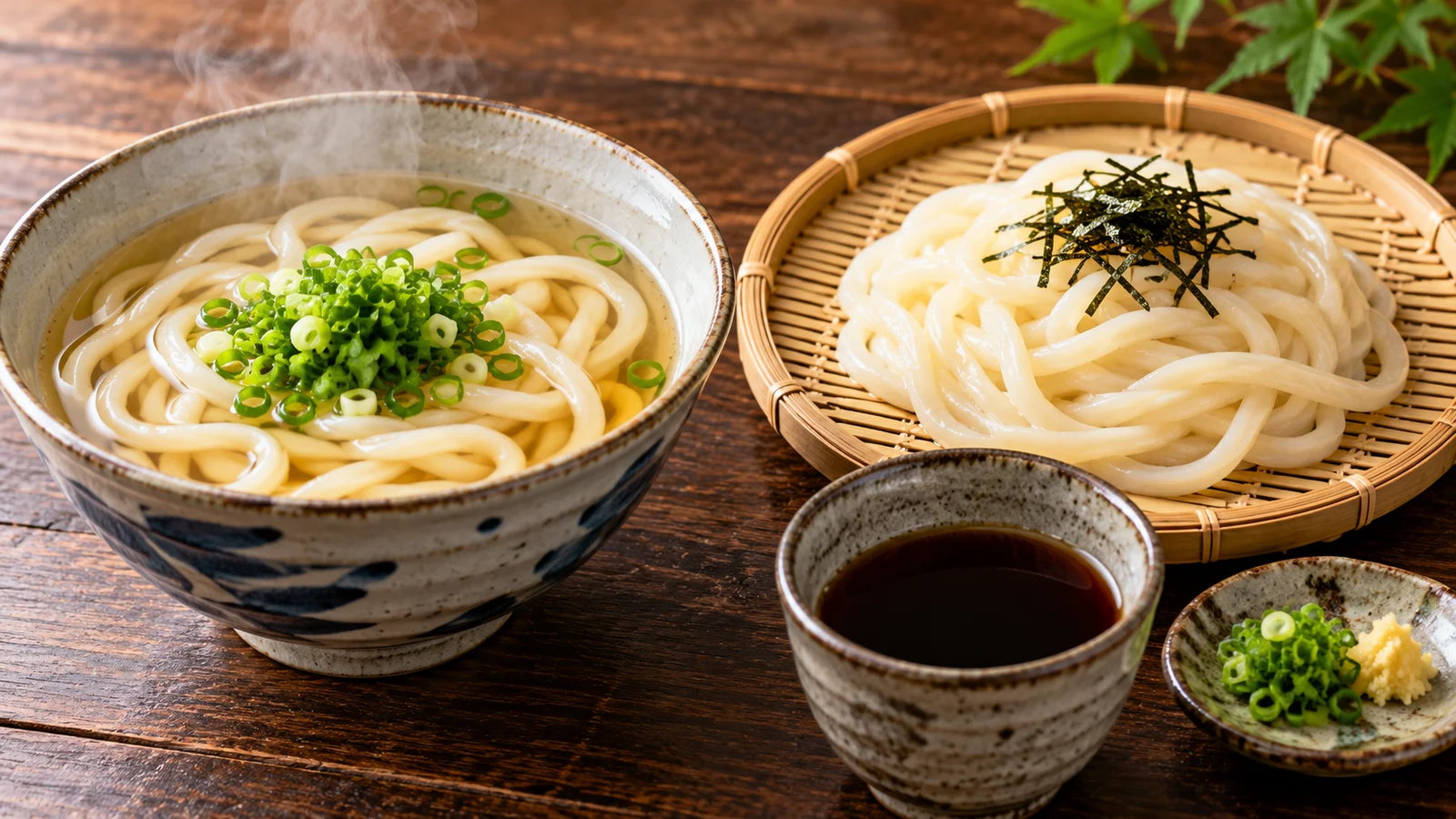
Hot udon often consists of cooked noodles in hot broth. Kake udon is a basic style with noodles in seasoned broth, sometimes with scallions or tempura. Kamaage udon is served hot in cooking water, with a separate dipping sauce.
Cold udon can be cooled after cooking and drained, then served with a cold dipping sauce. Other preparations have cold broth or sauce poured over the noodles. Chilled noodles may feel different from hot ones. The Japan National Tourism Organization’s Sanuki udon guide describes both hot broth and cold noodles with dipping sauce among the serving options.
What goes into the broth and toppings?
Udon broth often begins with stock made from kombu kelp, katsuobushi (shavings of smoked, dried bonito), dried anchovies or similar ingredients, then is seasoned with soy sauce and other seasonings. Ingredients, color and saltiness vary by region and restaurant; a clear broth is not necessarily plant-based. In the Sanuki area, stock made from small dried anchovies is also used.
- Scallions and fish cake: scallions add aroma, while fish cake is a processed fish topping. Check it if you have a fish allergy.
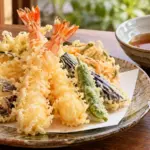
- Tempura: shrimp or vegetable tempura may be placed on the noodles or served separately. Ask about batter, oil and shared equipment if these matter to your diet or allergies.
- Fried tofu: kitsune udon includes a sweet-simmered fried tofu topping. Tofu and its seasoning may contain soy or wheat.
- Egg and meat: ingredients and degree of cooking vary. Check preparation and extra charges if needed.
What should you check before ordering?
- Choose the temperature and serving style. Check whether noodles come in hot broth, chilled with dipping sauce, or with sauce poured over them. A name may be used differently at different shops.
- Check toppings and portion size. Ask whether tempura or egg is included or ordered separately, and select a portion that suits your appetite if there is a choice.
- Explain allergies and restrictions. The noodles contain wheat, while broth and sauce may contain fish, soy or wheat. Ask about shellfish tempura and cross-contact from shared equipment if relevant.
- Look at the self-service procedure. Some shops ask you to choose noodles and temperature, then select displayed tempura and pay. The order and payment method vary, so follow the shop’s signs or ask staff.
How do you eat udon?
For hot udon, check the temperature of the broth and eat the noodles and toppings a little at a time. To keep tempura crisp, eat it separately or dip it briefly in the soup. If cold noodles and dipping sauce come separately, pick up a small portion of noodles and dip it; add scallions or ginger gradually if provided and desired.
Dipping sauce may not be intended to be drunk like soup, so taste it and adjust the amount you use. Some people slurp noodles, but this is not obligatory. You do not have to drink all the hot broth.
What if you are vegetarian or avoid certain ingredients?
Even if noodles contain no meat, the broth or dipping sauce may include fish ingredients such as katsuobushi or dried anchovies. If you need a vegetarian meal, check the stock, soy seasoning and toppings as well as the noodles, and ask about shared equipment. Vegetable tempura may be fried in the same oil as shrimp or other seafood.
Regular udon noodles are unsuitable if you have a wheat allergy or must avoid gluten. Ask whether an alternative noodle and separate preparation are available. If you have a food allergy, tell staff the specific ingredient and precautions you need before ordering.