Korean Food / Bungeoppang: Fish-Shaped Pastry, Fillings and How to Eat It
Bungeoppang is a Korean fish-shaped pastry baked in a mold, usually with sweet red bean paste inside. Its name and outline refer to a fish, but the standard pastry does not contain fish. A hot one offers a crisp outer edge and a softer center; ask which filling is inside because red bean, custard and other versions differ.
Why does it look like a fish, and how is it made?
The Korea Tourism Organization's bungeoppang entry describes flour batter filled with sweet red beans and baked in a fish-shaped frame. Batter goes into the heated mold, filling is added, and another layer of batter encloses it before both sides cook. The fish-scale and fin pattern comes from the mold, not from a fish ingredient.
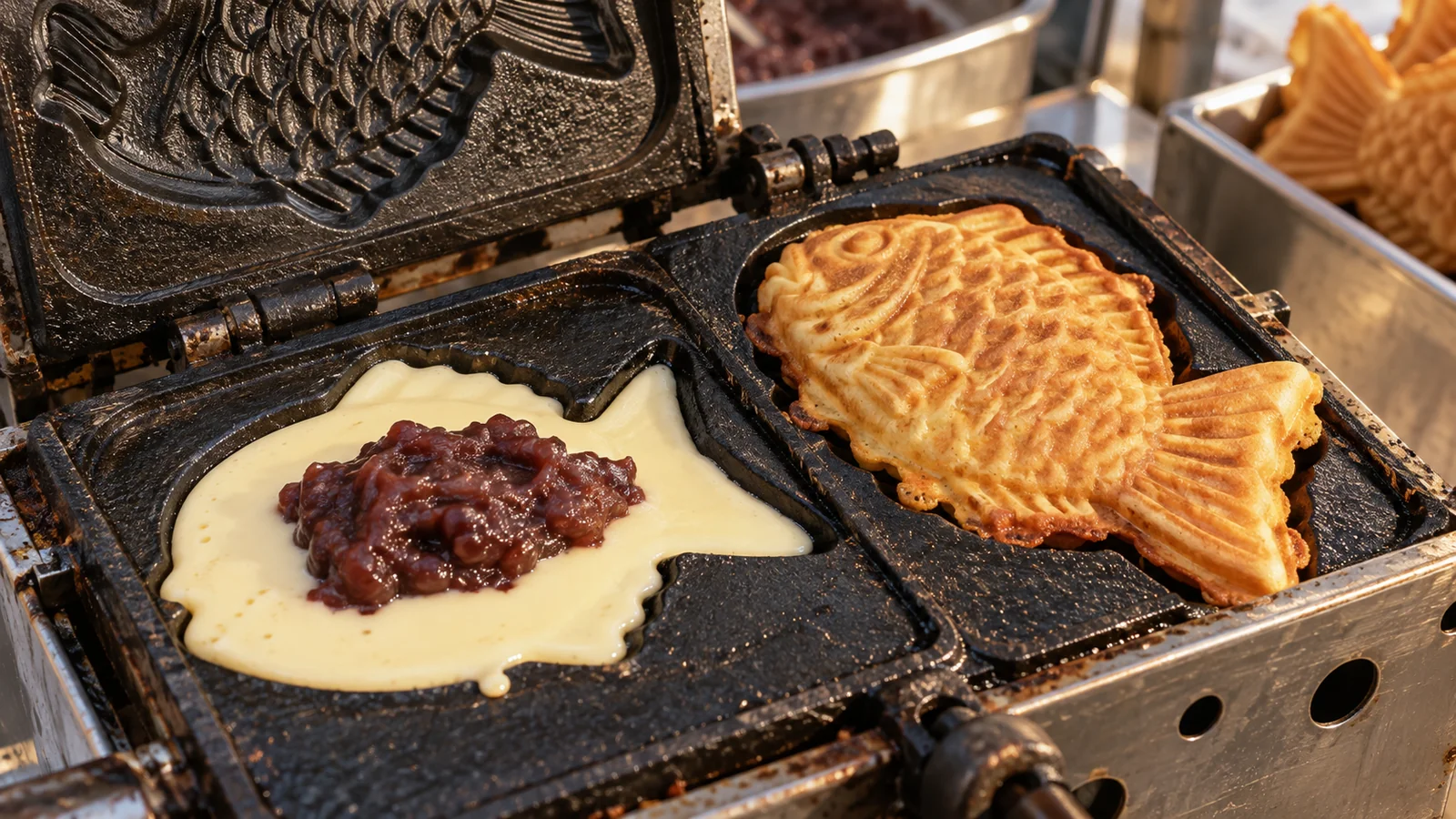
The Korean name combines bungeo, crucian carp, with ppang, bread. The Republic of Korea's official culture site explicitly says the familiar red-bean pastry has no fish despite the name. This is a useful distinction from eomuk, which is an actual fish cake. Still check the ingredients of any unusual savory variation instead of treating the name as an ingredient list.
What do red bean and custard versions taste like?
Sweet red bean paste is the traditional filling and gives the pastry a soft, dense center with a bean flavor. Custard is creamier and tastes different from beans. The tourism organization's street-food guide mentions both and notes that a freshly bought pastry is at its crispest. Chocolate and cheese versions are also documented, but a particular stall may sell only one or two choices.
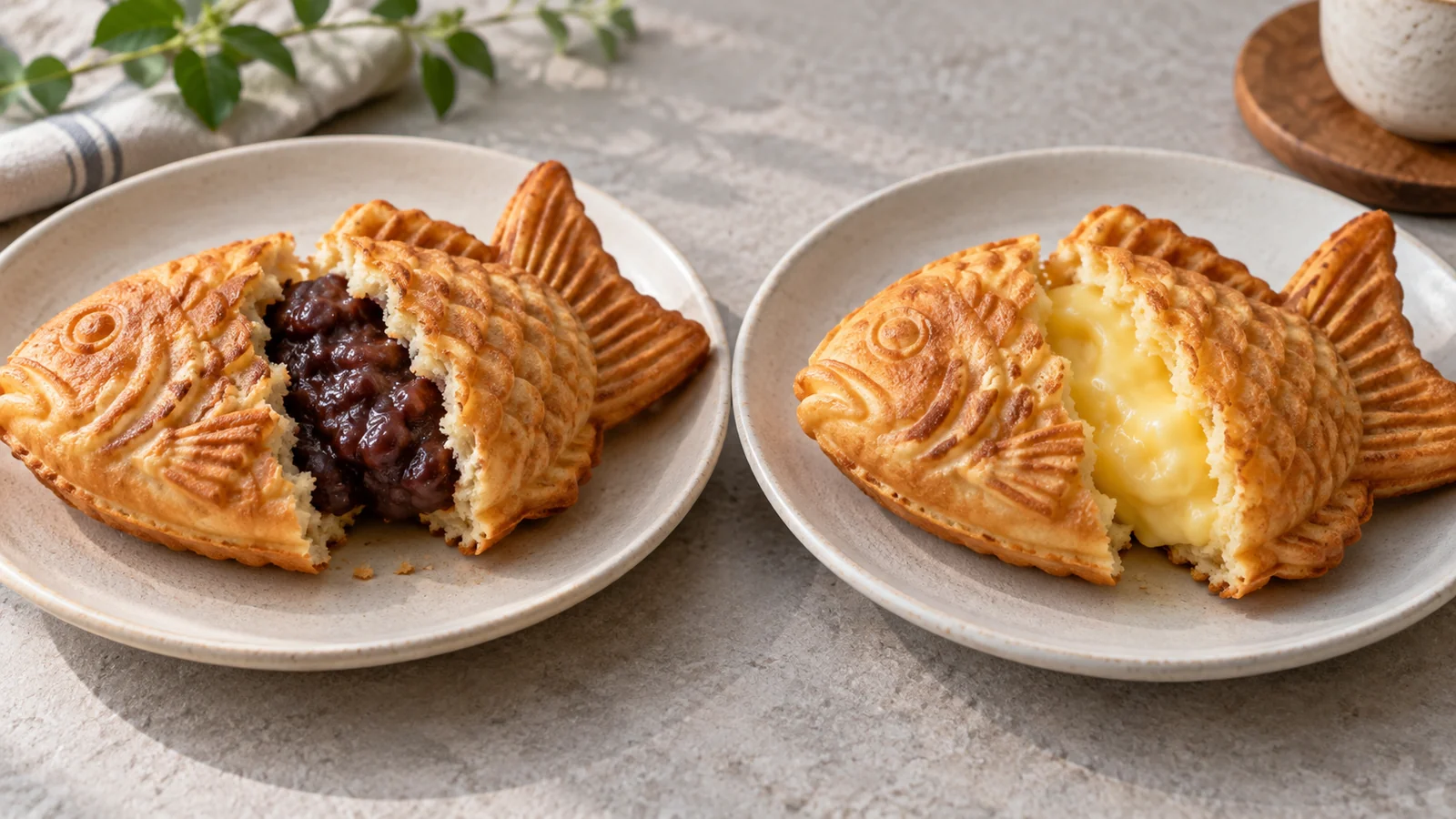
Look for the seller's filling label or ask before buying. A darker crust does not reliably identify a red-bean filling, and the shape of the head or tail is not a universal filling code. If you avoid dairy, eggs, wheat or beans, ask about the batter and filling separately; a custard alternative is not automatically suitable for a different diet.
How do you choose a fresh pastry at a stall?
- Check the available filling. Ask whether the batch is red bean, custard or another named filling. If several kinds share a tray, request that the seller identify your piece.
- Check the price and count. The price can be for one pastry or a set; size also varies by mold. Ask what the displayed price covers before assuming every fish-shaped pastry is identical.
- Allow the center to cool. A freshly baked crust may be comfortable to hold while the enclosed filling remains very hot. Break off a small piece and wait before taking a large bite, especially when serving a child.
Some people begin at the head and others at the tail; neither is a required method. Breaking the pastry open first is more useful when you want to see the filling and let steam escape. Eat it soon after purchase if a crisp crust is your priority, because steam trapped in a closed bag can soften it.
Is bungeoppang available only in winter?
Bungeoppang is strongly associated with Korea's winter street stalls. The tourism organization's winter-snack feature calls it an iconic cold-season snack and notes that some shops now sell it year-round. This means winter makes it easier to look for at street stalls, not that every vendor opens on a fixed calendar or that no shop sells it in summer.
If you are planning a visit, confirm a specific shop's current opening days and fillings rather than relying on an old map or seasonal generalization. For a related sweet street snack with a different round, pan-fried shape, see our hotteok guide. Hotteok has its own dough and filling styles; it is not simply a round bungeoppang.
What changes with takeout or packaged bungeoppang?
A pastry placed in a tightly closed bag while hot can lose surface crispness as moisture collects. Let it cool enough to handle and follow the seller's packaging advice; if the crisp crust matters, buying close to the time you will eat it is the most straightforward choice. Be careful with any hot filling even if the outside feels cooler.
For a refrigerated or frozen retail product, follow its own storage, heating and use-by instructions. Its batter, filling and processing may differ from a street-stall pastry. Do not apply one reheating time to every size or filling, and do not use a restored crunchy shell as proof that a product stored under uncertain conditions is safe.