Japanese Food / Sushi: Types, How It Differs from Sashimi and How to Order
Sushi is a Japanese dish built around seasoned, vinegared rice paired with ingredients such as seafood, egg or vegetables. Unlike sashimi, which generally consists of sliced fish or seafood without a combined rice portion, sushi can use raw or cooked toppings and does not always contain fish. When choosing, check its form, ingredients and whether seafood is raw.
How are sushi and sashimi different?
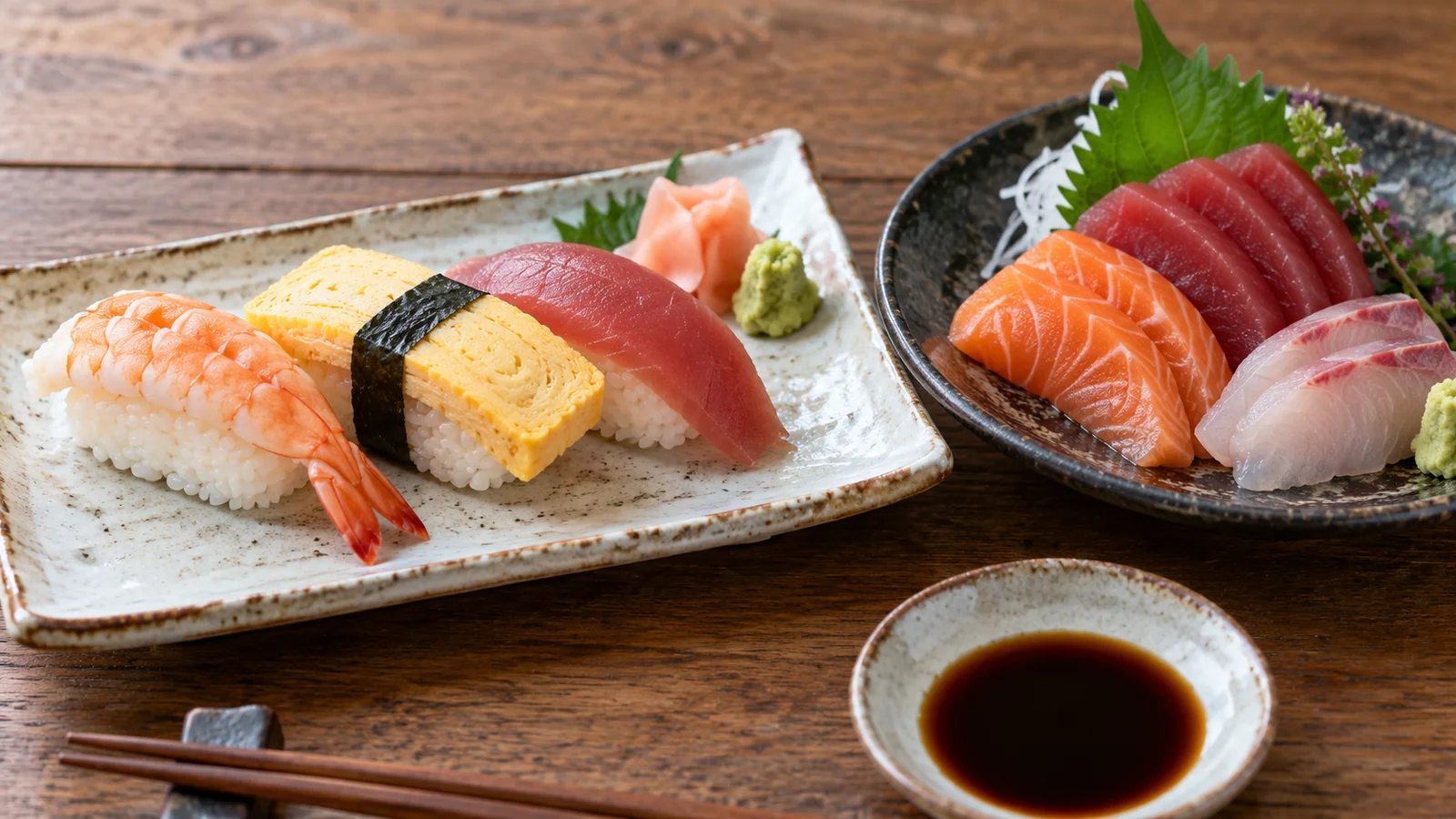
Vinegared rice is central to sushi. The ingredients placed on or in it may include fish, shellfish, cooked shrimp, egg or vegetables. The Japan National Tourism Organization's sushi guide describes sushi as seasoned rice paired with raw or cooked toppings. Sashimi usually means sliced fish or seafood served without the combined rice portion characteristic of sushi.
Do not assume the name sushi means that every ingredient is raw or that fish is always present. Egg and cucumber versions exist, and some seafood is cooked or cured. A vegetable-looking item can still have animal ingredients in its sauce or stock, so ask about the actual preparation when dietary restrictions matter.
How do nigiri, maki and chirashi differ?
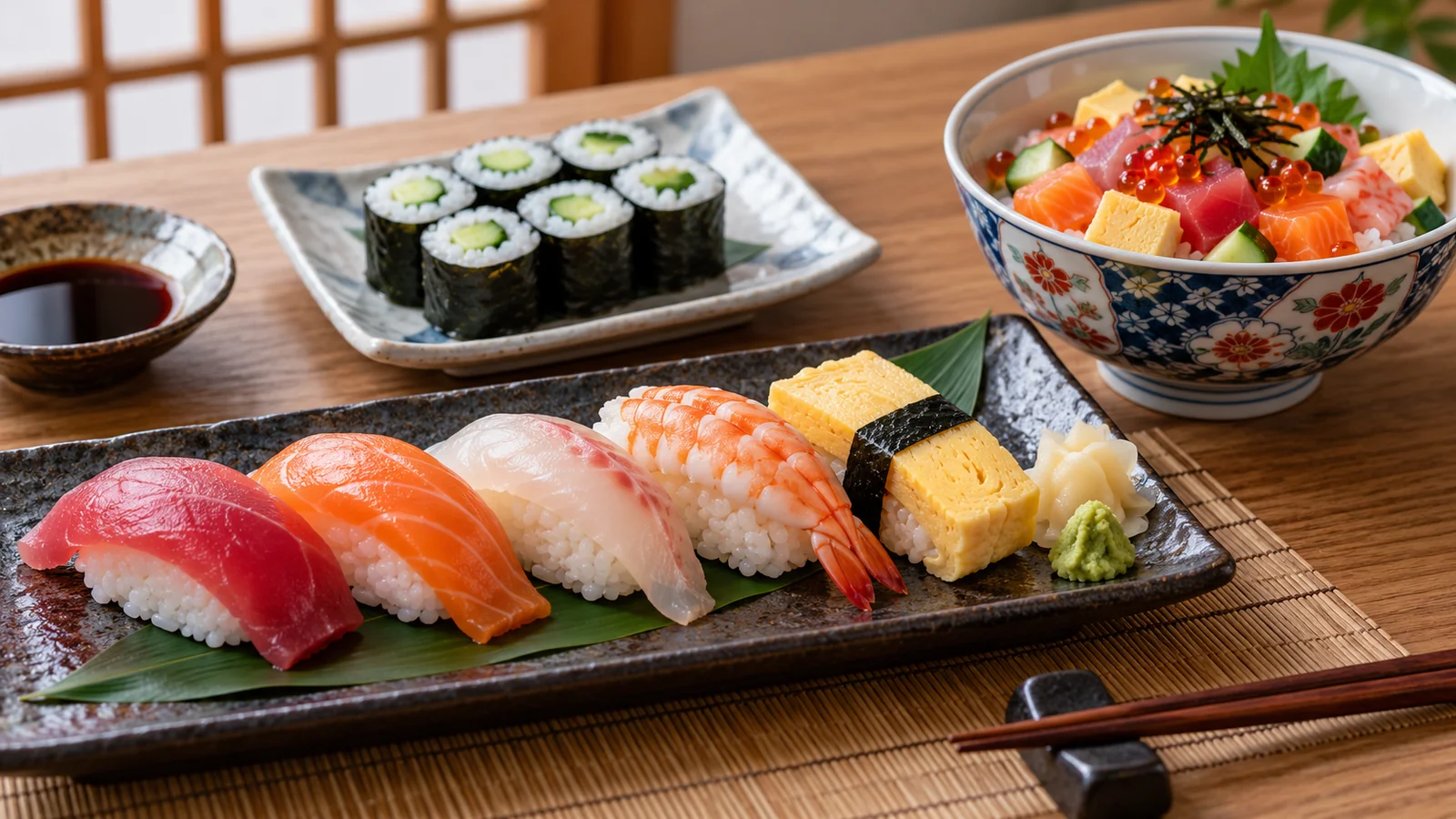
- Nigiri: a bite-sized portion of shaped rice topped with fish, cooked shrimp, egg or another ingredient.
- Maki: rice and fillings rolled in seaweed or another wrapper and cut into pieces. Cucumber is one possible fish-free filling, but recipes differ.
- Chirashi: a bowl or container of sushi rice with ingredients scattered over or mixed with it, depending on the preparation.
- Inari: seasoned fried tofu pockets filled with sushi rice. Check the seasoning and any additional ingredients.
Japan's Ministry of Agriculture, Forestry and Fisheries guide to nigiri describes toppings including cooked shrimp and egg as well as fish. Size, toppings and seasoning vary by shop, so read the actual menu rather than assuming every selection matches a photograph.
What should you check before ordering?
- Check the form and count. Ask how many pieces are included and whether the item is an assortment or an individual selection. A set need not contain every topping shown in a photograph.
- Ask about ingredients and whether seafood is raw. Check whether fish or shellfish is cooked and whether sauces contain egg, dairy, wheat or soy when relevant. For allergies, discuss possible cross-contact through shared knives and work surfaces.
- Check seasoning. Ask whether wasabi is already inside, soy sauce comes separately or a topping already has a sauce.
- Order a manageable amount. Start with a small selection to gauge size and flavor, then add more if desired.
At a conveyor-belt restaurant, the relationship between plate colors, ordering screens and prices varies. Check the price per plate and separately ordered items; ask staff about ingredients important to an allergy or diet instead of relying on plate color.
How can you use soy sauce and wasabi?
Try a piece without much extra seasoning first to notice the rice's acidity and topping's flavor. If using soy sauce, place a little in a dish and lightly touch the topping to it. Rice can absorb too much sauce, become salty and fall apart. Taste an already sauced piece before deciding whether it needs more.
Use your fingers or chopsticks, whichever is comfortable. If a piece is too large or a topping is hot, divide or cool it rather than forcing a bite. Pickled ginger, when provided, can be eaten between different pieces. Practices vary by restaurant and no single sequence is mandatory.
Who should avoid sushi with raw fish?
Because of foodborne illness risk, pregnant people, children, older adults and people with weakened immune systems should avoid raw or undercooked fish and shellfish. The U.S. Food and Drug Administration's seafood safety guidance recommends fully cooked seafood for these groups. Consult local public-health advice and a healthcare professional when needed for your circumstances.
Vinegared rice, soy sauce and wasabi do not safely cook raw fish. Freezing can kill some parasites but does not eliminate every harmful microorganism. When choosing cooked or vegetable sushi, also ask about the ingredients and whether preparation surfaces and tools are shared.
What about packaged sushi and leftovers?
Check that the seller keeps the product refrigerated and follow its storage temperature and use-by instructions. Ask how to keep it cold during travel and when to eat it. Fish, rice, egg and sauce have different handling needs, so the name sushi alone does not set one storage time for every product.
Do not judge sushi with an unknown storage history safe from appearance or smell alone. Follow the seller's advice and local food-safety guidance for leftovers; cooling a product again does not make it safe merely because it was left out for too long.