Japanese Food / Okonomiyaki: Osaka and Hiroshima Styles and How to Eat It
Okonomiyaki is a Japanese griddle dish made with flour batter and cabbage plus chosen ingredients such as meat or seafood. Kansai-style, associated with Osaka, commonly mixes ingredients into the batter, while Hiroshima-style typically layers them on a thin base and adds noodles. Recipes differ by shop, so check the batter, fillings, toppings and sauce when ordering.
What is okonomiyaki?
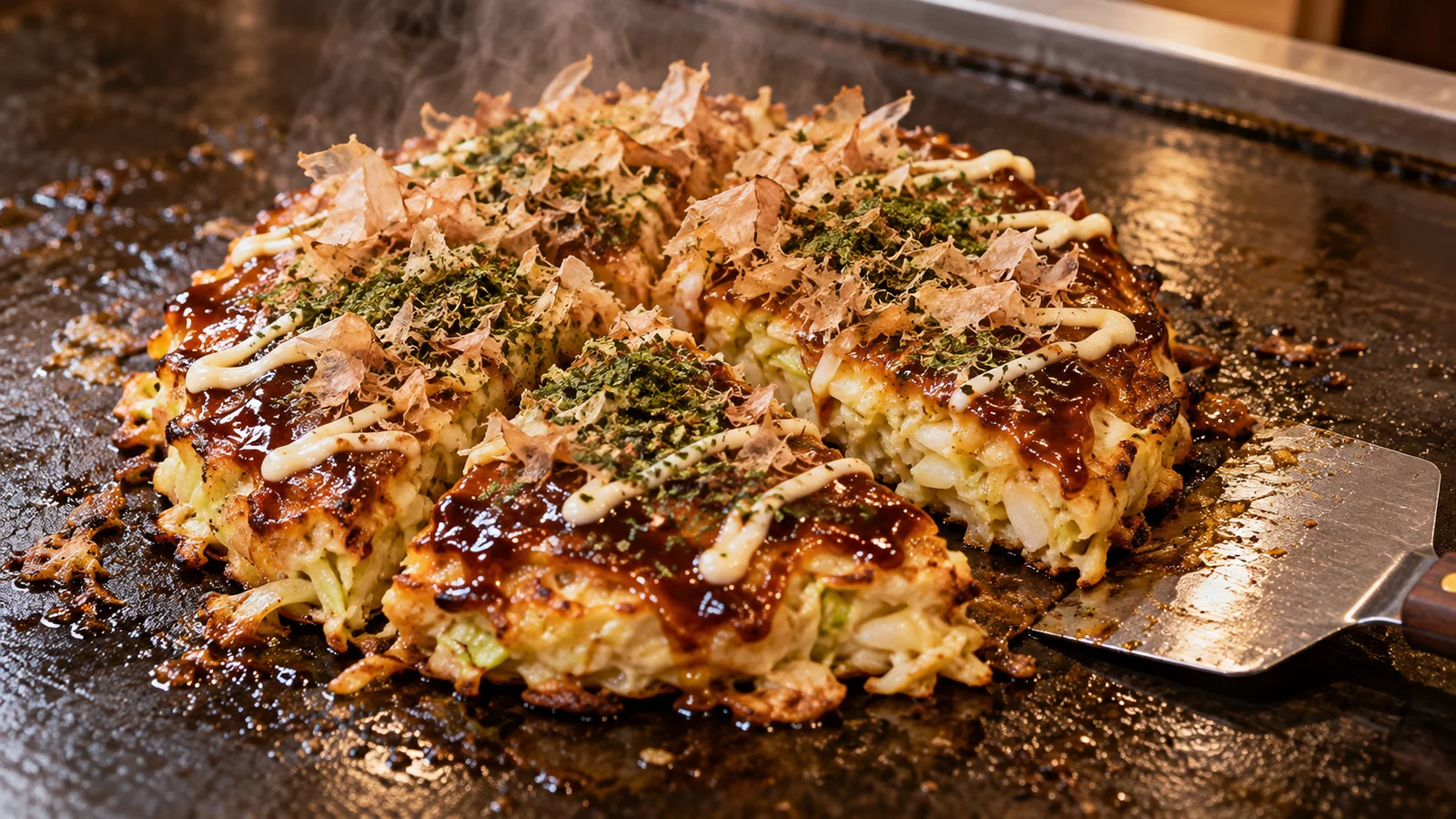
Okonomiyaki is a savory griddled dish built around a batter of flour, egg and stock with chopped cabbage, plus ingredients such as pork, squid or shrimp. It is often finished with sauce, mayonnaise, aonori (dried green seaweed powder) and katsuobushi (shavings of smoked, dried bonito). Not every restaurant uses the same ingredients.
The Japan National Tourism Organization’s okonomiyaki guide describes the cabbage-and-batter base and differences in regional preparation. The batter can be soft with cabbage to bite into, and the sauce sweet and savory, but thickness and flavor depend on the shop and ingredients.
How do Osaka and Hiroshima styles differ?
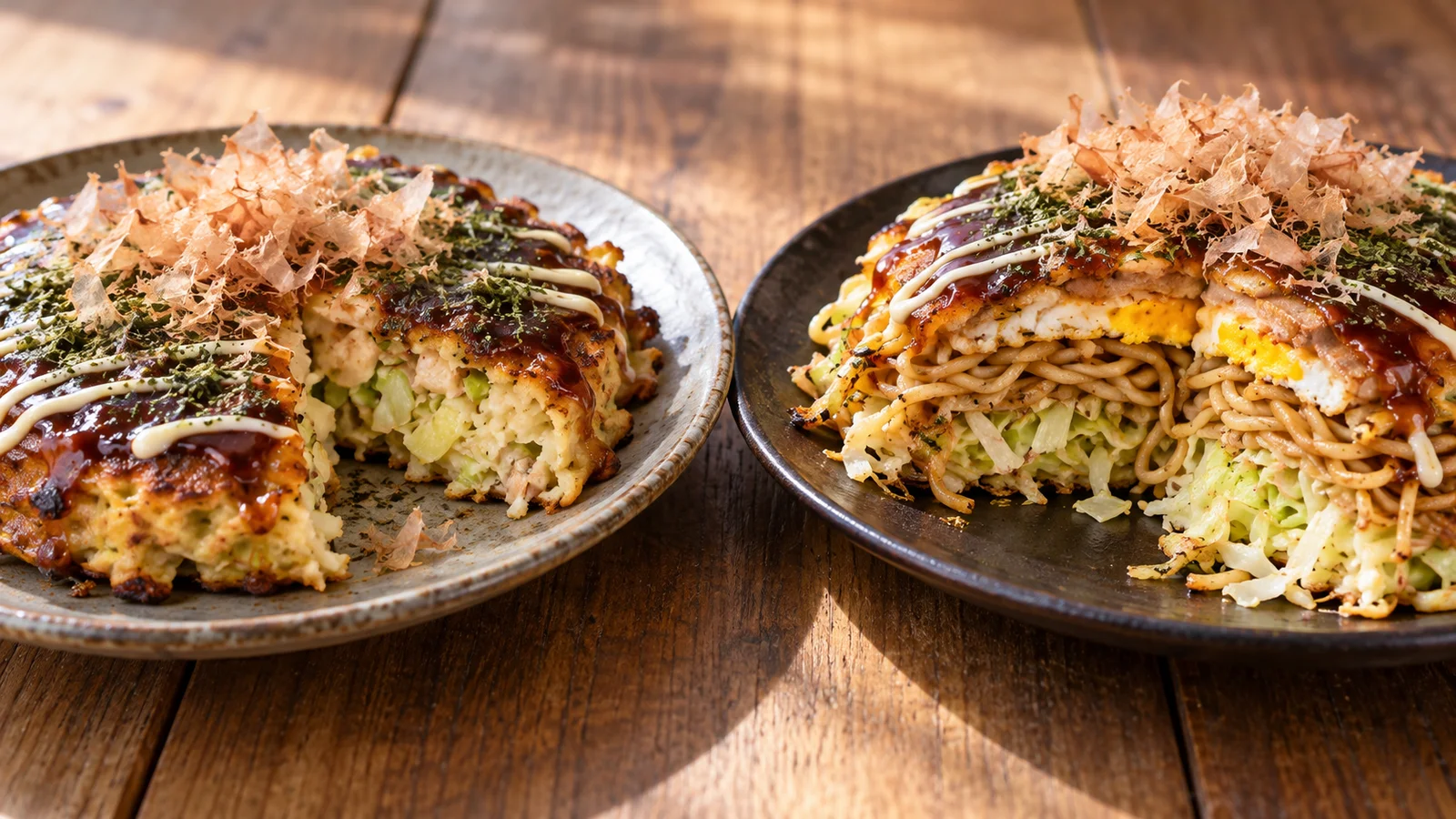
Kansai-style, including Osaka, commonly mixes cabbage and other ingredients with batter before cooking a thick pancake on a griddle; meat can also be placed on the outside. Hiroshima-style is widely known for a thin batter base with layers of cabbage and meat, often with noodles and egg. Ingredients and sequence vary in both styles.
The Japanese agriculture ministry’s Osaka introduction describes mixing cabbage and meat into batter, while its Hiroshima introduction describes layering cabbage and noodles over a thin base. Do not assume noodles alone define every regional menu; check the actual dish.
What ingredients and toppings are used?
- Batter and cabbage: flour, egg and stock with cabbage are common. The stock may contain fish.
- Meat and seafood: pork, squid and shrimp are possible fillings. Check what is included in an assortment or standard dish.
- Noodles and egg: Hiroshima-style often includes fried noodles and egg, but types and extra charges vary.
- Sauce and toppings: okonomiyaki sauce, mayonnaise, aonori, katsuobushi and red pickled ginger may be added. Katsuobushi is made from fish.
Even without visible meat, the batter or sauce may contain animal stock. If you eat vegetarian or avoid ingredients, check the batter, fillings, sauce and toppings separately.
How do you eat okonomiyaki?
Some restaurants cook it for you; others have a table griddle where customers cook it. If cooking it yourself, ask staff about the steps and doneness, and make sure batter, pork, seafood and egg are cooked through. Keep utensils used for raw ingredients separate from those used for cooked food.
Cut the finished dish into manageable pieces with a small spatula or chopsticks. The griddle and filling can be hot, so allow pieces to cool and take care with utensils and plates near the griddle. Taste first, then add sauce or mayonnaise to preference.
What should you check before ordering?
- Style and portion: check whether it is Kansai or Hiroshima style and whether noodles and meat are included. Consider the size and number of people sharing.
- Allergies: batter may contain wheat and egg, while fillings may include shrimp or squid. Also check wheat and soy in sauce, egg in mayonnaise and fish in katsuobushi.
- Shared griddle: ingredients can come into contact when a griddle or spatula is shared. If you have an allergy, ask whether the separate preparation you need is possible.
- Who cooks it: check whether staff or customers cook and ask for help if you are unsure about doneness or using the griddle.
What about cooking or storing leftovers?
Cook batter and fillings thoroughly to the center, taking care that pork, seafood and egg do not remain undercooked. Wash hands and utensils after handling raw ingredients and separate them from finished food. A brown surface alone does not prove the center is cooked.
Refrigerate leftovers promptly according to the seller’s instructions or local food-safety guidance on time and temperature, and reheat thoroughly to the center. Do not judge food with an unknown storage history safe from appearance or smell alone.