Korean Food / Tangsuyuk: Crispy Pork, Chewy Batter and Sweet-and-Sour Sauce
Tangsuyuk is a Korean-Chinese dish of battered, deep-fried meat served with a sweet-and-sour sauce. Pork is a familiar version, but the meat, coating and sauce vary, so the name does not specify one exact recipe. For a first order, compare the coating texture, sweetness and acidity of the sauce, and whether you want sauce on the meat or served separately.
What are the meat, batter and sauce made from?
The Korea Tourism Organization's tangsuyuk guide describes bite-sized pork loin or tenderloin coated in batter and fried, accompanied by a sauce made with vinegar, sugar and soy sauce. Onion, carrot or fruit may be included. This explains the familiar combination of savory fried meat with a tangy, sweet sauce rather than a single required ingredient list.
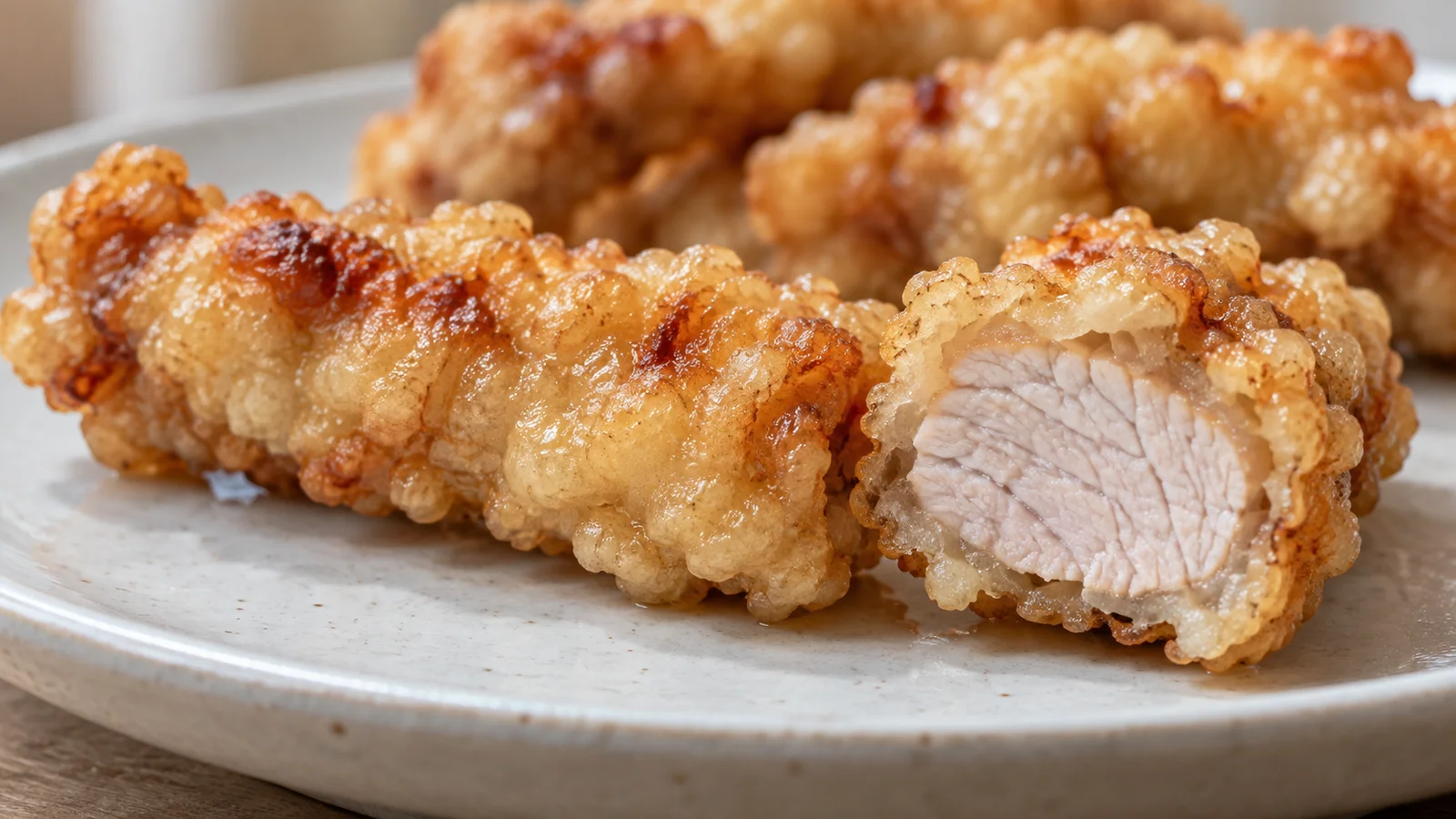
The coating is distinct from the meat inside. When tasting a piece, notice whether the outside is light and brittle or thicker and chewy, then consider the thickness and texture of the meat. A larger-looking piece can contain more coating rather than more meat. The cutaway photograph illustrates these separate layers; it does not show a standard meat-to-batter ratio used by every restaurant.
What does chapssal tangsuyuk mean?
Chapssal means glutinous rice, also called sticky rice, and chapssal tangsuyuk is a menu name associated with a chewy coating. The Korea Tourism Organization's Incheon Chinese-food feature gives a restaurant example of pork in a chewy sweet-rice batter. The name helps indicate a style to ask about, but it does not disclose the proportions of rice, starch or other flours in a particular recipe.
Do not treat the name as proof that the entire dish contains no wheat or egg. Other flours, batter ingredients and sauce ingredients must be checked separately. An official introduction to Mokhwa Banjeom, for example, describes tangsuyuk made with egg batter. These are examples of variation, not reasons to assume that every ordinary or chapssal version has the same ingredients.
Pour the sauce, dip it, or ask how the kitchen serves it?
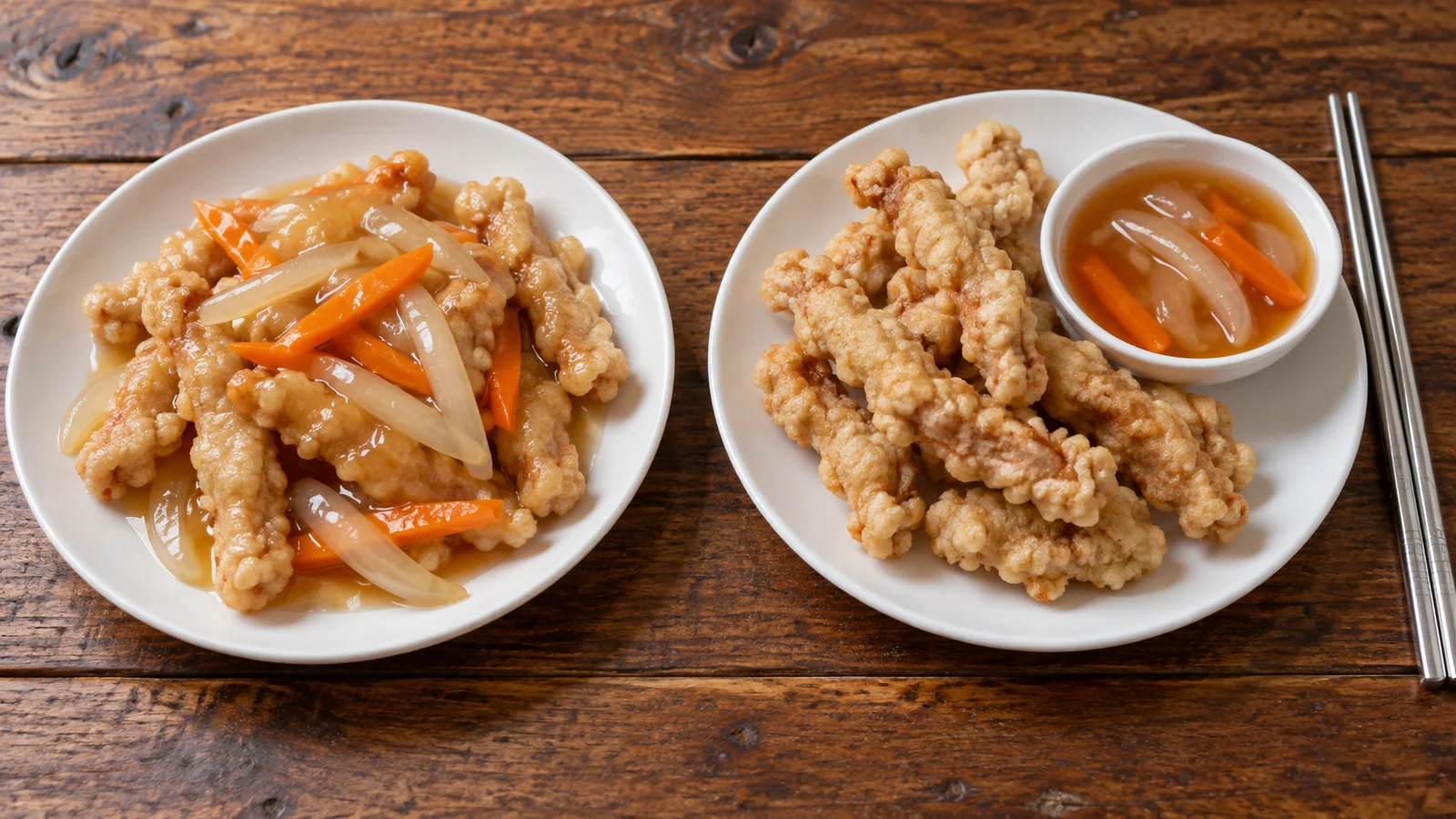
- Dipping: sauce comes separately, so you can add a little to each piece and compare an uncoated bite with a sauced bite. This gives control over the amount of sauce at the table.
- Pouring: sauce is spread over the fried pieces. The coating can absorb moisture and soften as it sits, making the experience different from dipping immediately before a bite.
- The kitchen's finished dish: some restaurants serve the meat already coated or combined with sauce. Ask before ordering if you want it separate; a finished dish cannot always be separated afterward.
The Korean words jjikmeok and bumeok are informal shorthand for dipping and pouring. Neither establishes one mandatory way to eat all tangsuyuk. If a group has different preferences, ask for separate sauce and put some onto your own portion instead of changing the whole shared plate without checking.
Try a small amount of sauce first. Sweetness, vinegar acidity, thickness and any chili seasoning are separate features. A pale sauce need not be bland, and a red variation may be spicy. The Korea Tourism Organization's Lien Chun introduction lists several tangsuyuk variations, including a Sichuan-style menu item; the actual seasoning still needs confirmation at the restaurant.
How can you choose a portion and order clearly?
- Confirm the meat and coating. Ask which meat is used and whether the coating is intended to be crisp, chewy or both. If an ingredient must be avoided, ask about the batter, sauce and shared cooking equipment, not just the meat.
- Check the actual size. Small, medium and large are restaurant-specific labels, not universal weights or guaranteed numbers of people. Ask how much food comes with the order and consider the noodle or rice dishes you are also buying.
- State the sauce preference before cooking. For example: "Can the sauce come separately?" Also ask whether a spicy variant can be adjusted, rather than assuming sauce color tells you its heat.
If staff cannot confirm ingredients relevant to an allergy, do not decide from the photo, the word chapssal or the absence of a visible ingredient. For a frozen or ready-made product, its own label and cooking directions take precedence over the description of restaurant tangsuyuk.
How does tangsuyuk fit into a noodle meal?
It can be a shared meat dish alongside individual bowls of jajangmyeon or jjamppong. Jajangmyeon provides noodles with dark chunjang sauce; regular jjamppong provides noodles and broth. Tangsuyuk adds fried meat and a different sweet-and-sour seasoning, so choose the combination by the flavors and amount of food you want rather than treating a set as obligatory.
Take a manageable piece and allow the hot center to cool enough before biting. If a piece is too large, use cutlery or ask for scissors and divide it on your own plate. Taste a small bite with sauce, then adjust the next piece; you do not have to finish the sauce or soak every piece to eat the dish correctly.
What changes with takeout and reheating?
For takeout, separate sauce helps you decide when moisture meets the fried coating. Steam trapped during transport can also soften the crust, so even unsauced pieces may not keep exactly the texture they had when served immediately. Packaging choice helps manage texture, but it does not replace appropriate handling and storage.
Follow the seller's instructions for leftovers or the package directions for a prepared product. If reheating is appropriate, check the guidance for the food and appliance rather than assuming one temperature and time fits every piece size or coating. Warming sauce separately when instructed can avoid soaking the coating too soon. Do not try to make food with uncertain storage conditions acceptable merely by restoring a crisp exterior.