Japanese Food / What Is Sukiyaki? Ingredients, Eating Tips and Shabu-Shabu
Sukiyaki is a Japanese hot pot of thinly sliced beef, vegetables and tofu cooked in a sweet and savory soy-based seasoning. Some cooks heat the sauce first, while others sear the beef first; the cooked food is sometimes dipped in raw egg. Ingredients and methods vary, so check the meat, sauce and egg when ordering.
What is sukiyaki?
Sukiyaki is usually made in a shallow pan with thin beef and vegetables, seasoned with soy sauce, sugar and cooking alcohol. The ingredients absorb the sweet-salty sauce and may be eaten with rice. They can be cooked together or in smaller batches as people eat.
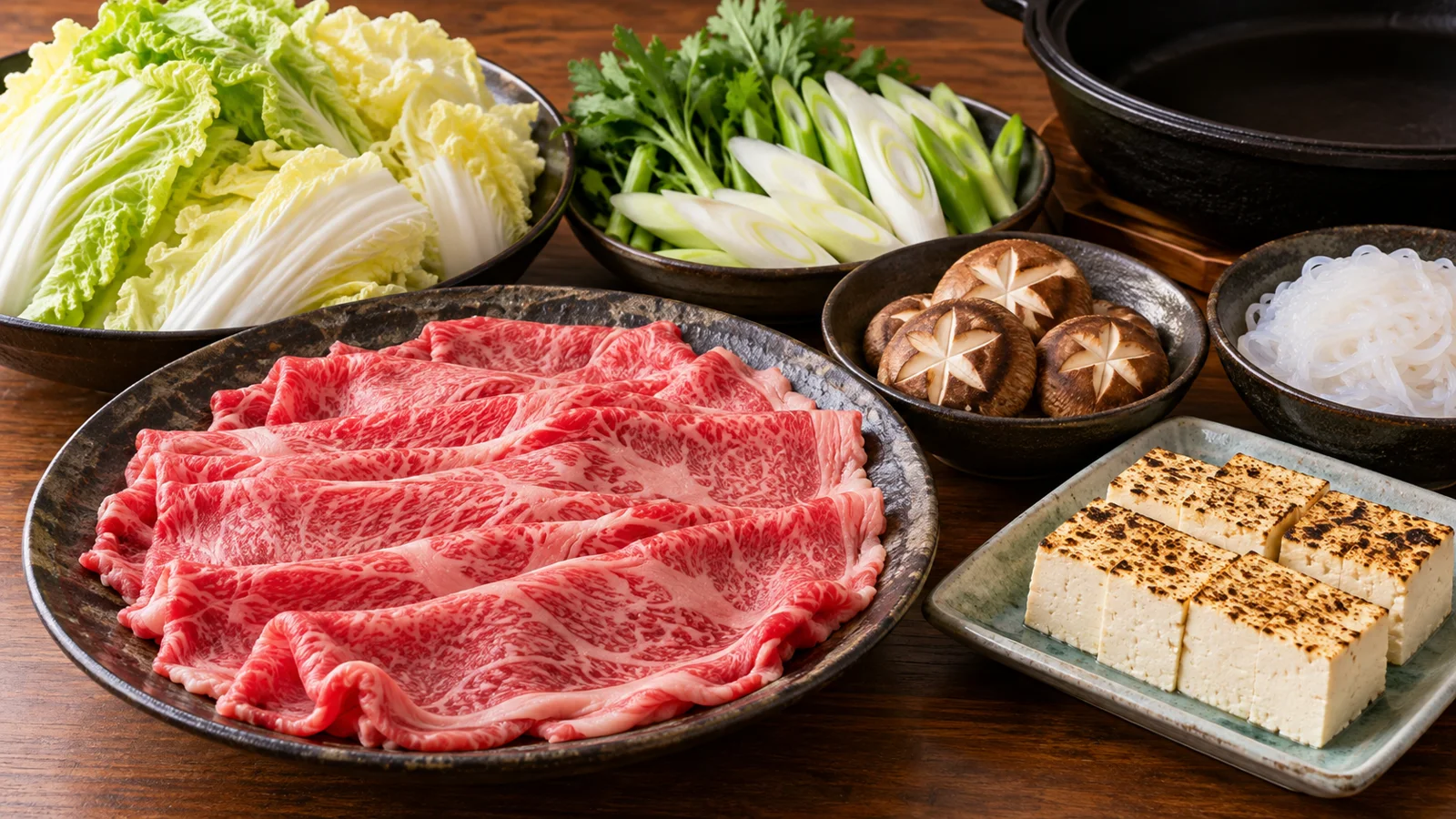
The Japanese Ministry of Agriculture's sukiyaki guide gives an example using beef, green onion, edible chrysanthemum, shirataki, napa cabbage and tofu. Ingredients and proportions vary by region and household.
What ingredients and seasoning are used?
- Beef: thin slices are common. The cut and fat content affect flavor and texture.
- Vegetables and mushrooms: napa cabbage, green onion, edible chrysanthemum and shiitake are possible choices, depending on availability and preference.
- Tofu and shirataki: grilled tofu and noodles made from konjac are often used, but not in every restaurant.
- Warishita: a sukiyaki sauce mixed from soy sauce, sugar, mirin or cooking alcohol and other ingredients. Sweetness and concentration differ.
Soy sauce can contain wheat and soy; warishita can also contain alcohol. Check the specific ingredients if you have an allergy or dietary restriction.
How do Kanto and Kansai styles differ?
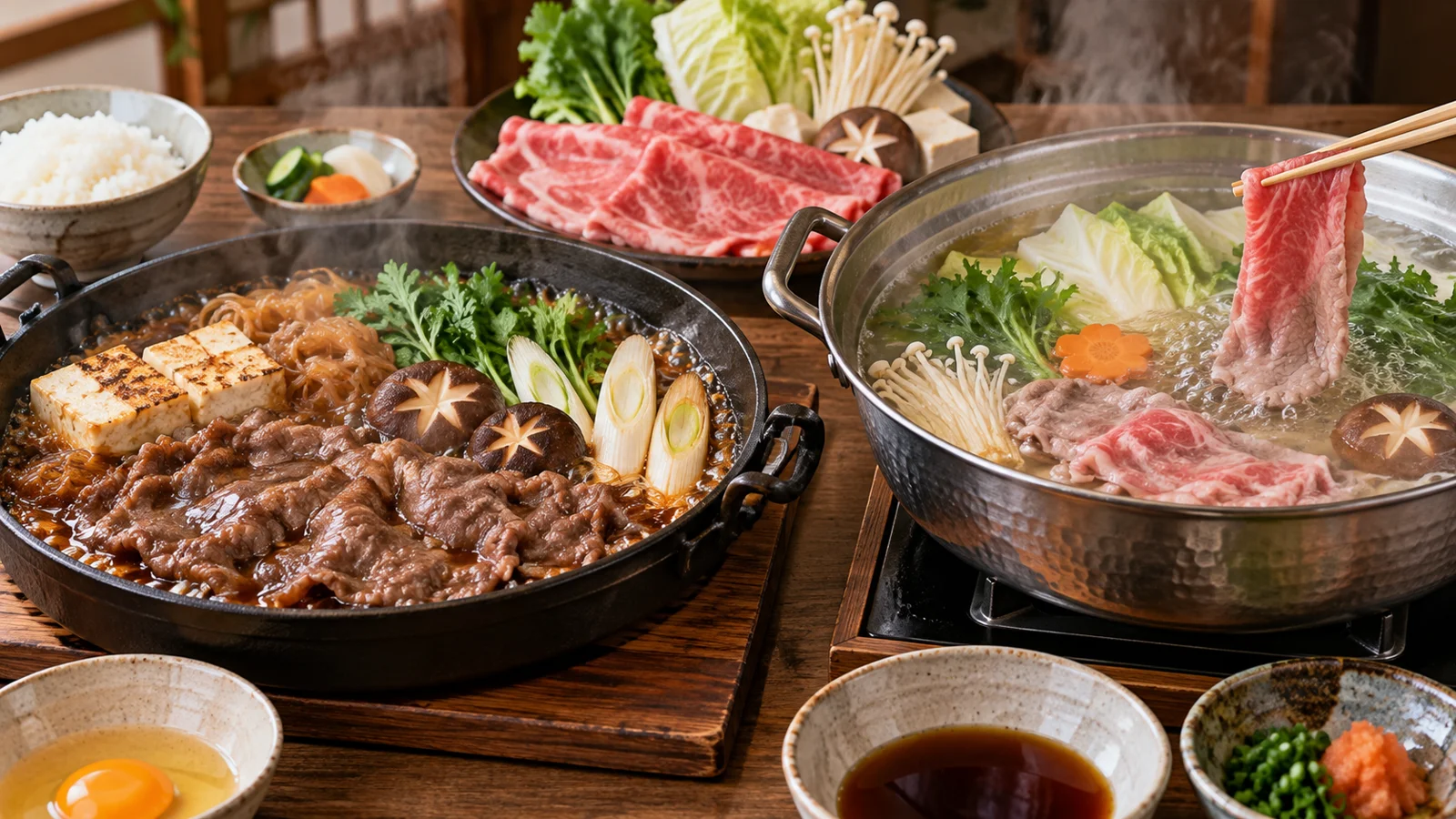
In a common description of Kanto style, premixed warishita is heated before meat and vegetables are cooked in it. Kansai style is often described as searing beef first, seasoning it with sugar and soy sauce, then cooking the other ingredients.
These labels are a useful guide rather than rigid rules. The ministry's Tokyo sukiyaki page notes that many Tokyo specialty restaurants now sear the beef first. Ask about the actual method and seasoning.
How does it differ from shabu-shabu?
Sukiyaki often cooks meat and vegetables together in a sweet soy seasoning. Shabu-shabu usually cooks thin meat in a clear broth before dipping it in ponzu or sesame sauce. Both vary in their meat, vegetables and sauces.
How do you order and eat it?
- Check the meat and portion. Ask about the beef cut, what a serving includes and the cost of extra meat or vegetables.
- Ask about cooking. Check whether staff cook it or you do, and how to add seasoning or broth.
- Separate raw and cooked food. Use different chopsticks or utensils for raw meat and eating, and cook ingredients safely.
- Ask about egg and allergens. Raw beaten egg is sometimes used as a dip; ask whether it is optional or a fully cooked alternative is available. Check wheat, soy and alcohol in the sauce as needed.
What about raw egg and cooking at home?
Raw eggs can pose a foodborne illness risk, and production, distribution and advice on eating them raw differ by country. Children, pregnant people, older adults and people with weakened immune systems should avoid raw egg and consider fully cooked egg or another option. The dish can also be eaten without egg.
At home, wash and cut ingredients, then heat the seasoning in a pan or sear beef first before adding vegetables and tofu. Dilute an overly strong sauce with a little water or broth and watch for burning. Keep raw-meat utensils separate from those used for cooked food and cook meat adequately according to its type and local food-safety guidance.
Even without visible meat, sauce or stock can contain animal ingredients. Tell the restaurant about your vegetarian requirements, wheat, soy or egg allergies and any concerns about shared equipment.