Japanese Food / What Are Gyoza? Fillings, Cooking Styles and Dipping Sauces
Japanese gyoza are dumplings with a thin wrapper enclosing minced meat, vegetables or other fillings, cooked by pan-frying, boiling or steaming. Yaki-gyoza, with a crisp base and a filling cooked with added water under a lid, are a familiar version. Check the cooking method, filling and dipping sauce when ordering.
What are Japanese gyoza?
Gyoza originated in China and became part of Japanese food culture. A thin wrapper is folded into a crescent around the filling, and pan-fried versions are common in Japan. Size, ingredients and preparation vary by region and restaurant.
The Japan National Tourism Organization's Utsunomiya gyoza guide describes their Chinese origins and thin wrappers. Its Tochigi food guide gives an example with pork, cabbage, chives, garlic and ginger.
What goes into the wrapper and filling?
- Wrapper: usually wheat-based, though rice-flour and other products exist. Do not infer ingredients from the name alone.
- Meat: minced pork is common, but other meat or seafood may be used. Check the specific menu.
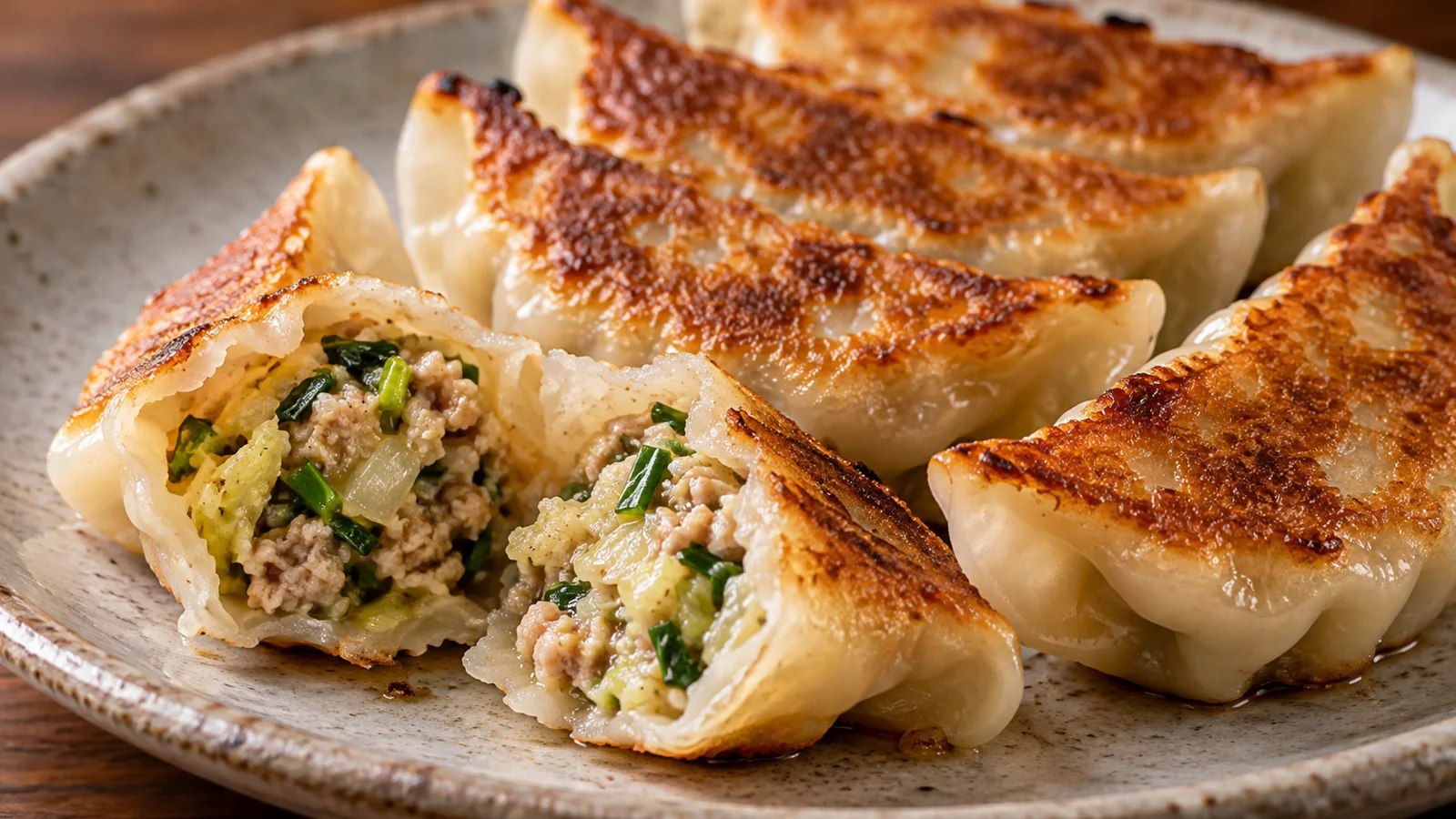
- Vegetables and aromatics: cabbage or napa cabbage, chives, green onion, garlic and ginger are possible. Garlic-free recipes also exist.
- Seasoning: soy sauce and sesame oil may be added; check wheat, soy or sesame if relevant.
Vegetable gyoza may still contain animal stock or fat. Vegetarian suitability depends on the wrapper, filling, seasonings and cooking oil.
How do pan-fried, boiled and steamed gyoza differ?
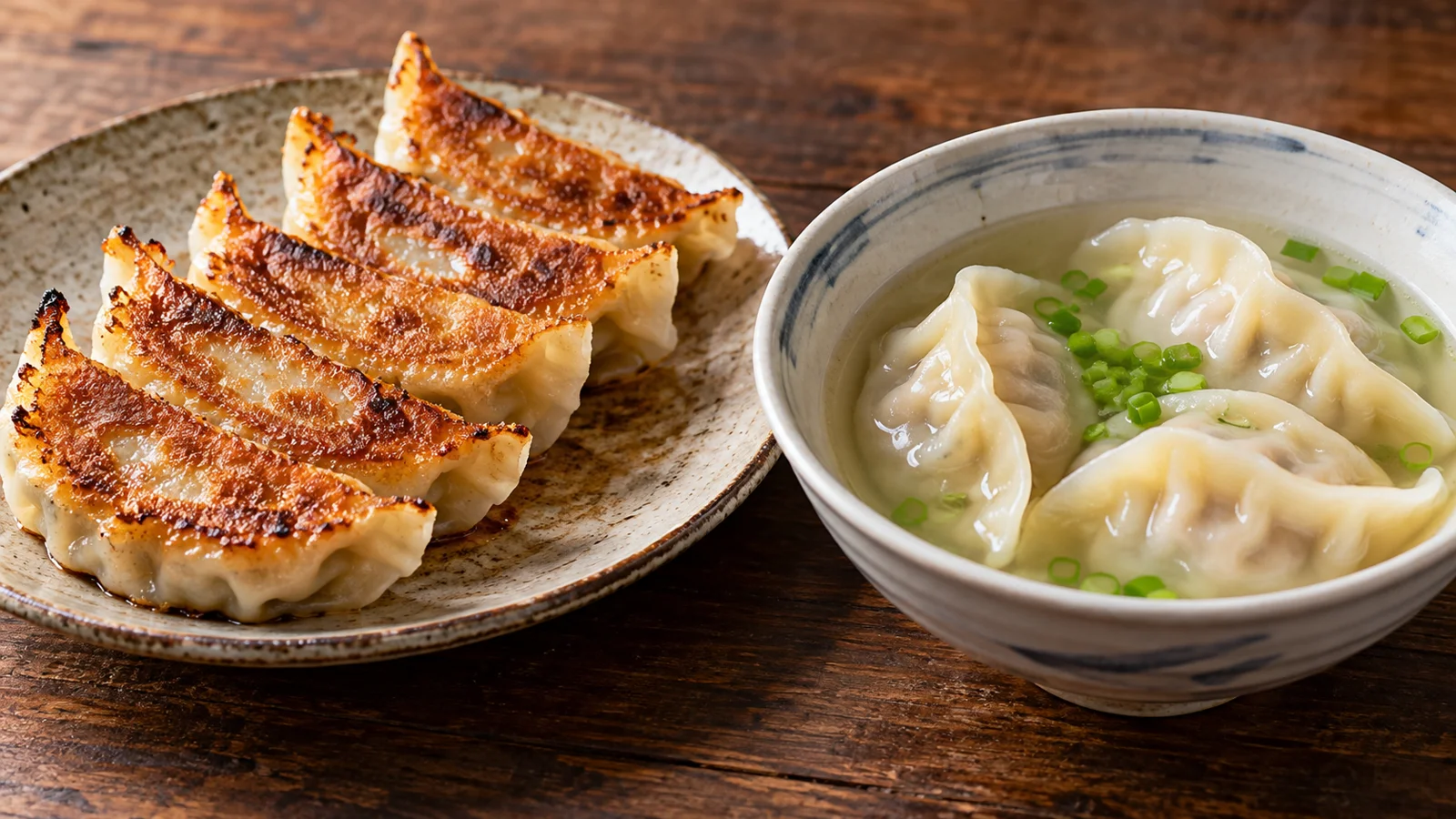
Yaki-gyoza are often browned on the base, cooked with a little water under a lid, then uncovered to evaporate moisture and crisp the bottom. Sui-gyoza are boiled for a softer wrapper, while mushi-gyoza are steamed. Wrapper thickness and methods vary by product and restaurant.
What dipping sauce is used?
Vinegar, soy sauce and rayu chili oil are often mixed to taste. Heat and ingredients vary, so add chili oil gradually. Taste a seasoned dumpling before deciding how much sauce to use.
Kobe also has a regional style served with miso-based sauce, described in the Japanese Ministry of Agriculture's miso-sauce gyoza guide. Sauces can contain soy, wheat, sesame or alcohol; check the specific product.
How do you order and eat them?
- Choose a method. Check whether the dumplings are pan-fried, boiled or steamed.
- Check quantity and filling. Ask how many are on a plate and whether pork, seafood or garlic is used.
- Check sauces and allergens. Ask about wheat, soy and sesame in the wrapper, filling, sauce and oil, and shared pans or utensils.
- Watch the hot filling. Juices can be very hot. If minced meat seems undercooked, ask for further cooking.
What matters when cooking and storing them at home?
For packaged dumplings, first check whether to cook from frozen or thaw. Arrange them with space in an oiled pan, add the amount of water specified and cover at the recommended heat. Once the center is cooked, uncover to evaporate the water and crisp the base. Be careful of splashing oil and steam when adding water to a hot pan.
When making them yourself, avoid overfilling so the wrappers close. Separate raw-meat utensils from those for finished food. A browned surface does not establish that minced filling is cooked through: heat to the center according to meat type and product instructions. Cool leftovers promptly, refrigerate and reheat thoroughly, following local food-safety time and temperature guidance.