Japanese Food / What Is Oden? Daikon, Fish Cakes and How to Eat It
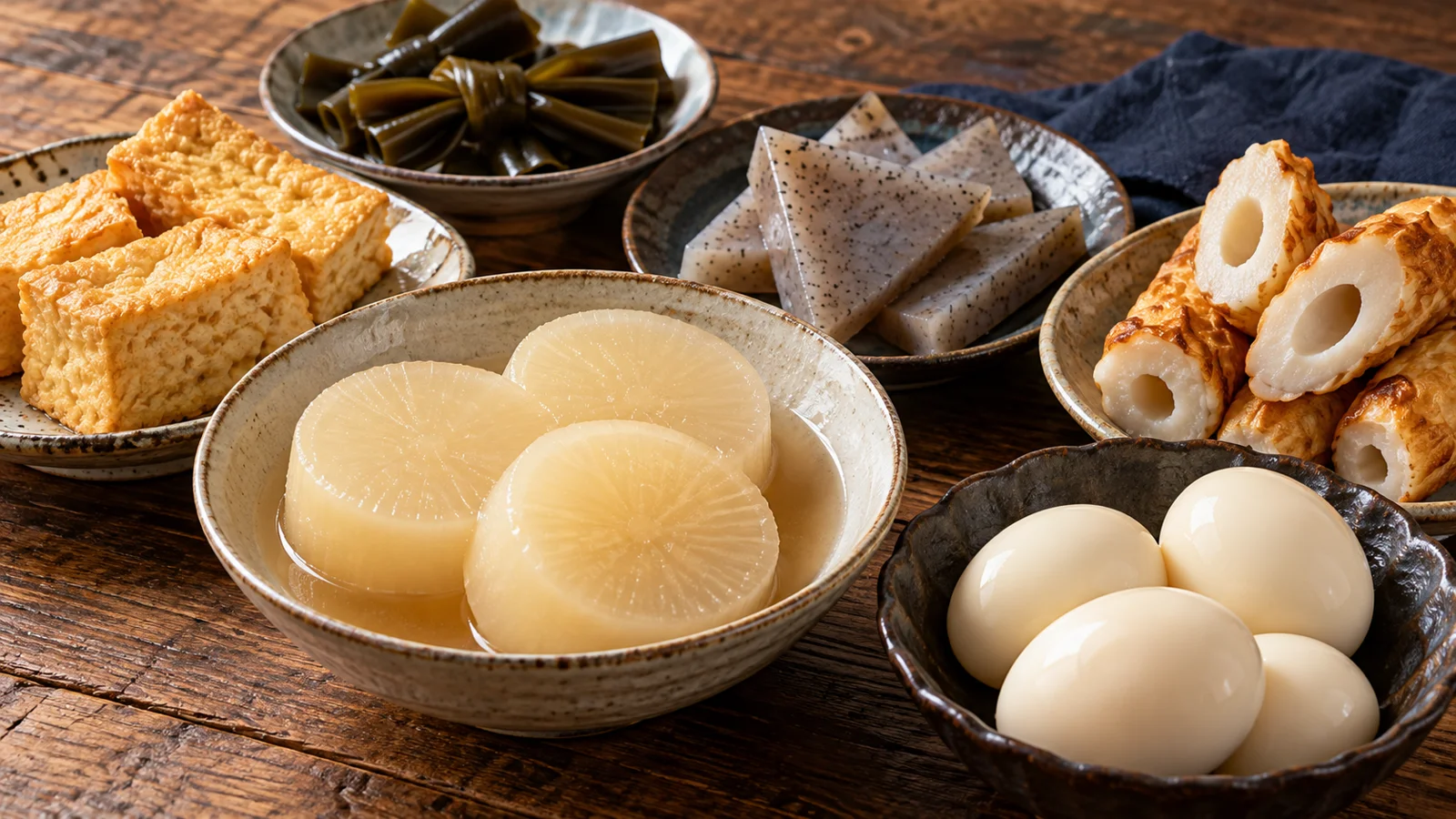
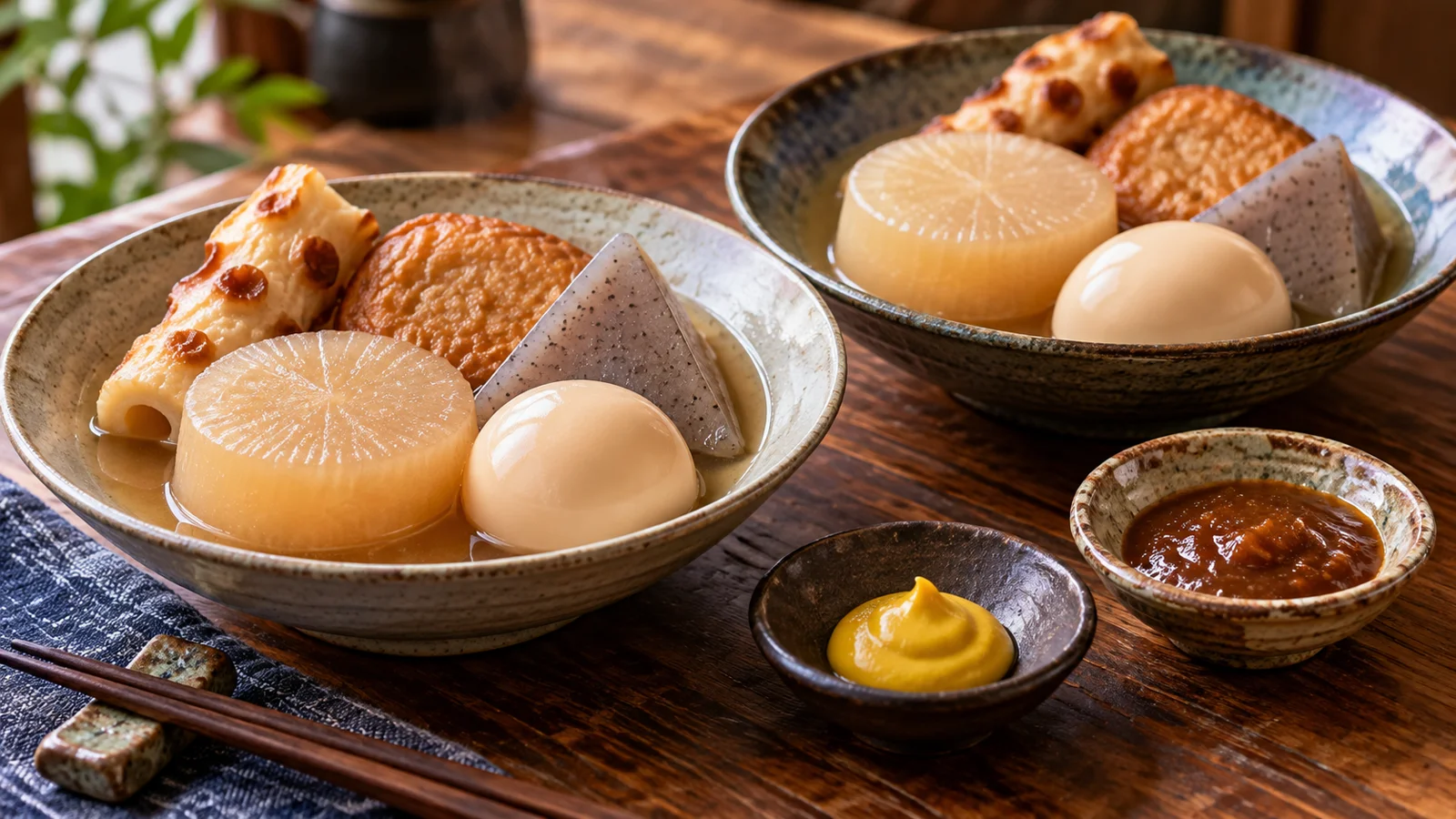
Oden is a Japanese simmered dish of daikon radish, boiled eggs, konjac, fish cakes, tofu and other ingredients cooked slowly in broth. It refers to the whole dish rather than just fish cakes. Ingredients, broth and condiments such as mustard or miso sauce vary by region and restaurant.
What is oden?
Oden lets various ingredients absorb the flavor of stock. Kelp and bonito stock seasoned with soy sauce is one method, but not all oden uses the same broth. Alongside fish cakes, radish, egg and konjac provide different textures.
The Japanese Ministry of Agriculture's Tokyo oden guide introduces radish, konjac, eggs, fish cakes and tofu. Even mild-looking ingredients absorb broth and seasoning, so appearance alone does not reveal flavor or contents.
What ingredients are common?
- Daikon: thick radish slices cooked to absorb broth; size and tenderness vary.
- Egg: boiled, peeled and simmered to take on flavor.
- Konjac and shirataki: firm pieces or thin strands made from konjac, with a springy texture.
- Fish cakes: chikuwa, satsuma-age and hanpen differ in shape and texture; products can include egg or wheat.
- Tofu products: fried or processed tofu is also used. Check the contents of filled products separately.
Chikuwa is a tubular fish cake with a hole; similarly named chikuwabu is a separate wheat-based ingredient. Check actual ingredients rather than names or shapes if you have allergies.
Do broth and serving styles differ by region?
Broth color, ingredients and sauces vary. Shizuoka has oden known for black hanpen and dark broth, while Aomori has a version served with ginger miso sauce.
The ministry's Shizuoka oden guide and ginger miso oden guide describe these examples. Not every restaurant in a region follows one recipe.
How do you use mustard and sauces?
A little karashi, Japanese mustard, can be used as a dip. It can be pungent, so start with a small amount. Some places offer miso sauce, ginger soy sauce or other condiments.
Taste the seasoned ingredient first, then decide how much sauce to add. Soy, wheat and alcohol in condiments vary by product; explain dietary restrictions specifically.
What should you check at a restaurant?
- Choose ingredients and quantity. Check whether prices are per piece or assortment and ask about unfamiliar items.
- Check broth. Vegetables or tofu can still contain fish stock, meat ingredients or animal seasonings.
- Explain allergies. Ask about fish, egg, wheat, soy and shared broth or tongs. Removing an ingredient does not remove cross-contact.
- Take care with hot food. Broth and the centers of radish or tofu can be hot; cut into manageable pieces.
How do you make and store it at home?
Prepare radish and konjac as directed, pre-boiling if the recipe requires. Boil and peel eggs. Heat prepared stock and seasoning, cook slower ingredients such as radish first, then add fish cakes and tofu. Adjust the heat to avoid vigorous boiling that can break soft ingredients.
For packaged oden sets, follow allergen, cooking and storage information. Do not leave leftovers in a large pot for a long time: divide into shallow containers, cool promptly and refrigerate, then heat thoroughly before eating. Follow local time and temperature guidance; appearance or smell alone cannot establish safety.