Korean Food / What Is Bulgogi? Marinades, Types, and How to Order and Eat It
Bulgogi is a Korean dish of thinly sliced, seasoned meat that is grilled or cooked in a pan. Soy-marinated beef is a familiar version, but pork and spicy preparations also exist. Check the meat, marinade, and presence of broth together when choosing a menu.
Meat and marinade
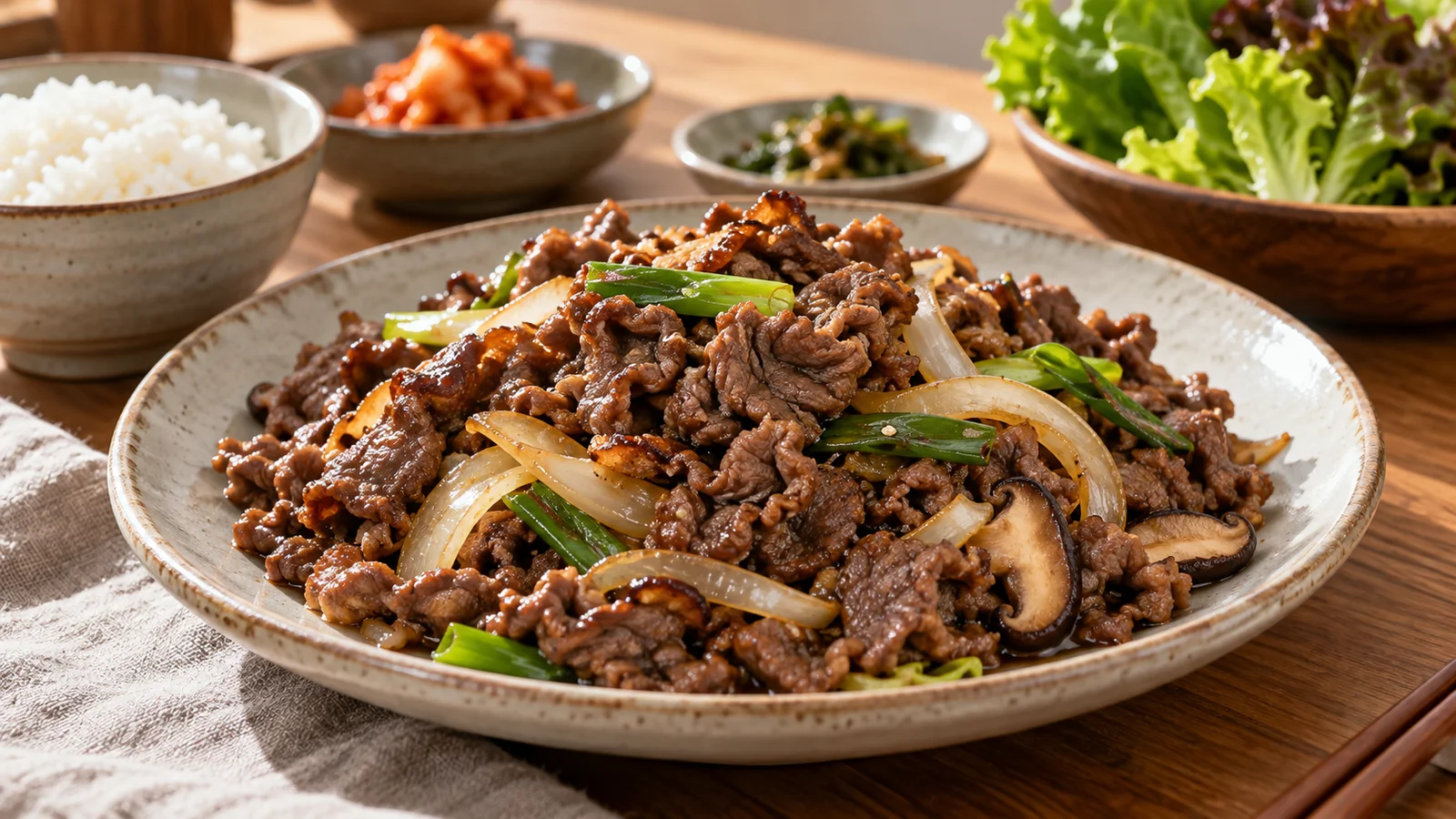
Beef bulgogi uses thin slices of beef with seasonings such as soy sauce, garlic, and a source of sweetness. Some recipes use pear or onion, and vegetables such as mushrooms and scallions may cook with the meat. Recipes are not identical from shop to shop.
The Korea Tourism Organization’s food guide describes beef bulgogi seasoning using vegetables and fruits such as onion and pear. Treat that as an example rather than a universal ingredient list or ratio. The word “bulgogi” alone does not confirm the meat or whether the sauce is soy-based.
What does bulgogi taste like?
A soy-based beef version is sweet and savory, often with garlic and scallion aromas. Thin slices are convenient to eat with rice, while tenderness and richness depend partly on the cut of meat.
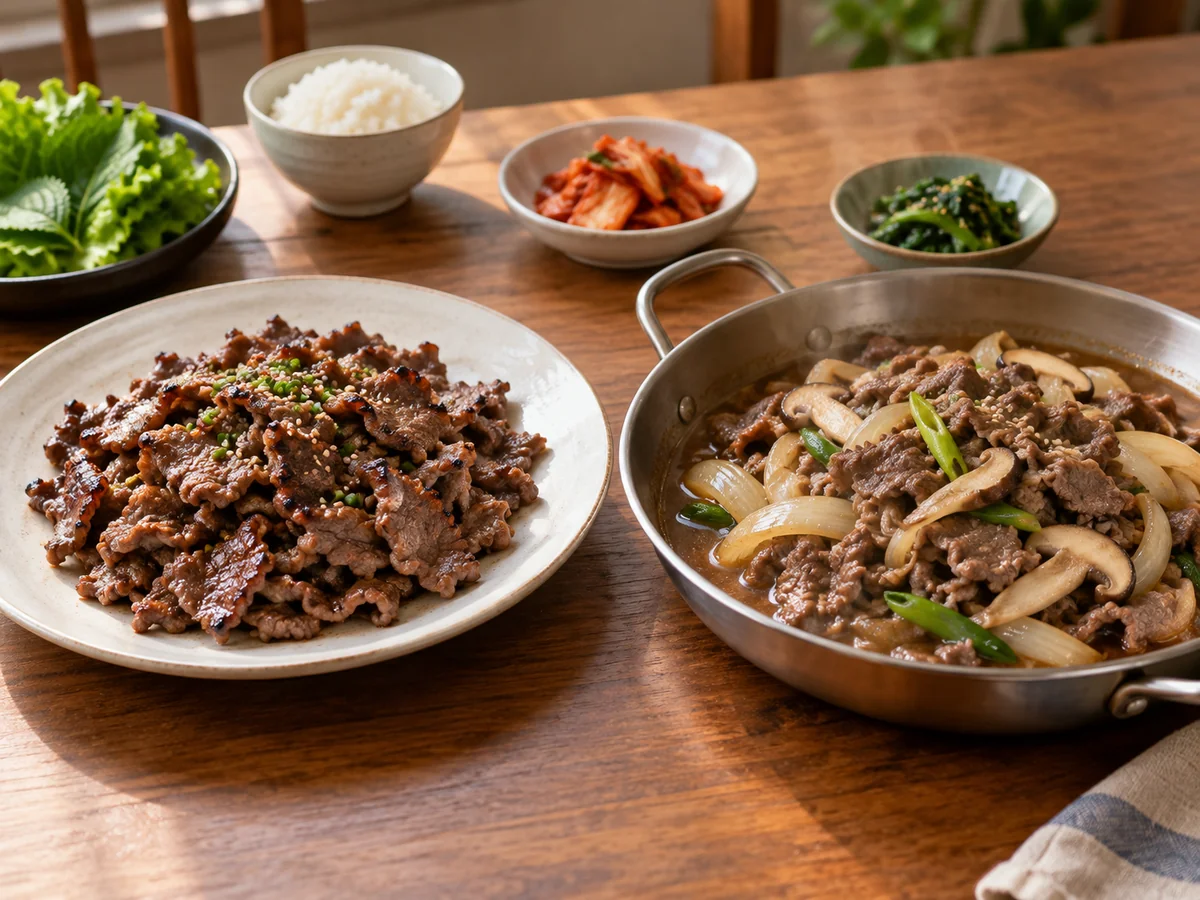
Direct grilling can emphasize browned edges and a roasted aroma. In a broth-style version, meat and vegetable flavors mingle with the liquid. Do not assume every beef bulgogi is mild: some menus add chili or use a spicy sauce. The description is a better guide than the color in a photograph.
Choose between grilled meat and a broth-based meal
Cooking method matters as much as the animal. With a soy-based marinade, a relatively dry preparation can emphasize browned meat, while a pan with vegetables and liquid creates seasoning to eat with rice and broth. Choose the meal format you want rather than assuming one must be the only authentic style.
For wraps, check whether the meat is easy to transfer onto leaves and whether leaves and ssamjang are supplied. For rice and broth, confirm that the menu actually includes enough liquid for that style and whether rice is included. A little liquid in a photograph does not necessarily indicate a soup-like serving.
Unlike unseasoned samgyeopsal, bulgogi often has flavor added before cooking. Declining extra salt at the table is different from obtaining a less sweet or salty marinade. Ask about adjustments before ordering; once served, try changing the balance of meat, rice, and vegetables before adding more sauce.
Beef and pork versions
Both involve seasoning meat before cooking, but the meat and sauce can differ. Pork bulgogi may use either a red chili-based sauce or a soy-based one. Names and preparations can overlap with other spicy pork dishes, so check how a particular restaurant uses the term.
If you avoid pork, ask explicitly for beef. On burgers and processed foods, “bulgogi flavor” may describe a sauce rather than guarantee a particular meat. Read the actual ingredient information when the distinction matters to you.
How do you eat bulgogi?
Taste a little meat first, then balance the seasoning with rice and side dishes. If lettuce or perilla leaves are provided, make a small wrap with cooked meat, a little rice, and a dab of ssamjang, a Korean dipping paste. Start with a small amount because the meat is already seasoned.
For a dish cooked at the table, follow staff instructions and keep utensils used for raw meat separate from eating utensils. Ask whether the food arrives fully cooked or needs more cooking on the table. This distinction is more useful than guessing from the name of the pan.
What should you check before ordering?
Confirm whether the price is per person or per platter, whether there is a minimum order, and whether rice is included. Extra meat or glass noodles may be separate additions. Portion rules and prices vary, so check the actual menu rather than relying on a general price expectation.
Soy sauce can introduce soy and wheat ingredients; sesame oil or garnishes can introduce sesame. If you need less sweetness or heat, ask whether the meat is already marinated and can be adjusted. For a first order, establish three things: beef or pork, mild or spicy, and grilled or broth-style.