Korean Food / What Is Japchae? Glass Noodles, Ingredients, Flavor, and How to Eat It
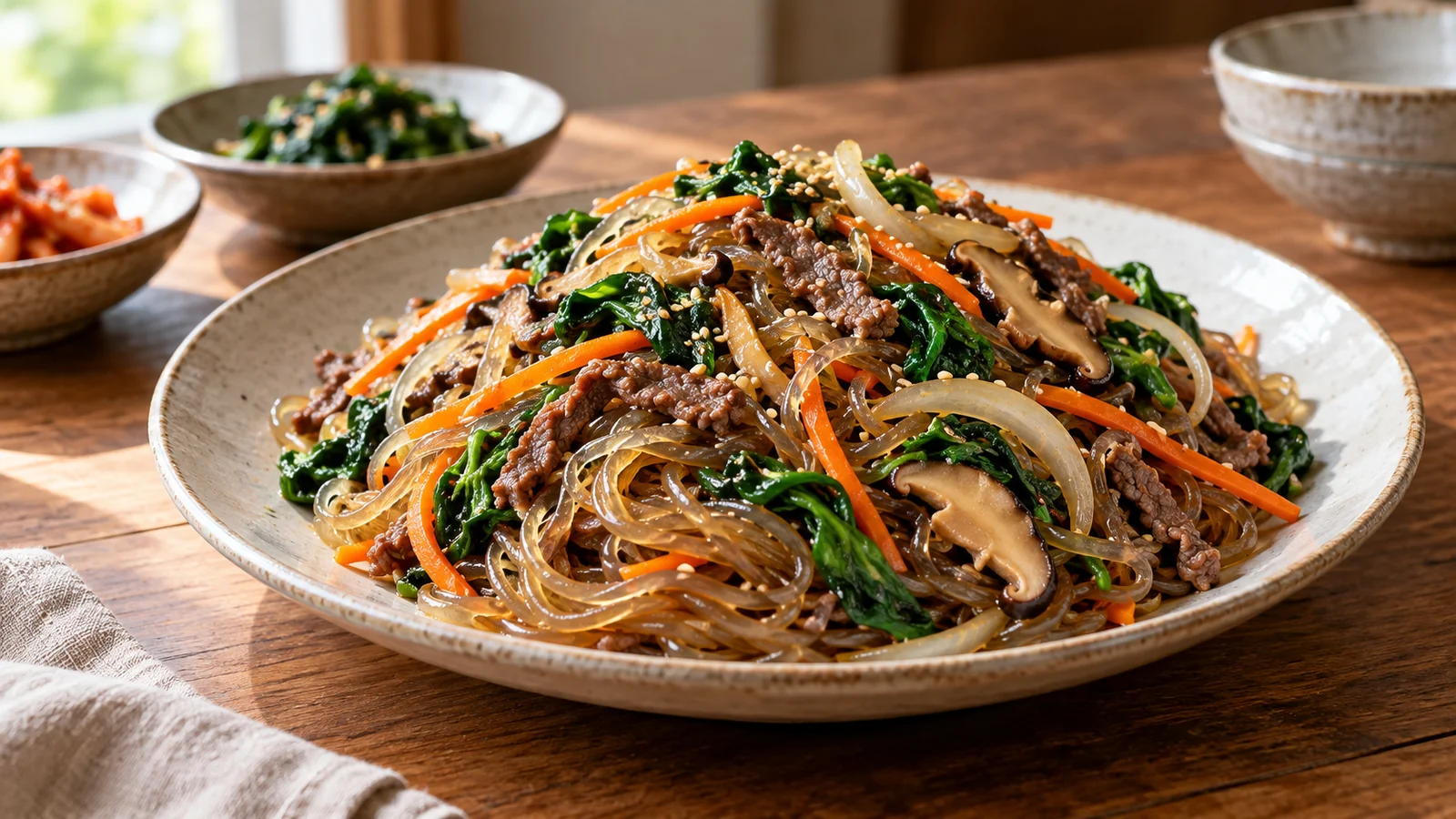
Japchae is a Korean dish of cooked glass noodles mixed or stir-fried with vegetables, mushrooms, and sometimes meat. A familiar version has soy-based seasoning, a sesame aroma, and springy noodles. A vegetable-filled appearance does not establish that the dish is vegetarian.
What are the noodles made from?
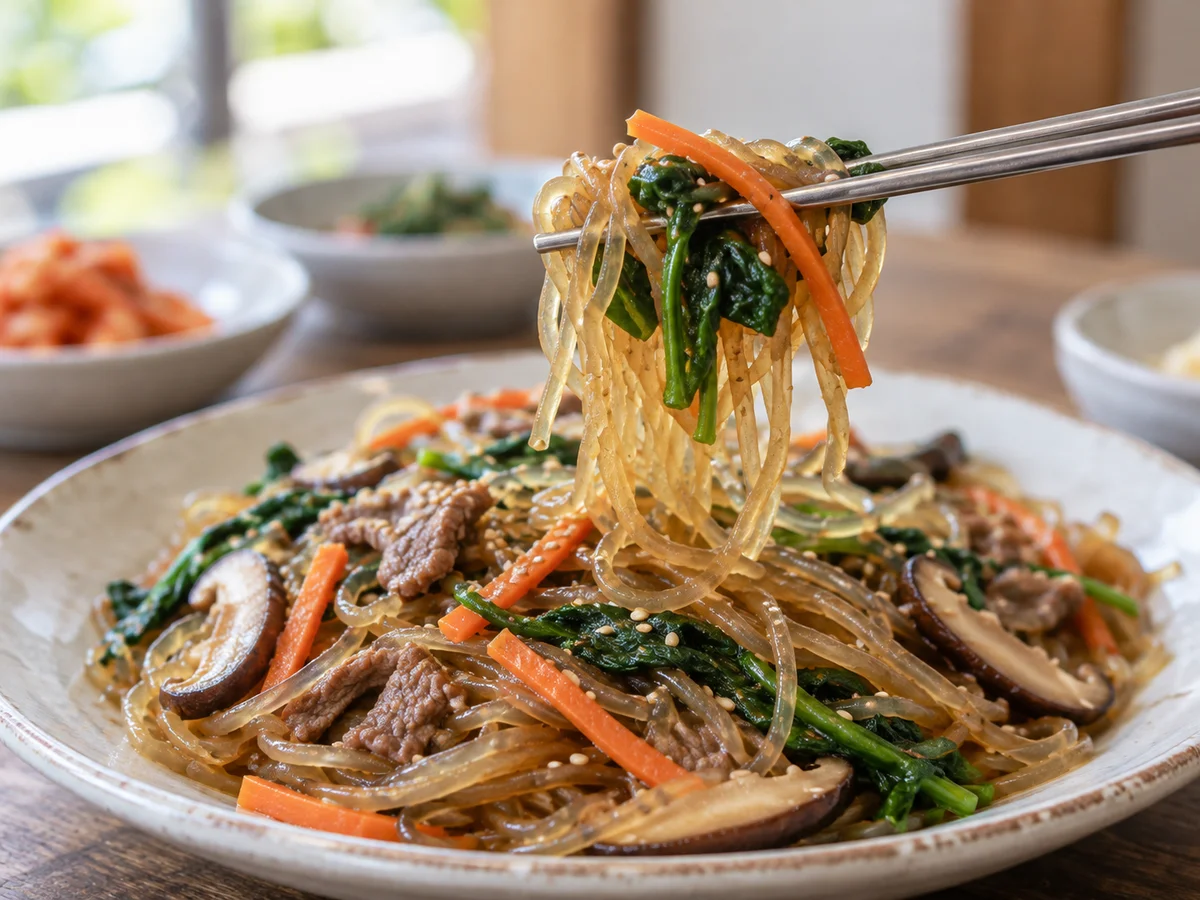
Korean japchae commonly uses starch noodles made with ingredients such as sweet potato starch. They become translucent and springy when cooked, rather than resembling wheat noodles or rice vermicelli. Starch blends vary by product, so check the ingredient information if the distinction matters to you.
Long, slippery noodles can be awkward to pick up in a large bundle. Take a small portion or ask whether they can be cut. Seeing noodles on a plate does not mean this is a soup dish that needs broth poured over it.
Vegetables, mushrooms, and meat
Thin strips of carrot, spinach, onion, and mushrooms can be combined with the noodles. Beef or pork may be included, while meat-free versions also exist. The Korea Tourism Organization’s food guide describes vegetables, mushrooms, and meat cooked and combined with seasoned glass noodles.
Because ingredients have different thicknesses and moisture levels, some methods cook them separately before mixing. The vegetables are more than a garnish: a firmer carrot strip and a soft mushroom give contrast to the noodles. Try a spoonful or small bundle that includes several ingredients.
Flavor and differences from other noodle dishes
A familiar soy-seasoned japchae is sweet and savory, with sesame oil or seeds adding aroma. The seasoning coats the ingredients instead of forming a bowl of soup. The amount of oil and sweetness varies, so one restaurant’s version need not represent every other one.
Not every japchae is necessarily mild; chili-seasoned versions exist. Nor do starch noodles automatically make the finished dish gluten-free. Soy sauce or other seasonings may introduce wheat even when the noodles themselves do not.
Why the vegetables matter as much as the noodles
Thinking of japchae only as noodles overlooks the contrast that makes the dish distinctive. Glass noodles provide long, springy strands; mushrooms and vegetables add softness or crunch. If vegetables collect on one side, redistribute a little and taste a small portion containing several ingredients. The textures can differ even when they share the same seasoning.
If the dish feels too oily for your preference, adding soy sauce does not reduce its oil or noodle content; it mainly adds more seasoning. When rice is part of the meal, alternating small amounts can balance a strong flavor. That does not mean every plate of japchae must be mixed with rice.
Decide whether you want a small side, a shared platter, or japchae-bap as a meal before choosing a portion. For dietary needs, actual meat, egg, and seasoning information is more useful than abundant visible vegetables or translucent noodles. Ask before ordering whether the ingredients have already been mixed, since removing one component may no longer be practical.
How should you order and eat it?
Take a small serving and taste noodles with vegetables. Gently redistribute the ingredients if they have collected on one side. Check the seasoning before adding soy sauce or salt. If you prefer a warm dish, ask how that menu is served rather than assuming a fixed temperature for all japchae.
For vegetarian requirements, ask about meat, egg garnish, stock, and seasonings. For allergies, ask about soy, wheat, sesame, and shared equipment as relevant. Three clear questions can settle much of a first order: “Does it contain meat?”, “Is rice included?”, and “Is the seasoning mild?”