Korean Food / What Is Samgyetang? Chicken, Ginseng, Rice Filling, and How to Eat It
Samgyetang is a Korean soup made by simmering a small chicken with ingredients such as glutinous rice, ginseng, garlic, and jujube. You eat the meat, broth, and rice filling together, with ginseng adding its distinctive aroma. Taste the broth first, then separate small pieces of meat from the bones.
What is inside the chicken?
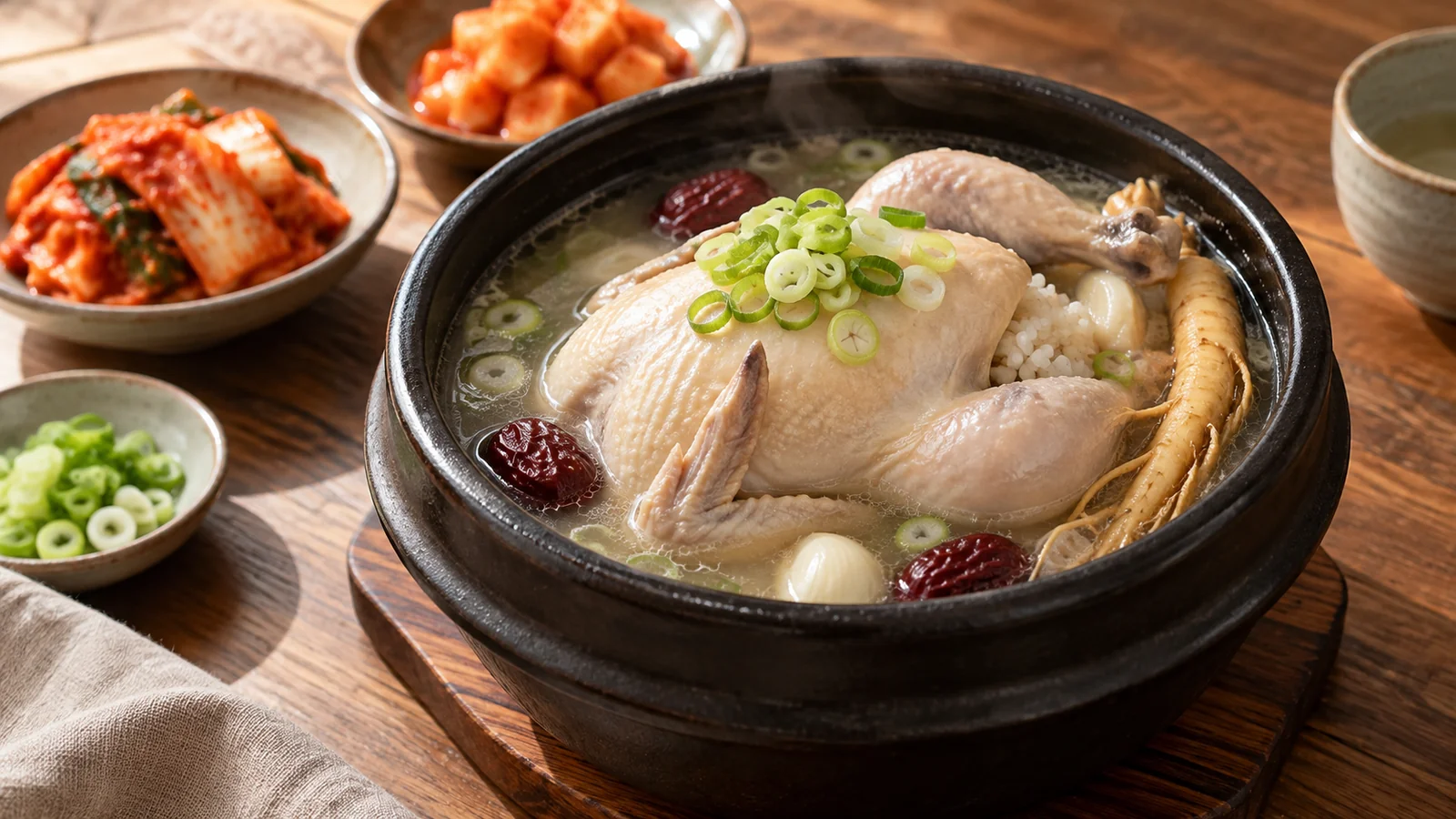
The Korea Tourism Organization’s food guide describes chicken filled with glutinous rice, garlic, jujube, and ginseng. The placement and proportions vary; some ingredients may sit in the broth rather than inside the chicken. Additional ingredients are possible, so do not treat one photograph as a universal recipe.
Rice-like grains in the cavity may be the glutinous rice filling. It absorbs broth and differs from a separate bowl of plain rice. Explore the filling carefully and distinguish edible ingredients from bones or jujube stones.
What does it taste like?
Chicken broth and tender meat form the base, while ginseng contributes a distinctive aroma. Its strength depends on the ingredients and amounts. If the flavor is unfamiliar, ask how pronounced it is or begin with small tastes of broth.
Broths range from relatively clear to richer preparations with additional ingredients. Some restaurants leave room for diners to add salt, but that does not mean every bowl is unsalted. Taste both broth and meat before adjusting the seasoning.
How do you eat the rice filling?
As you separate the chicken, you can find the rice inside. Scoop some with broth or transfer a little to a side bowl. You do not have to empty all the rice into the soup at once, and no single eating order is required.
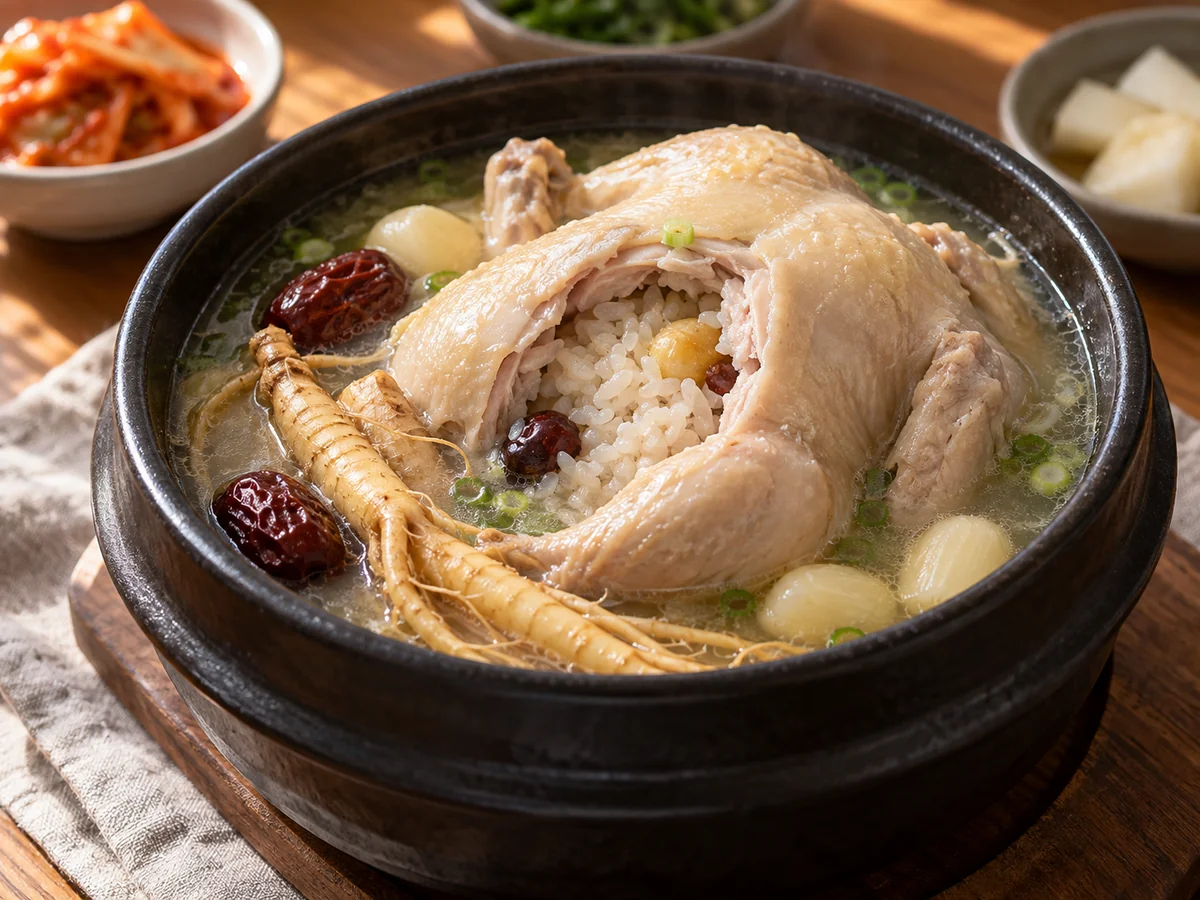
A whole chicken need not be pulled apart in one movement. Work with small portions to avoid splashing hot broth, and ask staff for help if needed. The illustration explains the filling; it does not establish the portion of rice in every restaurant’s dish.
Eating the chicken and broth
- Taste a little broth to check temperature, seasoning, and aroma.
- Transfer a small piece of chicken to a side bowl if provided, let it cool, and separate meat from bone.
- Alternate meat, rice, and broth.
- Add salt or accompaniments only after tasting.
Small bones can remain with the meat, so take your time. Both the pot and its contents may be hot. Tender chicken is not the same as boneless chicken; help children separate manageable portions if sharing the meal.
Compare the meal arrangement with baeksuk
Both dishes can involve chicken cooked in water, but their names do not settle every ordering detail. Samgyetang commonly suggests ginseng and glutinous rice; baeksuk is a broader cooking description. Chicken size, ginseng, and whether rice or porridge arrives separately determine the actual meal.
For an individual bowl, ask whether it contains one small chicken, how rice is incorporated, and whether extra rice is supplied. For sharing, clarify chicken size, recommended diners, and serving bowls or tools. “One chicken” alone does not establish which menu offers more food.
If ginseng is unfamiliar, taste a little broth before alternating chicken and rice. Before salting, distinguish lightly seasoned meat from the seasoning of the broth as a whole. Stirring all the rice into the soup changes its body; trying a little first preserves your choice. Ingredients, flavor, and portion give a clearer basis for ordering than an unspecified promise of health benefits.
What should you check before ordering?
Ask how many people a bowl serves and how the rice is included. A version with abalone or other extras changes the ingredients, so read the full name if you avoid seafood. Ask about any added seed or nut ingredients according to your allergy needs.
Although associated with Korean summer eating traditions, samgyetang is not restricted to summer. Ginseng also does not justify promising a specific health effect from the dish. Choose it as a meal of chicken, broth, rice, and aroma, after checking the ingredients and portion.