Korean Food / What Is Hotteok? Sweet Fillings, Texture, Types, and How to Eat It
Hotteok is a Korean snack made by flattening and cooking dough around a filling, commonly a sweet one. Its cooked outer surface contrasts with the soft dough and melted sugar inside, sometimes with seeds or nuts. A freshly cooked hotteok can have a very hot center, so let it cool and take small bites.
What are the dough and filling made from?
A familiar version uses dough made with ingredients such as wheat flour or glutinous rice, enclosing a sugar-based filling. Cinnamon, nuts, or seeds may be added, but recipes vary. The Korea Tourism Organization’s food guide describes sugar melting into a syrup-like center during cooking.
A menu translated as “honey hotteok” does not by itself confirm actual honey; the syrup may be described that way because of its appearance. Likewise, a glutinous-rice label does not guarantee the complete absence of wheat flour. Ask about ingredients when those distinctions matter.
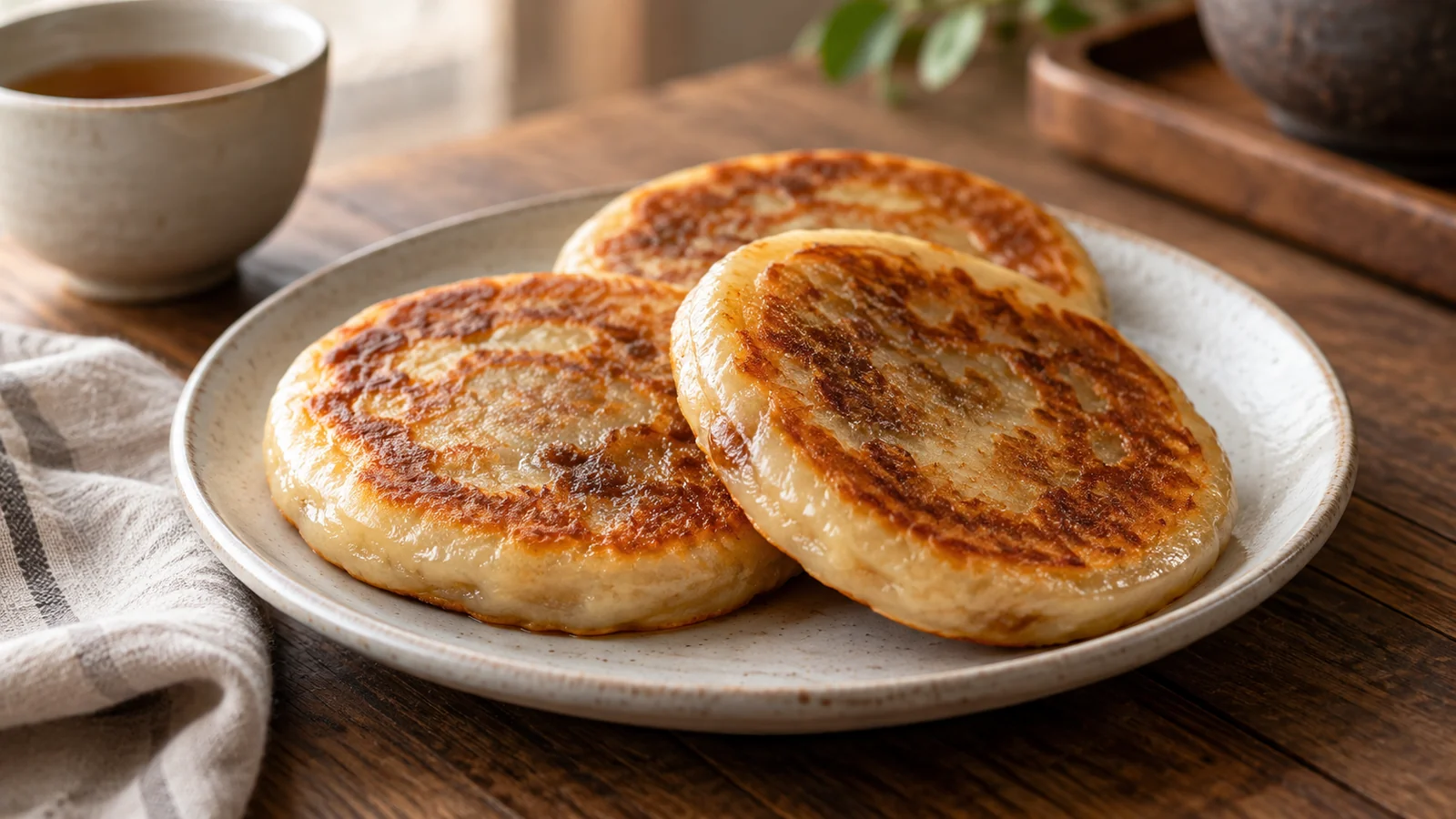
Choose the outer texture and the filling separately
Hotteok can combine a crisp surface with chewy dough inside. Thinly pressed and thicker versions have different proportions of dough and filling, so “crispy” does not describe every part of the snack. Decide whether you want more dough to chew or a thin surface surrounding a syrup-like center.
Seed hotteok does not use one universal mixture. Ask which seeds or nuts are present and whether they supplement the regular sugar filling. This helps distinguish sweetness from crunch. A honey-style name does not guarantee real honey, and a glutinous-rice name does not establish the absence of wheat.
Immediate eating and takeaway are different choices. Crispness may change in packaging, while a cooled exterior can still surround hot sugar. Start with a small edge bite and check the center rather than judging by the surface alone. If you intend to save part, obtain storage and reheating guidance from the seller before leaving.
Basic, seed-filled, and other types
The basic idea is dough enclosing a sweet filling. Seed-filled hotteok adds seeds or nuts for crunch, but the exact mixture and the way it is added vary by shop.
Cheese, vegetable, or noodle fillings are other possibilities, so the word hotteok does not always mean a purely sweet snack. For a savory version, ask about both the filling and the dough’s sweetness to understand what you are ordering.
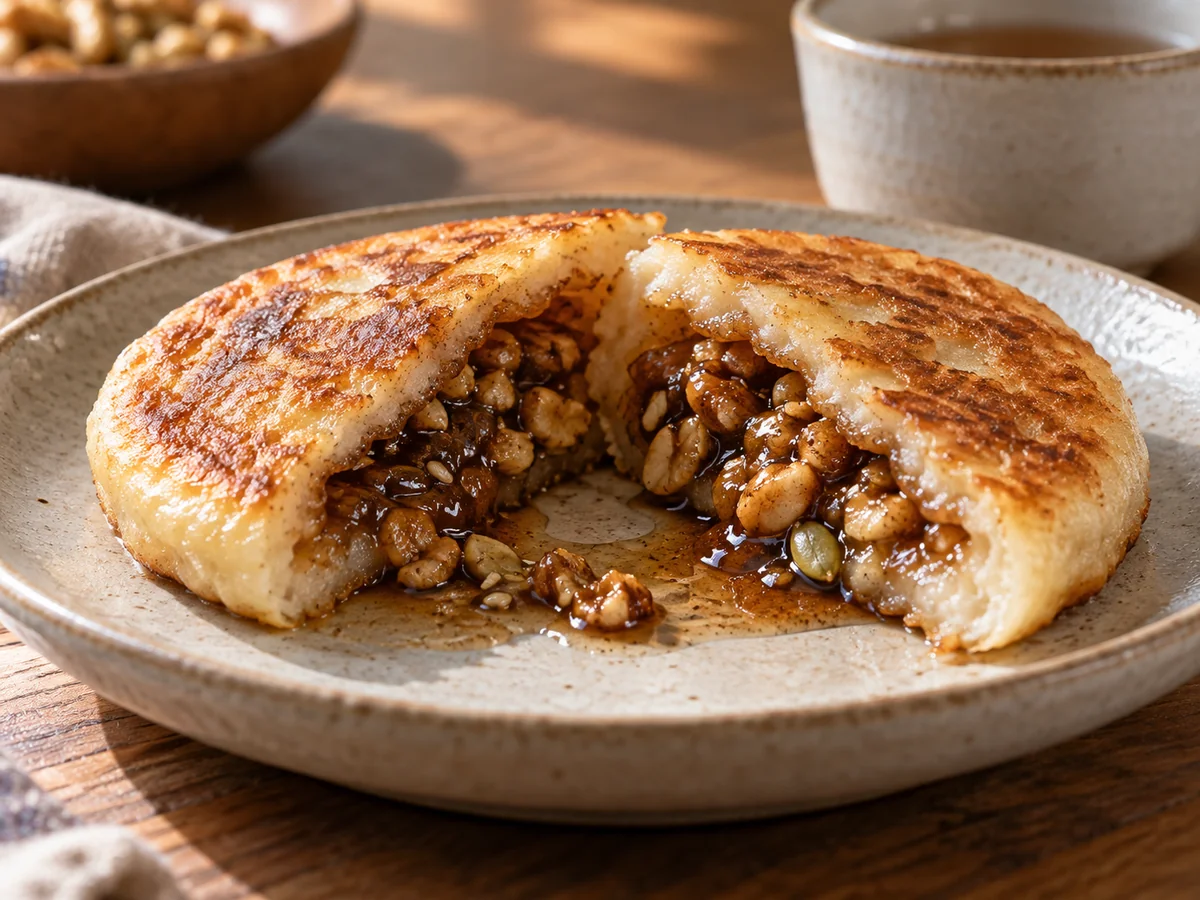
How do you eat a hot one?
Use the cup or holder provided and begin with a small bite near the edge. A cooler surface does not prove that the center has cooled. A large bite can release hot syrup, so keep the filling away from your face and hands.
To see the center, put the hotteok on a plate and divide it carefully. Check the filling before giving small pieces to a child. A paper holder is not a guarantee against heat; set the snack down and allow more cooling if needed.
What should you check when buying it?
Ask about size, filling, and whether it is cooked to order or served from an existing batch. One market’s portion or price does not define every shop. Takeaway steam and elapsed time can soften the outer surface.
If you avoid nuts or seeds, check the specific filling and shared preparation area. Dough may also contain wheat, milk, or egg, depending on the recipe. For allergies or dietary requirements, ask about ingredients and cooking fat instead of relying on the name. Follow the seller’s storage and reheating instructions for packaged products.