Korean Food / What Is Haemul Pajeon? Seafood, Scallions, Texture, and How to Eat It
Haemul pajeon is a Korean savory pancake made by pan-cooking scallions and seafood with batter. It combines the aroma of cooked scallions, the texture of seafood, and a browned outer surface with a softer interior. Taste a piece on its own before adding dipping sauce.
Which seafood and batter are used?
A batter commonly based on wheat flour holds scallions and seafood such as squid, shrimp, or shellfish. The Korea Tourism Organization’s food guide describes pan-cooking this combination to create contrasting edges and interior. Egg use, batter proportions, and the exact seafood vary.
Scallions may remain long or be cut into the mixture. Visible toppings cannot establish every ingredient or its total amount. If you avoid squid or have a shrimp or shellfish allergy, check the batter and cooking arrangements as well as asking about the visible seafood.
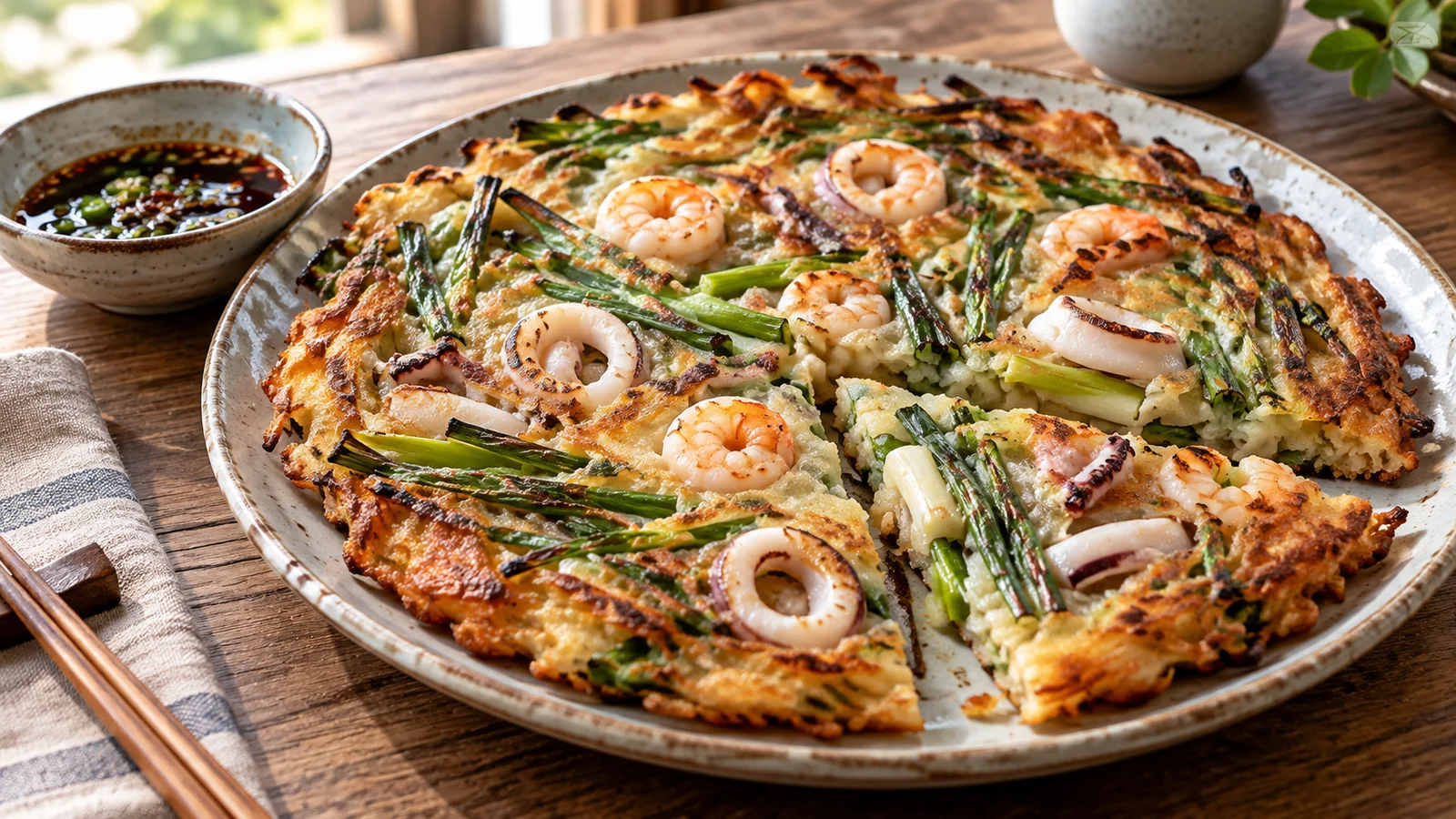
Compare thickness as well as the seafood
The pan-contact edges can be crisp or golden, while the center remains softer with batter and scallions. Seafood adds chew and scallions add cooked aroma and sweetness. Thickness, oil, and time after cooking all affect the result.
Pajeon is not defined only by how much seafood or scallion is visible; batter holds those ingredients together. A thinner preparation with broad browned areas can emphasize its cooked surface, while a thicker one may emphasize the moist center and scallions. Choose the contrast you enjoy rather than treating one texture as automatically superior.
Squid, shrimp, and shellfish do not all have to appear together. A single-seafood version and a mixture offer different textures. Ask which seafood is used instead of relying on the broad label, whether for preference or an ingredient restriction. A few visible pieces in a photograph do not establish the entire mixture.
Consider thickness and accompanying dishes as well as diameter when judging portion. A shared side and a pancake-centered meal need different amounts. Stacking hot pieces or packaging them can soften the surface through steam. Taste some as served; dip just an edge in sauce to compare before adding more seasoning.
How does pajeon relate to jeon and buchimgae?
Jeon covers a range of foods pan-cooked with coatings or batter. Pajeon centers on scallions, and haemul pajeon adds seafood. Kimchijeon centers on kimchi and gamjajeon on potato, changing their main flavors and textures.
Buchimgae is often used for a broader batter pancake, but everyday usage overlaps with jeon. Ingredient and batter descriptions are more helpful than treating the names as rigid technical standards. A mung-bean bindaetteok, for example, should be compared through its different base ingredient.
How do you eat it with sauce?
Take a portion from the shared platter and taste it plain. Long scallions may make dividing pieces awkward; use supplied utensils or ask staff for help. Avoid holding a hot platter while using scissors or tongs.
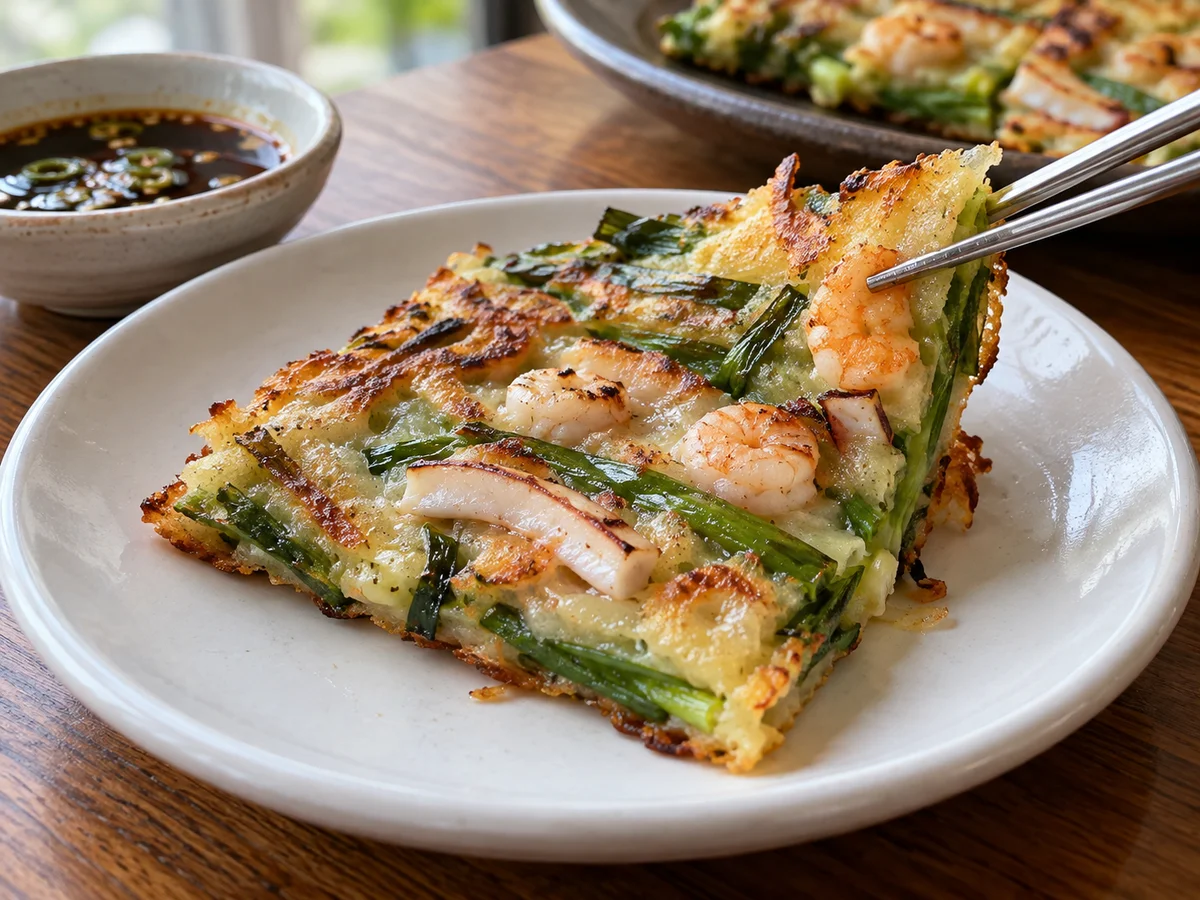
Dip one edge in a little sauce, which may combine soy sauce, vinegar, and chili powder. The pancake may already be seasoned, so soaking the whole piece is unnecessary. Although associated with makgeolli rice wine, it does not require alcohol and can be enjoyed as food on its own.
What should you check for ordering or takeaway?
Check size, suggested number of diners, and included seafood. An assorted-jeon platter may be several kinds of small pancakes rather than one large haemul pajeon. Consider how it fits alongside noodles or another main meal.
Wheat and eggs in batter, seafood, and soy in sauce depend on the recipe. For takeaway, expect steam and travel time to affect crispness. Ask the seller about storage and reheating suited to the packaging instead of assuming the original texture will remain unchanged.