Korean Food / What Is Naengmyeon? Broth and Spicy Types, Flavor, and How to Eat It
Naengmyeon is a Korean noodle dish served cold with broth or seasoning. Mulnaengmyeon centers on chilled broth, while bibimnaengmyeon centers on noodles mixed with sauce. Start by choosing that style, then check the noodle texture and heat level.
Noodles and toppings
Buckwheat-based noodles are familiar, but starch blends and recipes vary. The name alone does not establish the buckwheat percentage or rule out other grains. Check the noodles and seasoning separately if you have dietary restrictions.
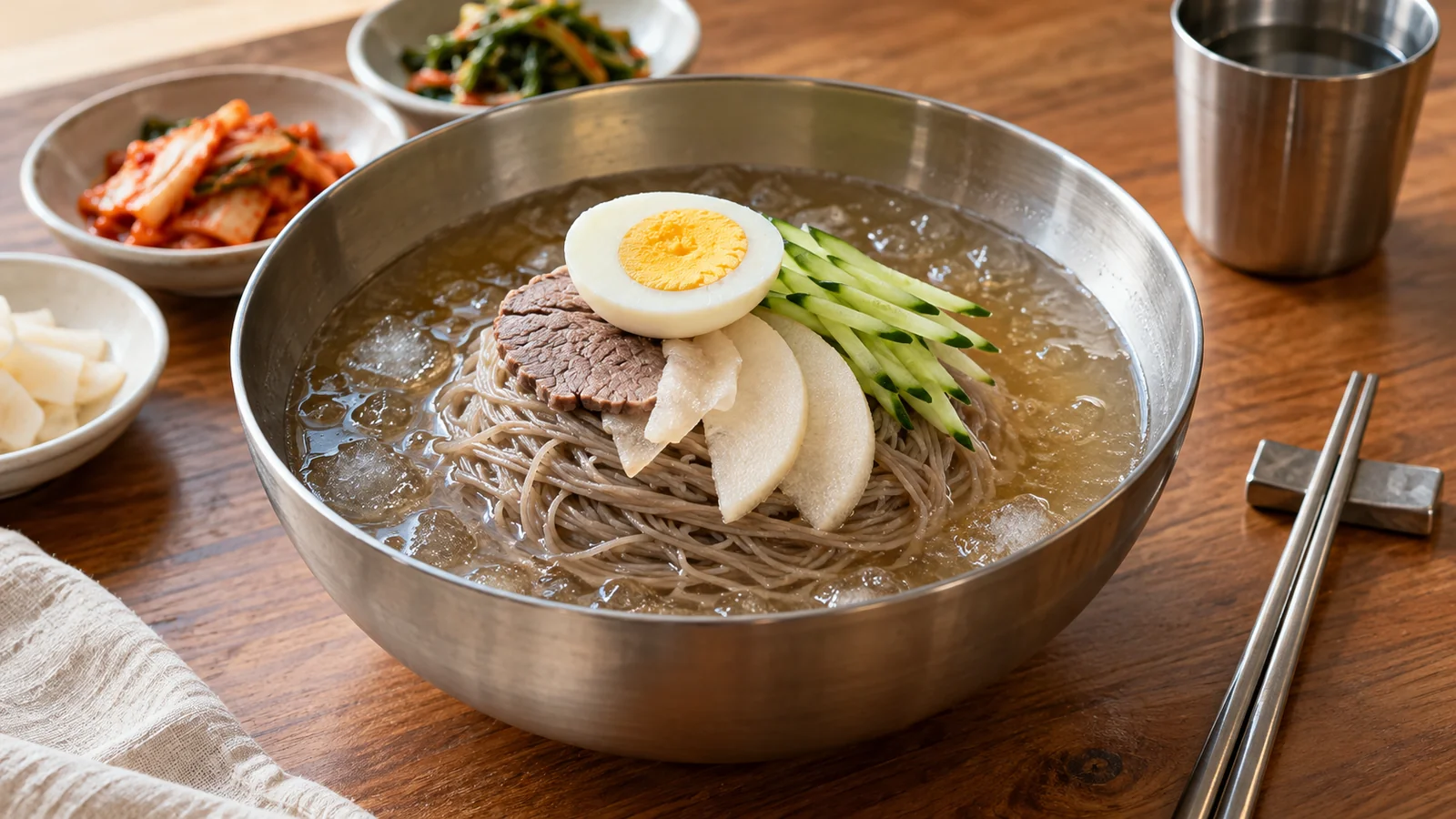
Cucumber, pickled radish, egg, pear, and meat may be used as toppings, but they are not a compulsory set. A bowl without visible meat can still use meat broth. A menu such as hoe-naengmyeon may feature a fish topping, so check that distinction too.
How do broth and mixed types differ?
The Korea Tourism Organization’s food guide distinguishes noodles in cold broth from noodles mixed with red seasoning. Broth versions let you explore the stock’s aroma and seasoning; mixed versions emphasize the sauce coating the noodles.
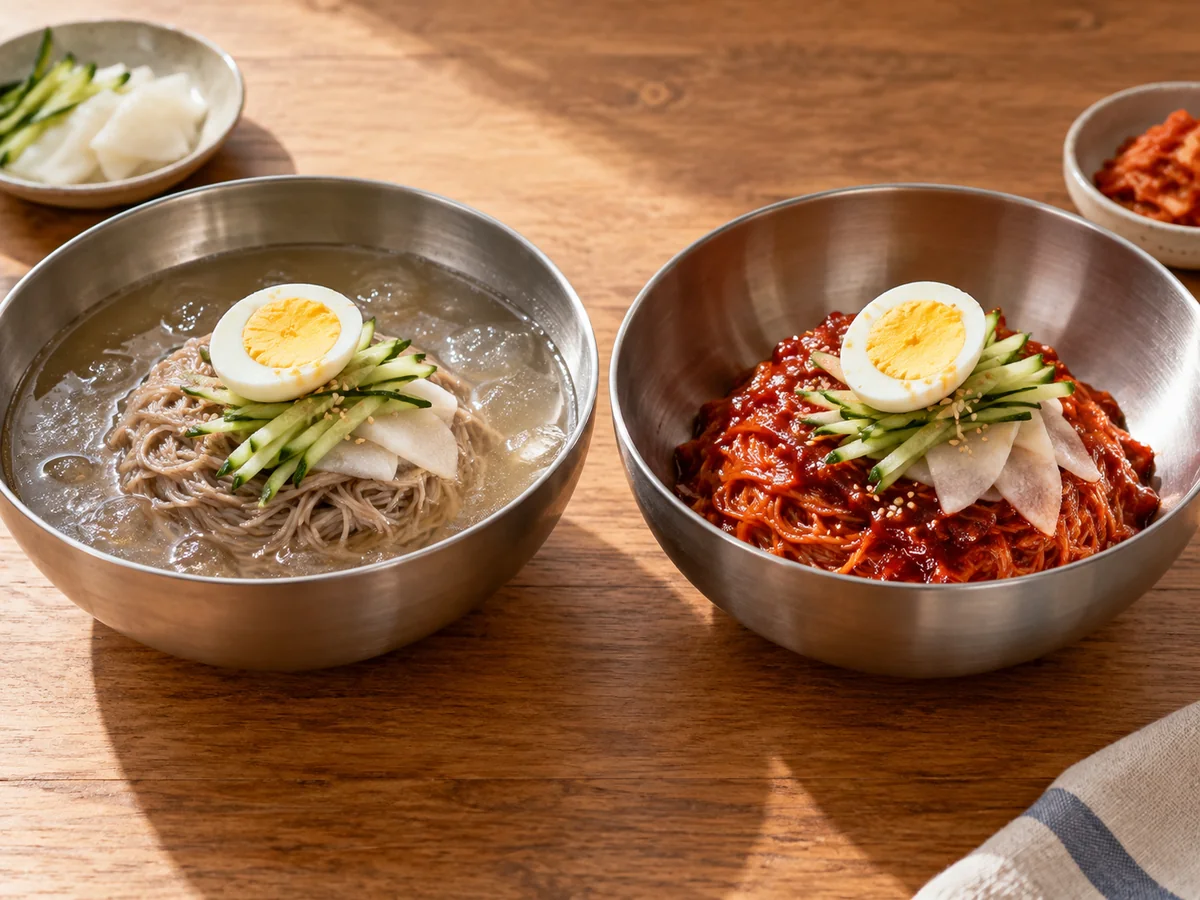
A broth bowl may still include spicy paste, and a mixed bowl may come with a little broth. “Broth is always mild” and “mixed always means one fixed heat level” are unreliable assumptions. Ask whether sauce can be served separately.
Read the broth and sauce before the regional label
Pyeongyang and Hamheung are clues to style, not the same classification as broth versus mixed noodles. Instead of memorizing a single compulsory flavor for each region, ask about noodle ingredients and springiness, stock, and whether sauce is already mixed in. Restaurants using the same regional label may still offer different menus.
To explore the broth, find out whether chili paste is already dissolved or can arrive separately. For mixed noodles, acidity and sweetness matter alongside heat. Vinegar adds acidity and mustard a sharp aromatic sensation; adding a lot of both at once makes their separate effects harder to judge.
Distinguish noodle length from springiness. Cutting makes long strands more manageable without changing the noodle’s underlying chew. You can ask for one or two cuts first and decide whether you want more. A finishing bowl after samgyeopsal may also be smaller than a meal portion, so check which serving the menu means.
When should you add mustard and vinegar?
Mustard adds a sharp aroma, while vinegar adds acidity. Neither requires a fixed dose. Taste the broth first, add a little, and compare before adding more. For a mixed version, combine the noodles with the existing sauce and taste before adjusting.
Loosen a compact bundle gently so it meets the broth or sauce. Cutting noodles is optional. If their length or springiness is difficult for you, ask for scissors or for staff to cut them. Leaving them uncut is not a universal rule of correct eating.
Eating toppings and side dishes
Try small portions of noodles with different toppings instead of lifting a huge bundle at once. Warm broth or dumplings may accompany the meal, depending on what you ordered.
Naengmyeon can be a standalone meal or follow grilled meat. A smaller finishing portion at a BBQ restaurant can differ from a full meal portion. Check which one the menu is offering before using the photograph to estimate quantity.
What should you ask before ordering?
Clarify broth or mixed style, whether spicy sauce is included, and how springy the noodles are. Check egg, meat, fish toppings, and stock where relevant. Plant-based-looking noodles do not make the whole dish vegetarian.
Mention specific problem ingredients, such as buckwheat, wheat, egg, or mustard, rather than simply asking whether the dish is “safe.” You need not use the vinegar or mustard on the table. Begin with the original flavor, then adjust seasoning and noodle length to suit you.