Korean Food / What Is Seolleongtang? Milky Beef Soup, Gomtang, and Seasoning
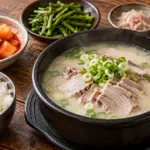
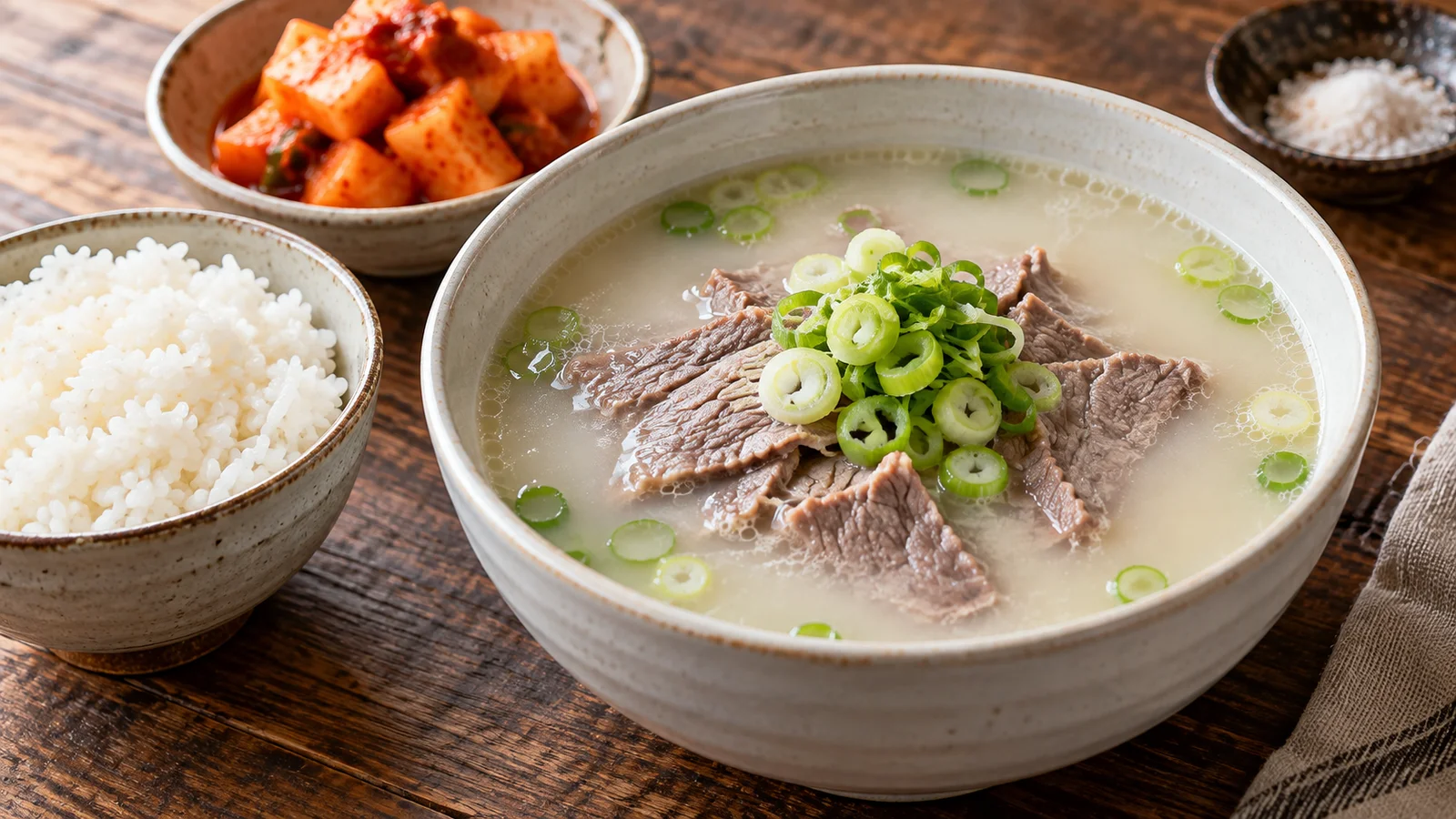
Seolleongtang is a Korean soup made with beef bones, meat, and broth, typically served with rice. Its familiar appearance is milky, and diners may adjust the seasoning with salt and scallions. Taste the broth before adding rice or condiments so you can judge what the bowl needs.
What is in the broth and bowl?
Bones and meat contribute to the broth, which is served with ingredients such as sliced beef. Cuts, proportions, and methods vary. The Korea Tourism Organization’s food guide describes several beef parts simmered into a milky broth, with salt, pepper, and scallions added when eating.
Thin wheat noodles may be included, and rice may arrive separately or already in the soup. A white broth does not by itself mean milk has been added, but appearance should not replace an ingredient check. Neither quality nor nutrition nor cooking time can be reliably established from color alone.
What does seolleongtang taste like?
The focus is the savory flavor and richness of the beef broth rather than red chili seasoning. Lightly seasoned soup may initially seem plain, but restaurants do not all serve it without salt. Taste before deciding what to add.
Scallions contribute aroma and texture; pepper brings a different aromatic edge. Large amounts can obscure the original broth. Radish kimchi and other kimchi provide contrasting side dishes, and eating them separately is just as reasonable as combining them with a spoonful of soup.
How do you season it?
- Try a small spoonful to check temperature and existing seasoning.
- If needed, add a little salt, stir thoroughly, and taste again.
- Add scallions or pepper according to your preference.
- Try the broth with meat, rice, or noodles before adding more.
Salt is easy to add and difficult to take back. Kimchi liquid changes acidity and chili flavor as well as saltiness, so it is not interchangeable with a pinch of salt. Taste side dishes separately first if you want to understand the original broth.
Why color alone cannot separate seolleongtang and gomtang
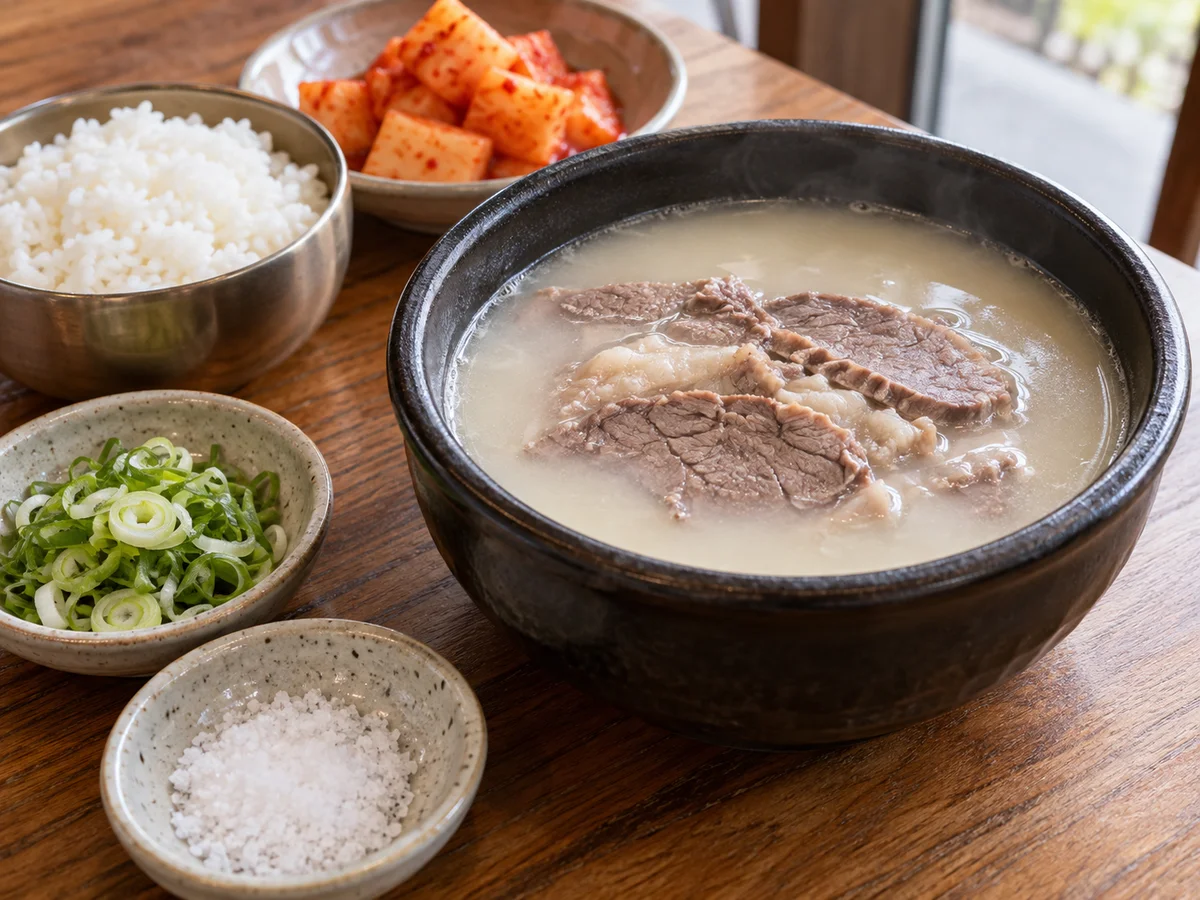
Seolleongtang is familiar as milky broth from beef bones and meat, while gomtang is often described as long-simmered meat soup. Yet names such as sagol gomtang also use bones. A rigid bones-versus-meat rule cannot classify every menu.
Explain whether you want a clearer soup or a richer, milky-looking broth, then check the stock and cuts. Color does not establish cooking time or nutritional content. Meat quantity and the inclusion of organ meats can change the meal even under the same name.
Table seasoning with salt and scallions is familiar, but not every restaurant serves an unsalted bowl. Taste first and dissolve small additions thoroughly. Radish-kimchi liquid changes acidity and chili flavor as well as salt, so it is not simply a salt substitute. To understand the original broth, try the kimchi separately before deciding whether to combine it.
How should you eat the rice and choose a portion?
Add all the rice or a little at a time, depending on how much broth absorption you enjoy. If noodles are included, consider them when deciding how much rice you want. Take small spoonfuls and allow hot meat and broth to cool before eating.
A special-size bowl may change the amount or type of meat. Ask about organ meats if you avoid them, and check noodles, stock, and seasonings for dietary restrictions. A dish name alone cannot establish that the whole meal meets a particular diet.