Korean Food / What Is Kalguksu? Knife-Cut Noodles and Clam, Chicken, or Perilla Broth
Kalguksu is a Korean dish made with wheat dough rolled out and cut into noodles with a knife, commonly cooked in broth. The name describes the noodles rather than one fixed soup: clam, chicken, and perilla-seed versions taste different. Begin by choosing the broth and checking whether seafood is used.
What makes the noodles distinctive?
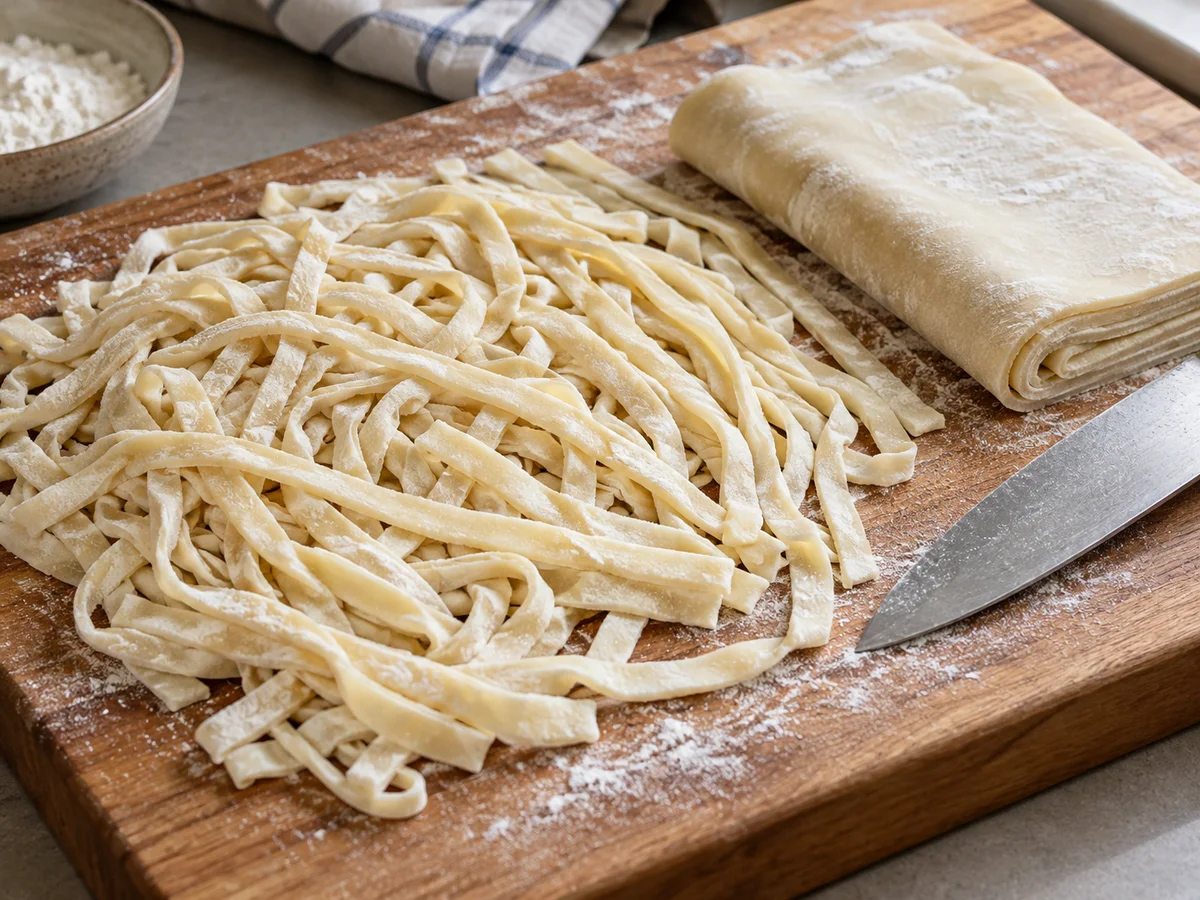
Rolling and knife-cutting dough produces long, flat noodles. Thickness, width, dough composition, and cooking affect how tender or chewy they are. The Korea Tourism Organization’s food guide explains the knife in the name and describes broths using chicken, anchovies, or clams.
Handmade noodle menus do not all produce the same texture. Starch released during cooking can make the soup feel thicker. Because noodles continue changing in hot liquid, a bowl eaten promptly will not necessarily have the same texture as one left standing.
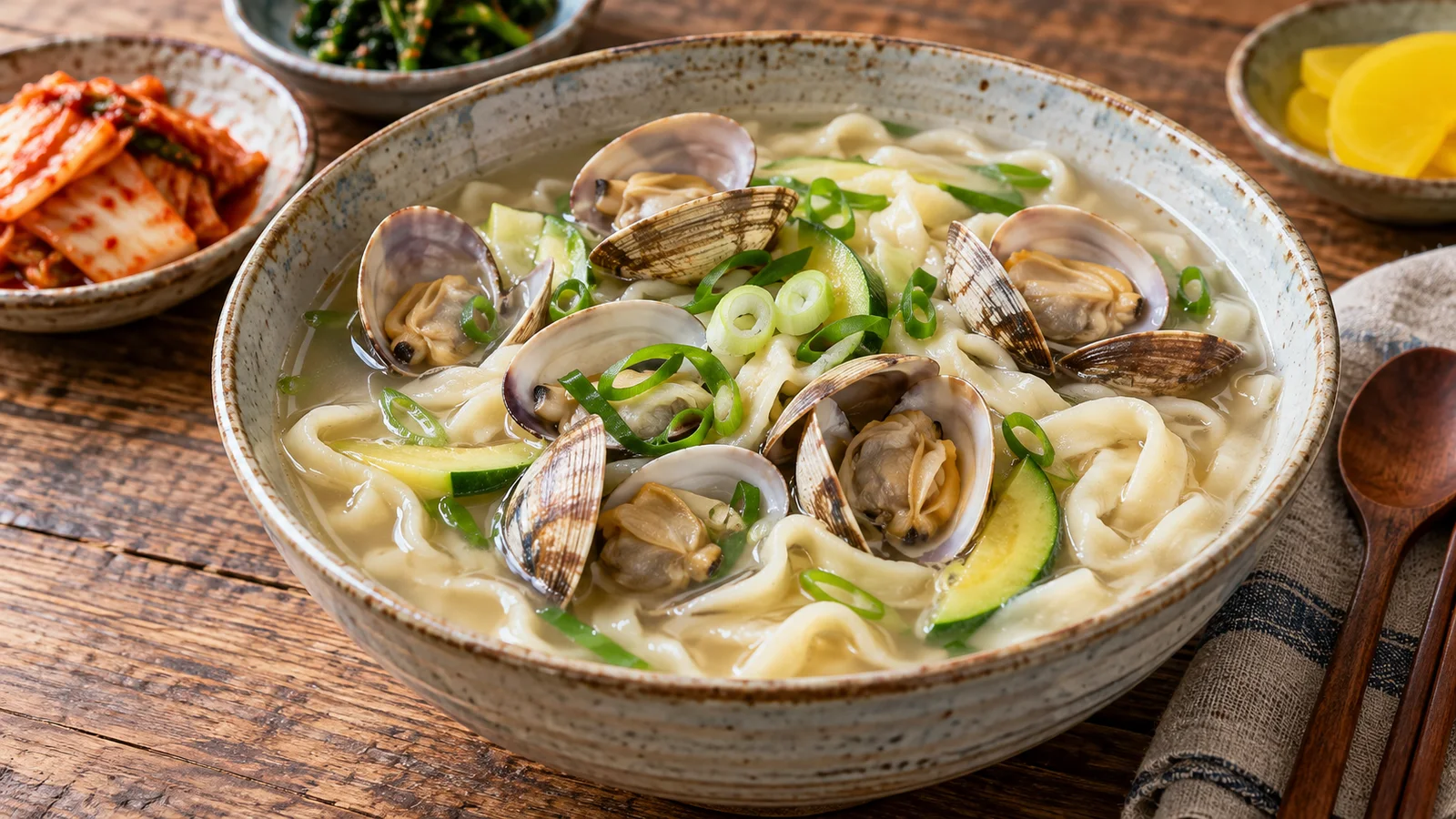
Choose the stock and noodle texture together
A perilla soup with no visible seafood may still use anchovy stock. Ask about the base if you are vegetarian or avoid seafood. For a lighter-looking broth, check the recipe rather than assuming all varieties are equally clear; for a spicy version, ask about the chili seasoning.
Kalguksu identifies knife-cut noodles, not one fixed broth. Clam versions pair shellfish with the soup; chicken versions emphasize chicken and stock; ground perilla can add aroma and body. When asking for a lighter or richer soup, also explain which ingredient flavors you want.
Thicker noodles may make the dough texture more noticeable, but thickness alone establishes neither doneness nor quality. Dough and cooking affect tenderness and springiness. Try a few strands with broth first and serve manageable portions, remembering that noodles continue absorbing liquid while they stand.
Sujebi uses torn dough pieces rather than cut strands; kaljebi combines both. Compare those if contrasting dough textures appeal to you. Adding dumplings increases the amount of dough-based food as well as the portion, so inspect the basic serving first. A clear appearance or a named clam style still does not replace checking all ingredients in the stock.
How is it different from sujebi or janchi guksu?
Sujebi uses pieces torn from dough, producing irregular shapes rather than long knife-cut strands. Kaljebi combines the two. They can share a broth while offering distinctly different dough textures.
Janchi guksu is familiar as thin wheat noodles served with broth and garnishes. Noodle thickness and the character of the soup provide useful comparisons with kalguksu. None of these names alone establishes whether the stock contains anchovies, meat, or shellfish.
Check whether the dish is fully cooked or whether noodles must finish cooking at the table. Ask staff when to start if cooking is ongoing. Separate clam meat from shells and put empty shells aside rather than trying to eat around them in a crowded bowl.
Transfer small portions of noodles and broth to a side bowl if supplied. If the remaining liquid reduces, ask whether stock can be added instead of diluting it arbitrarily. Decide on extra dishes after seeing the noodle portion, since the noodles change texture as they sit.
What should you check before ordering?
Confirm whether you are ordering individual bowls or a shared pot, and whether minimum portions or extra-noodle rules apply. Consider the original noodle quantity before adding dumplings or rice. Menu photos can help, but the description should establish what is included.
Wheat noodles are fundamental, while eggs and other ingredients vary by recipe. Check shellfish, shrimp, meat stock, and perilla according to your needs. Choosing the desired noodle texture and stock ingredients makes the range of kalguksu menus much easier to understand.