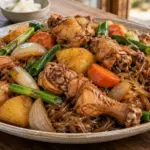
Korean Food / What Is Mandu? Fillings, Steamed or Pan-Fried Styles, and Soup
Mandu are dumplings made by enclosing a filling in a thin dough wrapper and cooking it. Korean menus describe both the filling, such as meat or kimchi, and the method, such as steaming, pan-frying, or soup. Treat these as two separate choices when reading a menu.
What is inside the wrapper?
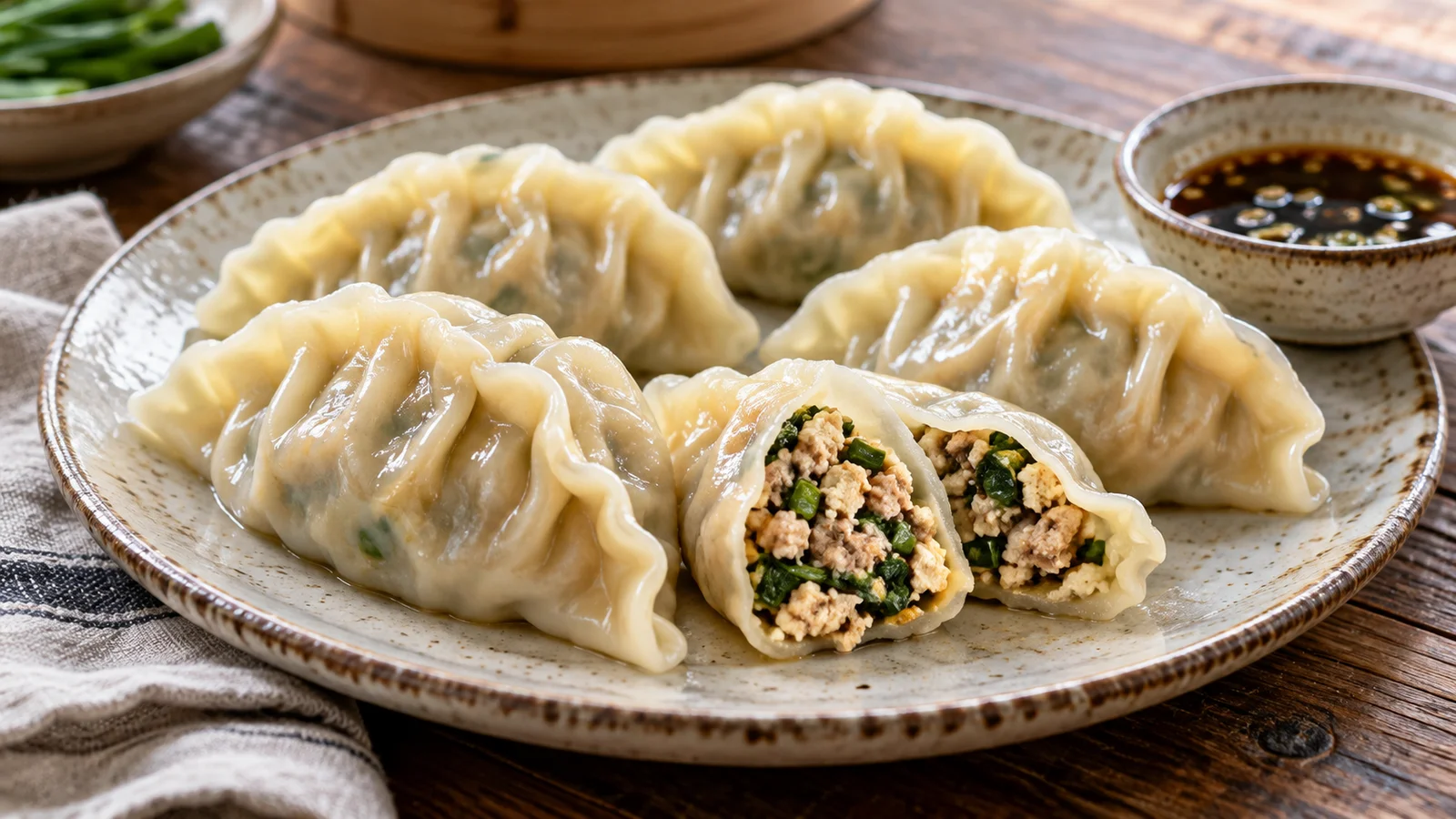
A wrapper encloses ingredients such as minced meat, tofu, chives, and vegetables. The Korea Tourism Organization’s food guide introduces these fillings and several cooking methods. Glass noodles and other vegetables may also appear; proportions vary by restaurant and product.
Thin wrappers place more emphasis on the filling, while thicker or larger dumplings make the dough more prominent. Wangmandu emphasizes a large dumpling, but it does not define one standard weight or texture. Consider size as well as count when choosing a portion or combining mandu with another dish.
Meat filling or kimchi filling?
Meat mandu emphasizes savory meat and vegetables; kimchi mandu adds kimchi’s chili flavor and acidity. Kimchi filling may still contain pork, tofu, and other ingredients. It is not an automatic vegetarian option.
Even a vegetable-labelled version requires an ingredient check when a strict diet matters, including wrapper, seasoning, and soup stock. If you are unsure about heat, ask how spicy the kimchi version is or whether a mixed plate is possible.
The same filling changes with the cooking method
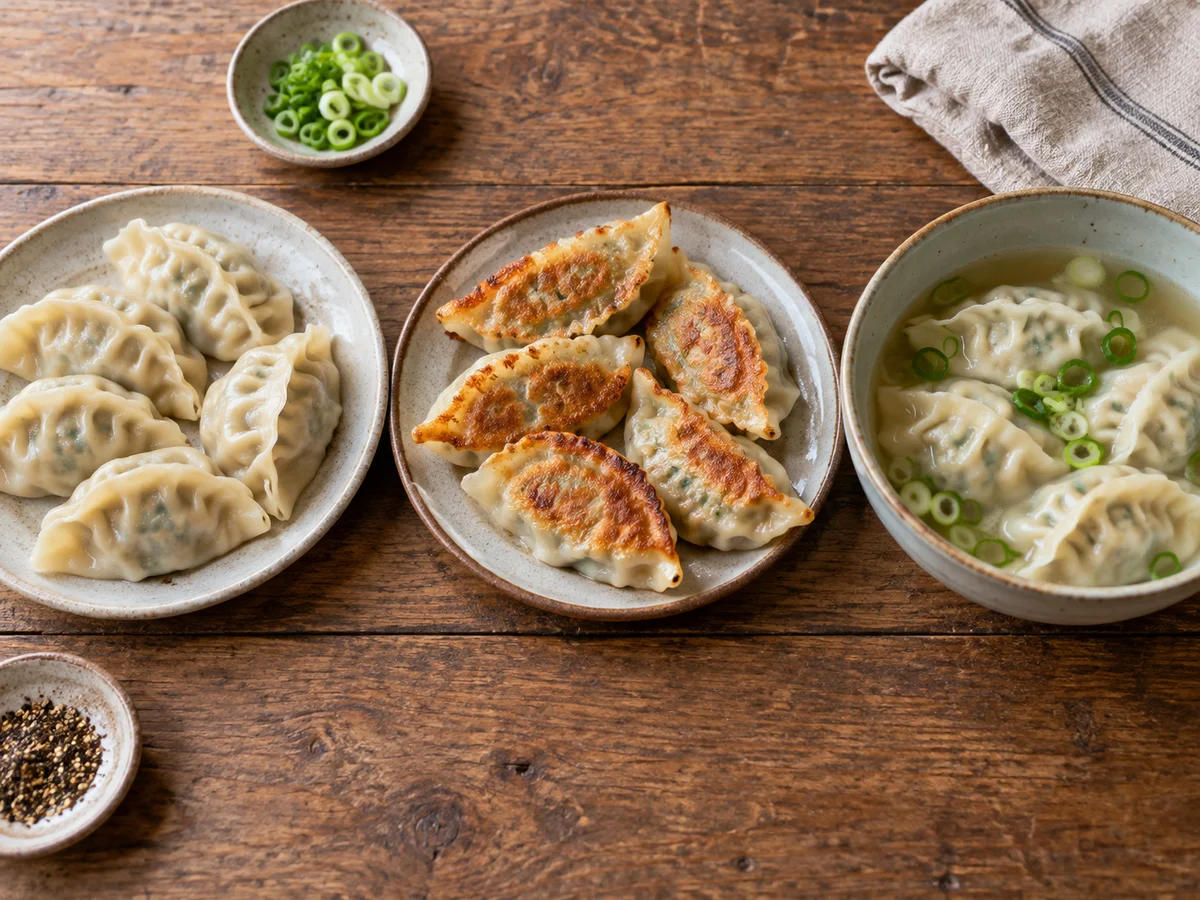
Compare filling and cooking as two separate choices. Steaming emphasizes a moist wrapper; pan-cooking can emphasize a crisp surface. Soup adds the broth’s flavor to wrapper and filling. A kimchi filling therefore does not describe the entire eating experience without knowing the method.
| Method | What to compare |
|---|---|
| Steamed | Wrapper thickness, moisture, and piece size |
| Pan-fried | Crisp surface versus filling, and the actual frying method |
| Soup | Stock, garnishes, and whether rice cakes are included |
For large wangmandu, size and wrapper-to-filling ratio matter alongside count. A few large pieces and many small ones cannot be compared by number alone. Decide whether they accompany noodles or form the meal. Frozen products still require their own package instructions; shape alone does not establish that cooking is already complete.
How do you eat hot mandu?
Freshly served dumplings can be hotter inside than they look outside. Let one cool on a side plate and test with a small bite. Divide a large dumpling with suitable utensils if needed; a spoon can support a dumpling taken from soup.
Try a little dipping sauce on one edge instead of soaking the whole dumpling. Seasoned fillings, especially kimchi, may need no extra sauce. Vinegar or chili powder are optional additions, and you do not have to follow a fixed mixing ratio.
How do you choose an order or frozen product?
Choose the filling and cooking method, then check size and count. Tteok manduguk includes rice cakes as well as dumplings, changing the meal’s composition. A small side of mandu may be enough when paired with noodles or rice.
Wheat, soy, eggs, sesame, meat, and seafood depend on the recipe and product. At home, follow the package’s heating and storage instructions. Do not infer from frozen appearance alone that a dumpling has already been fully cooked; products have different preparation requirements.