Korean Food / What Is Budae Jjigae? Ham, Sausage, Noodle Extras, and How to Eat It
Budae jjigae is a Korean stew combining processed meats such as ham and sausage with ingredients including kimchi and vegetables. Its spicy broth takes on savory, salty flavors from the meats, and ramyeon noodles may be added. Check included ingredients and extras before ordering, especially when the pot cooks at the table.
What ingredients go into the pot?
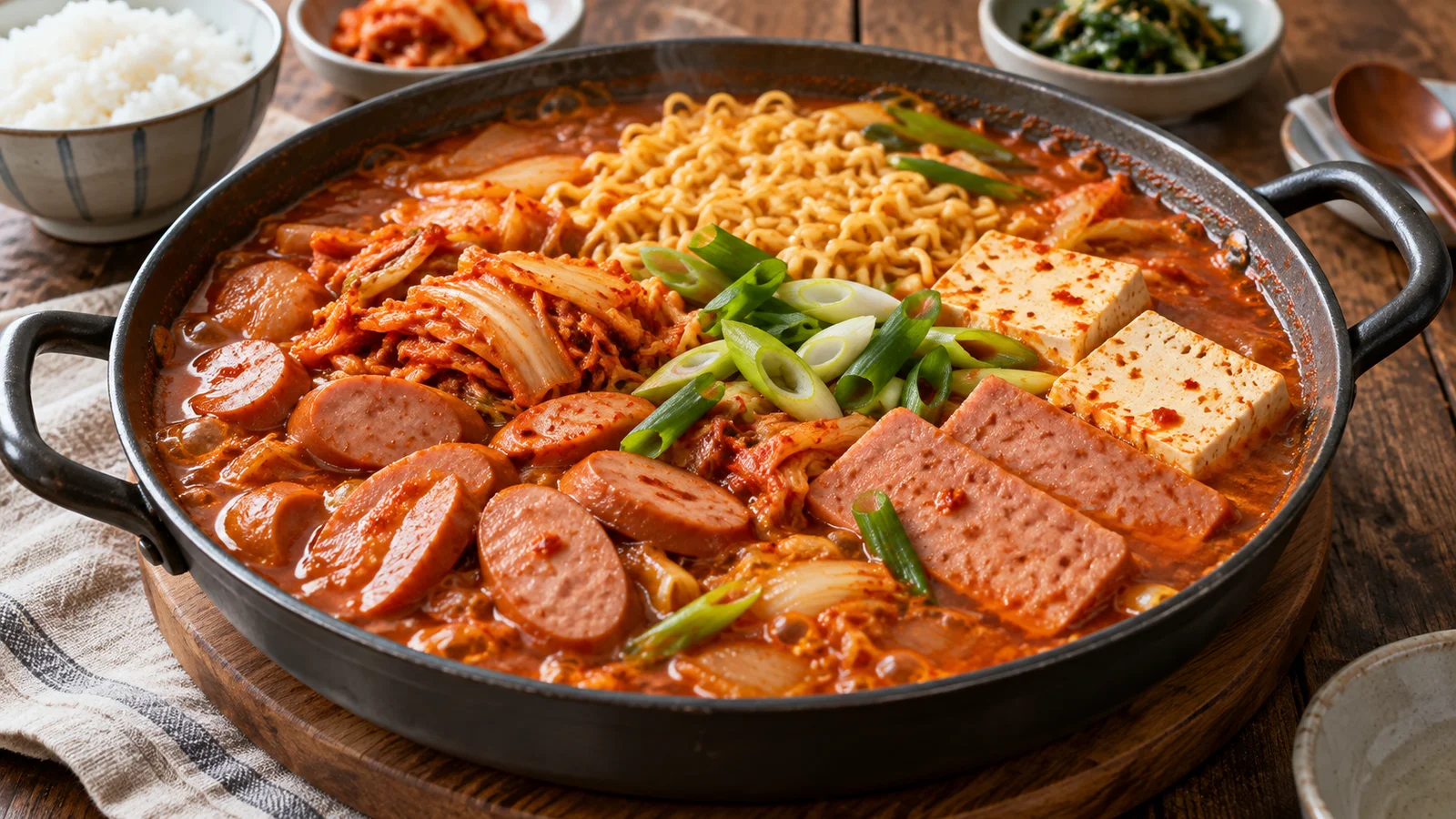
Ham and sausage may be joined by kimchi, scallions, tofu, or minced meat; cheese and beans appear in some versions. The Korea Tourism Organization’s food guide introduces a stew built around meats such as ham and sausage. Types of meat and broth composition vary across restaurants.
A photograph showing noodles or cheese does not establish that they are included in the base price. Extras change both portion size and flavor. Understanding the basic pot first makes it easier to decide whether you actually want another noodle serving or more meat.
Why is it called army-base stew?
Budae refers to an army unit or base, and jjigae means stew. Its background is associated with foods such as ham and sausage available around US military bases after the Korean War, combined with Korean cooking. This broader cultural meeting is more useful than claiming one definitive inventor without evidence.
Today restaurants prepare it with their own ingredient combinations. The military connection in its name does not restrict it to military dining. Regional menu names also exist, but one region’s recipe should not be treated as the mandatory form of every budae jjigae.
Compare the central ingredients with kimchi jjigae
Both this stew and kimchi jjigae can arrive as red broth containing kimchi, but their center of attention differs. Kimchi stew builds on kimchi with additions such as pork or tuna; budae jjigae puts much more emphasis on a mixture of processed meats. Choose the ingredients you want rather than assuming similar color means the same flavor.
The pot combines meat-derived saltiness and richness, kimchi acidity, and chili seasoning. Cheese adds flavor and texture without removing salt or chili. As liquid reduces, seasoning can become more concentrated; ask staff about heat and stock additions when the pot keeps cooking.
Check whether ramyeon is included before ordering it. Noodles absorb broth, so consider pot size, remaining liquid, and rice before adding several portions at once. Liking ham does not require adding every meat, cheese, and noodle option. Understand the basic pot first and add only what would improve the meal for your group.
When do you add ramyeon noodles?
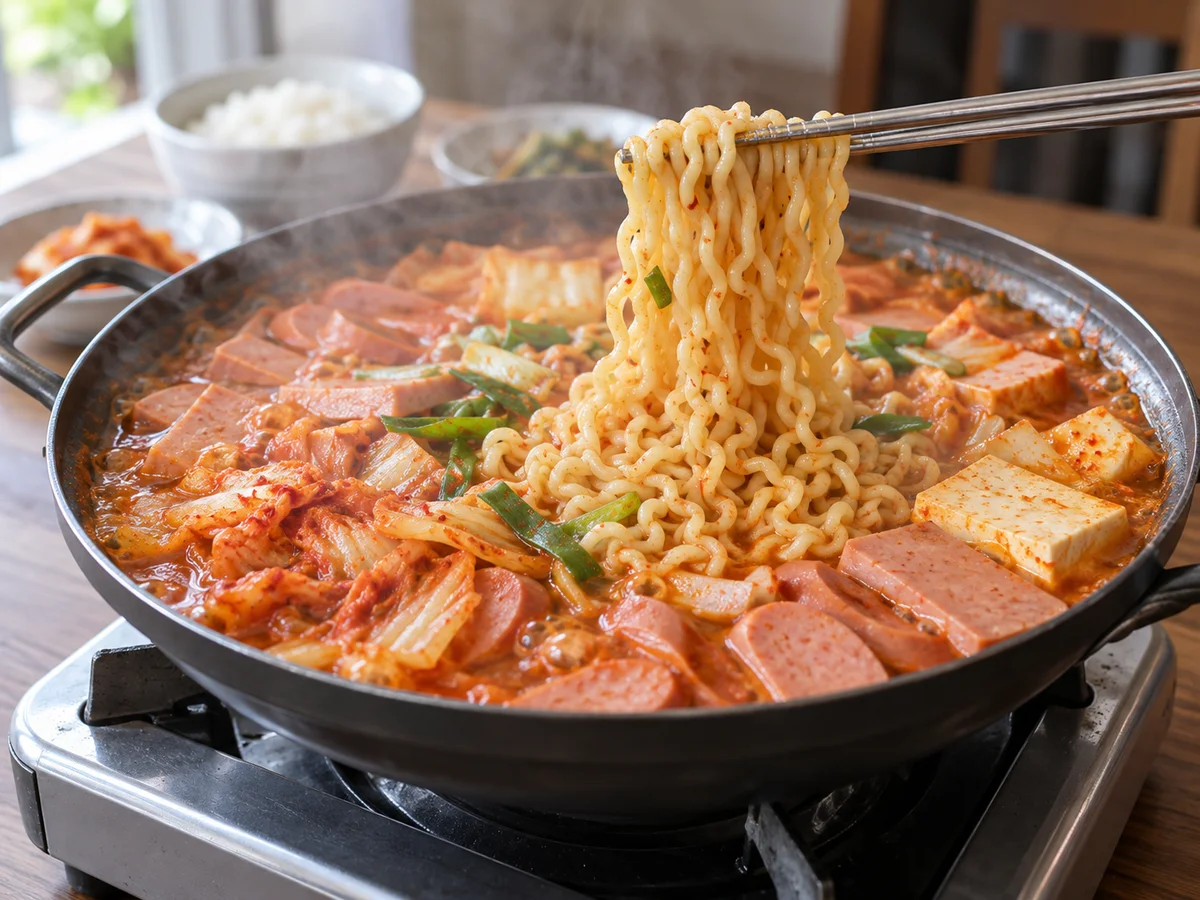
For a table-cooked pot, find out what staff cook and when diners should begin eating. Dry noodles affect the amount of liquid and need time to cook, so ask when they should go in. Check that noodles are not already included before ordering another portion.
Transfer cooked noodles and meat to a side bowl to cool, alternating with rice if you like. Broth reduces as it boils and may become more concentrated; ask for more stock if needed. Seek help with heat adjustment instead of leaving the pot boiling strongly as liquid runs low.
What should you check before ordering?
Confirm minimum portions, included rice and noodles, and charges for added meat or cheese. A shared pot and an individual bowl can differ in both size and cooking arrangement. Ask about the basic serving before selecting several additions.
Processed meats may contain different animal ingredients as well as soy, wheat, or dairy. Stock and kimchi can introduce further ingredients. If you avoid a meat or allergen, ask about actual products and preparation rather than judging a sausage by appearance. Request a milder option before cooking if available.